admin's blog

Comprehensive Guide to PMI Disciplined Agile Coach (DAC) Exam Preparation

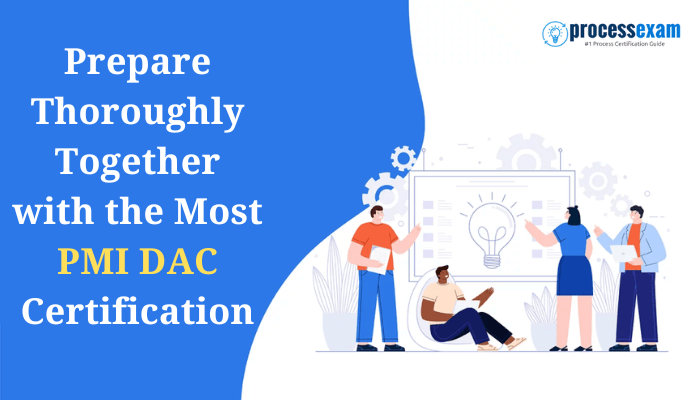
Group of people collaborating and studying for the PMI Disciplined Agile Coach (DAC) Certification with ProcessExam.com.

In today's fast-paced world, Agile methodologies are more relevant than ever. Companies are constantly seeking ways to improve their processes, enhance productivity, and deliver value more effectively. If you're looking to play a pivotal role in this transformation, becoming a PMI Disciplined Agile Coach (DAC) could be the perfect step for you.

In this guide, we'll walk you through everything you need to know about the DAC certification, why it's valuable, the key topics it covers, and how you can prepare effectively - especially using the excellent resources at ProcessExam.com.

What Is the PMI Disciplined Agile Coach (DAC) Certification?

The PMI Disciplined Agile Coach (DAC) Certification is a prestigious credential offered by the Project Management Institute (PMI). Professionals coach teams and organizations to adopt and optimize Disciplined Agile (DA) practices. But what exactly does this mean?

PMI Certifications Roadmap: Find the Right One for Your Career Stage

Updated on 22 September 2026. What’s new: retired Disciplined Agile credentials removed, and PMP and PMI-ACP eligibility updated to PMI's current experience rules

Many candidates picture PMI certifications as a ladder: CAPM at the bottom, the PMP in the middle, PgMP at the top. That picture sends people to the wrong exam. PMI's credentials work more like a map grouped by the work you do: one for newcomers, one core practitioner credential, one for agile delivery, several specialist ones, two for senior program and portfolio leaders, and one for AI projects. The right one is the credential that matches work you can already evidence.
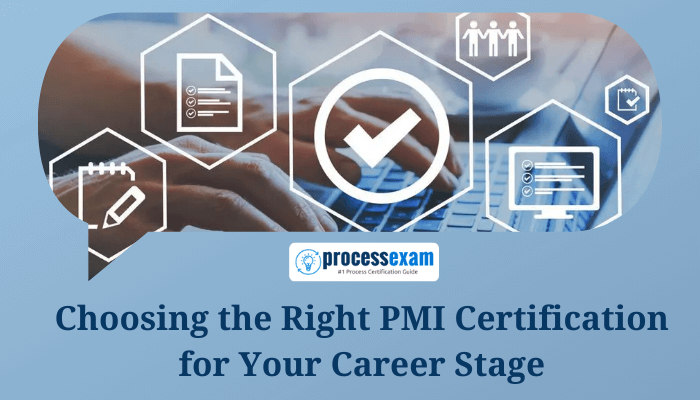
Choosing the right PMI certification for your career stage, banner with project icons over a laptop

That single rule settles most of the confusion behind searches for a PMI certification roadmap. The Project Management Institute does not make you collect its credentials in order, and none of its current exams asks you to hold another PMI credential before you apply. What each one does ask for is a particular kind of experience, and that is why the same person can be ready for the PMI-ACP years before the PgMP, or ready for the PMP while a colleague of the same age is better served by the PMI-RMP.

This guide walks through the map stage by stage. For each group it explains who the credential is written for, what PMI asks before you can apply, and what the exam looks like, with every exam figure taken from the fee and format data we keep for each PMI exam. The final section turns the map into a decision you can make this week.

Simplified Guide to SAFe SPC Certification

Smiling woman holding a notebook, standing outdoors with the text 'How to Easily Pass the SAFe Practice Consultant (SPC)

The SAFe Practice Consultant (SPC) certification is a prestigious credential for professionals seeking to implement the Scaled Agile Framework (SAFe) within organizations. The SPC certification opens doors to numerous career opportunities and is highly sought after in the agile community.

This comprehensive guide will help you understand how to easily pass the SAFe SPC certification exam, providing insights into the exam structure, preparation strategies, and tips for success.

Understanding the SAFe SPC Certification

The SAFe SPC certification is designed for professionals who want to become certified SAFe Practice Consultants. These consultants play a crucial role in leading and implementing SAFe within organizations. The certification validates your ability to:

  • Implement and manage SAFe transformations: Guide and support organizations in adopting SAFe.

  • Train SAFe practitioners: Conduct SAFe training sessions for various roles within the framework.

  • Coach Agile teams: Help teams become more agile and effective.

SPC Exam Details

Before diving into the preparation strategies, it is essential to understand the structure of the SPC exam. According to Scaled Agile, the SPC exam consists of:

PSM I Study Guide: How to Prepare for the Scrum Master Exam and Pass at 85%

An 85% pass mark sounds brutal, and the Scrum Guide is short enough to read in an evening, so candidates tend to assume PSM I is either impossible or trivial. Both beliefs cost attempts. The exam has 80 questions in 60 minutes and costs USD 200, and if every question counts equally you can miss about 12. What decides the result is how closely you have read a very short document, not how much Scrum experience you bring.

Agile team at a sprint board preparing for the PSM I exam

This guide is about passing PSM I itself: how deep to take the Scrum Guide, how the questions are phrased, how to use Scrum.org's open assessments, and how to run the hour on exam day. It is written for first-time candidates, for practising Scrum Masters who assume experience is enough, and for people retaking after a near miss.

Is the short Scrum Guide really all you need to pass PSM I?

Almost, but only if you read it the way a lawyer reads a contract. The current Guide, the 2020 edition that Scrum.org explains on its Scrum Guide 2020 update page, runs to only a few pages. Every word in it was chosen on purpose, which is why the exam can ask about a single verb. A sentence such as "the Product Owner is one person, not a committee" is a complete exam question waiting to be asked.

CTAL-TM Exam Guide: v3.0 Syllabus, Format and Study Plan

CTAL-TM v3.0 is ISTQB's Advanced Level exam for people who run testing rather than just do it: 50 questions, 120 minutes, 88 points available and 58 needed to pass. It rewards judgement over recall, because most of the marks sit in questions that hand you a project and ask what a test manager should do next. This guide covers the syllabus chapter by chapter, the exam rules, worked examples and a seven-week study plan.

CTAL-TM certification study tips cover with a tester working on a laptop

What does CTAL-TM v3.0 certify, and is it the version to study now?

The Certified Tester Advanced Level Test Management certificate shows that you can organise testing across a project: plan it, rank its risks, estimate it, track it, report on it, handle its defects and build the team that does it. ISTQB's own list of business outcomes has eleven items, from "manage testing in various software development projects" to "create defect reports and a defect workflow suitable for a software development lifecycle". Nothing on that list is about writing test cases. It is about decisions.

LEED Green Associate Exam Prep: 10 Tips for the LEED v5 Exam

Updated on 21 September 2026. What’s new: updated for the LEED v5 Green Associate exam, which replaced the LEED v4 exam in 2026.

Two office blocks on the same street can run up very different energy bills, and most of that gap was settled before anyone switched on a light: which way the building faces, how much glass it has, how well the envelope is sealed, how big the heating and cooling plant is, and whether anyone meters it. The LEED Green Associate exam tests whether you understand those choices. You pass with 170 out of 200 across 100 questions in two hours, now set on LEED v5.

Candidate typing on a laptop while preparing for the LEED Green Associate exam

Why does a building's energy bill explain what the LEED Green Associate exam tests?

An energy bill is where the design decisions show up. The meter can't tell a good architect from a careless one, but twelve months of bills can. A deep plan with no daylight needs electric lighting all day, and the lights add heat that the cooling system then has to remove. A west-facing glass wall with no shading lets in the low afternoon sun, and the cooling plant pays for it every summer. Oversized air handlers, sized for a worst case that never arrives, run inefficiently for most of their working life. None of these problems appears on the drawings as a line item. They turn up later as operating cost and as carbon.

LEED AP BD+C Exam Preparation Guide: 10 Proven Study Tips

Updated on 22 September 2026. What’s new: updated for the LEED v5 AP BD+C exam, now a standalone English-only beta after LEED v4 testing ended on 28 June 2026.

If you are getting ready for the LEED AP BD+C exam this autumn, you are getting ready for a LEED v5 exam. USGBC stopped offering the LEED v4 version on 28 June 2026, and the only Building Design and Construction exam on offer today is the LEED v5 beta: 100 questions in two hours, 170 out of 200 to pass, and no score on the day. This guide explains the new eight-domain outline and gives ten study tips written for it.

Candidate smiling at a laptop while preparing for the LEED AP BD+C exam

Which version of the LEED AP BD+C exam can you take right now?

The answer depends on the date you test, not the date you register, and it changed twice in 2026. We checked USGBC's LEED v5 exam information page (last updated 14 August 2026) and GBCI's LEED AP with Specialty Candidate Handbook (updated September 2026) in September 2026. Here is the position they describe.

LEED v4 is gone for BD+C

The last day to register for the LEED v4 AP with Specialty exams was 24 June 2026, and the last day to sit one was 28 June 2026. Anyone who had registered but not tested by then was moved automatically to the English version of the LEED v5 exam, keeping the original 12-month eligibility period. There is no route back to the v4 paper, even if your project work is still on LEED v4.

LEED AP ND Exam Guide: LEED v4 Content and Practice Tests

Most LEED study advice published this year opens with LEED v5, and for Neighborhood Development candidates it is aimed at the wrong exam. USGBC moved Green Associate, BD+C, O+M and ID+C onto LEED v5 during 2026 and left Neighborhood Development exactly where it was. GBCI's candidate handbook, updated September 2026, still heads its section "LEED AP ND v4 exam specifications". So your exam is unchanged: 100 questions, 120 minutes, 170 out of 200 to pass.

LEED AP ND exam preparation with study tips and practice tests

That single fact decides what you should buy, read and practise for the next two months. It also explains why so much recent commentary is unusable: a reference guide written for the v5 credit library will teach you credits that your exam does not test, and a course sold as "updated for LEED v5" may simply not cover the Neighborhood Development rating system at all.

This guide is written for planners, landscape architects, civil engineers, developers and municipal staff preparing for the LEED AP Neighborhood Development specialty. It sets out what USGBC confirms about the exam's version, what the five content areas actually contain, how the combined and specialty-only routes differ, and an eight-week plan you can start this weekend.

OGA-031 ArchiMate 3 Foundation Exam: Pass Mark, Syllabus and Study Plan

You can pass OGA-031 without ever opening a modelling tool, but not without knowing the language's rules by heart. The ArchiMate 3 Foundation paper is 40 closed-book multiple-choice questions in 60 minutes, and 24 correct answers (60%) pass. It asks which element, relationship or layer a situation calls for, so vocabulary drills and diagram reading beat long hours of passive reading.

Enterprise architect arranging blank cards into three connected layers on a glass wall

That framing matters because ArchiMate is often described as "just boxes and arrows". At Foundation level the arrows are the exam. A question may describe a customer-facing service, an application component and a server, then ask which relationship joins two of them, or which element type fits a described thing. Candidates who can draw well but have not memorised the definitions lose marks to candidates who have. This guide covers the exam format, the language you need to know, the relationship rules, a four-week plan and the route on to the Practitioner paper.

What does the OGA-031 exam look like, and which ArchiMate version does it test?

OGA-031 is the Open Group's ArchiMate 3 Part 1 exam, and passing it earns the ArchiMate 3 Foundation qualification. There are no prerequisites. The paper is supervised and closed book, so no specification, notes or tools are allowed, and each correct answer scores one point. The Open Group's own ArchiMate examinations summary lists these terms, and they match the figures below.

CIS-SPM Exam Prep: Why Dumps Risk Your Certification

Updated on 23 September 2026. What’s new: the exam details now follow the Strategic Portfolio Management blueprint: 60 questions in 90 minutes for USD $450, across nine weighted domains

Dumps and practice questions are not two versions of one product, so there is no fair comparison to make. A dump circulates copied live exam content, and the ServiceNow certification terms you accept before booking treat that content as confidential – a credential earned against them can be withdrawn. This guide works from what ServiceNow publishes about CIS-SPM: 60 questions, 90 minutes, USD $450, and a result given only as Pass or Fail.

Portfolio manager reviewing a project board on a monitor at a standing desk while preparing for the CIS-SPM exam

What does a CIS-SPM dump actually put at risk?

Start with what you are buying when you buy leaked questions, because the marketing never describes it accurately. Somebody sat the CIS-SPM exam, memorised or captured items, and resold them. Everything that follows – the price, the "verified" label, the promise of a 24-hour pass – rests on that single act. ProcessExam does not link to such material and will not tell you where to find it. What is worth your time is understanding the three separate costs a candidate takes on by going near it.

Syndicate content