Blogs

What's Really Inside the ASCM CSCP Exam Syllabus?

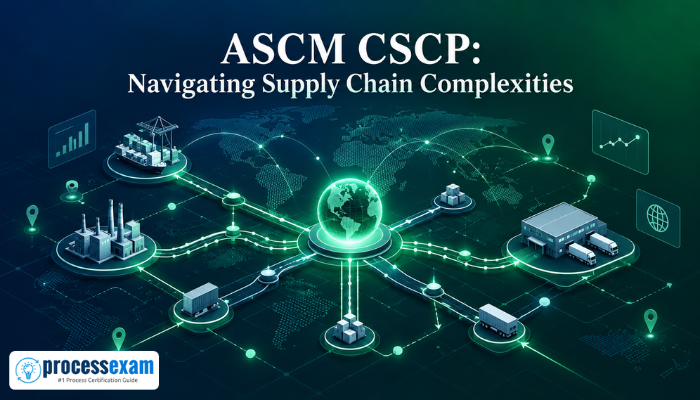
Abstract global supply chain network with glowing emerald pathways connecting sourcing, production, and distribution hubs.

The ASCM CSCP (Certified Supply Chain Professional) certification stands as a globally recognized credential for individuals aiming to demonstrate expertise in end-to-end supply chain management. This advanced certification, offered by ASCM (formerly APICS), validates a professional's comprehensive understanding of global supply chain processes, from supplier to customer. Professionals seeking to enhance their strategic capabilities and operational excellence in a complex, interconnected world often pursue the CSCP. This article explores the core purpose, eligibility, benefits, and preparation strategies crucial for understanding the ASCM CSCP certification and navigating its associated examination.

Mastering Global Supply Chain Operations with the ASCM CSCP Exam Syllabus

The ASCM CSCP certification is designed for professionals dedicated to improving supply chain efficiency and innovation. It signifies a deep understanding of how various supply chain components integrate to drive business success globally. Earning this credential confirms a candidate’s ability to strategically manage and optimize supply chain activities, including sourcing, production, distribution, and logistics, across diverse environments. This rigorous program reflects the dynamic nature of supply chain challenges, ensuring certified individuals are equipped with relevant, forward-thinking knowledge.

Achieving the CSCP certification validates a professional's capacity to:

Uncover The SHRM-SCP Shifts Top Performers Won't Share

HR leader reviewing workforce analytics and SHRM-SCP competency notes on a laptop at a modern desk.

The SHRM-SCP (SHRM Senior Certified Professional) certification stands as a pinnacle for experienced HR professionals, validating a strategic command of the HR body of applied skills and knowledge. This credential from SHRM signifies an individual's capacity to lead HR initiatives, shape organizational strategy, and contribute at the highest levels of human capital management. Targeted at professionals who already possess a deep understanding of HR principles and are ready to apply them in a strategic context, the SHRM-SCP is essential for those aiming to transcend operational roles and drive enterprise-wide impact. This comprehensive article delves into the transformative shifts defining modern HR, the strategic value the SHRM-SCP confers, advanced preparation methodologies, and the lasting career trajectory it enables, equipping candidates with an expert, forward-looking perspective on this pivotal certification.

Mastering the Evolving HR Landscape with SHRM-SCP Insight

The human resources profession is undergoing an unprecedented transformation, driven by technological advancements, shifts in workforce demographics, and dynamic global economies. HR leaders today are not merely administrators but strategic partners, tasked with navigating complexity and fostering resilient organizational cultures. The SHRM-SCP certification is designed to validate professionals who can lead this evolution, demonstrating an advanced ability to integrate HR strategy with overarching business objectives. It prepares individuals to forecast trends, mitigate risks, and champion innovation within their organizations.

ISTQB CT-QDO: Essential Guide to Quality in DevOps Certification

An abstract isometric illustration showing interconnected hexagonal nodes representing DevOps stages, with a central "Quality" node brightly linking them, signifying ISTQB CT-QDO integration.

The ISTQB Certified Tester Quality in DevOps (CT-QDO) certification is specifically designed for professionals aiming to elevate their understanding and practical application of quality assurance within fast-paced DevOps environments. This credential, known by its exam code CT-QDO, validates a candidate's ability to integrate testing activities seamlessly throughout the entire software delivery pipeline, ensuring that quality is built in, not merely tested for at the end. Individuals working in roles such as testers, quality assurance engineers, DevOps engineers, and business analysts who are involved in software quality processes will find immense value in pursuing this certification. This comprehensive guide serves as your essential starting point, clarifying the certification's objectives, outlining key syllabus topics, and providing a clear pathway for effective preparation to help you achieve your ISTQB CT-QDO certification.

PMI-CPMAI: Mastering AI Project Management for Career Growth

Professional reviewing an AI project success dashboard for PMI-CPMAI certification insights.

The PMI Certified Professional in Managing AI (PMI-CPMAI) certification establishes a recognized standard for professionals leading artificial intelligence projects. This credential validates an individual's ability to effectively integrate project management principles with AI-specific considerations, ensuring successful implementation and ethical deployment of AI solutions. This article delves into the intricacies of the PMI-CPMAI certification, examining its core purpose, exploring the associated costs, and analyzing the significant return on investment (ROI) it offers to professionals navigating the complex landscape of AI project management. It is designed for project managers, business analysts, data scientists, and technical leaders seeking to enhance their capabilities and formalize their expertise in orchestrating AI initiatives.

Establishing Competence in AI Project Management

The PMI-CPMAI credential signifies a professional's deep understanding of how to manage AI projects from conception through deployment and ongoing operations. In an era where AI is rapidly transforming industries, the ability to manage these complex, often ambiguous, and data-intensive projects is paramount. PMI, as a global authority in project management, has tailored this certification to equip leaders with the specialized knowledge and skills required to address the unique challenges inherent in AI development and implementation. This includes navigating data ethics, managing algorithmic bias, overseeing model lifecycle, and fostering collaboration across diverse technical teams.

How to Pass the OMG-SYSML2-MU100 Exam

OMG-SYSML2-MU100 Model User certification study guide with laptop, SysML v2 diagrams, notes, and practice tests.

The OMG SysMLv2 Model User certification is the first credential in the Object Management Group's SysML v2 certification program, and the exam behind it is coded OMG-SYSML2-MU100. It tests one specific competency: whether you can read and correctly interpret a SysMLv2 model. The exam has 90 questions, runs 150 minutes in native English-speaking countries and 180 minutes everywhere else, requires 63 of 90 correct answers (70%) to pass, costs US$400 plus taxes, and carries no prerequisites. It became available on 2 June 2026, and it is the entry point to OMG's upcoming SysMLv2 Model Builder exams.

This guide covers what the certification validates, the complete published syllabus with topic weights, the question formats you will actually face, how SysMLv2 differs from SysML v1, and a structured preparation approach. Every exam figure below comes from OMG's own certification pages and its official exam information sheet - each one is linked so you can verify it yourself.

Mastering Finance QA with the ISTQB CT-FT Exam

An adult woman reviews a digital study plan for the ISTQB CT-FT exam, surrounded by organized study materials, symbolizing focused preparation and readiness.

The ISTQB Certified Tester - Finance Testing (CT-FT) certification validates a tester's specialized knowledge in financial software testing, ensuring proficiency in critical domains like banking applications, regulatory compliance, and risk management. This professional credential is designed for individuals involved in testing financial applications who need to demonstrate a deep understanding of the unique challenges and requirements within the finance sector. Professionals seeking to enhance their expertise and career prospects in this specialized field will find this article a comprehensive guide, clarifying the exam's purpose, the skills it validates, and effective preparation strategies to achieve certification.

Establishing Competence in Financial Software Testing

The financial industry operates under stringent regulations and demands an exceptionally high level of accuracy and security from its software systems. Testing these applications requires more than general software testing skills; it necessitates specific domain knowledge to identify risks, ensure compliance, and validate complex financial calculations. The ISTQB CT-FT certification addresses this critical need by providing a globally recognized benchmark for competence in finance testing. It aims to equip testers with the specialized techniques and understanding required to manage the unique intricacies of financial software, from retail banking platforms to investment systems and payment gateways.

AI Won't Replace Scrum Masters – PSM-AI Essentials Will Elevate Them

An adult woman, a Scrum Master, confidently presents AI-integrated Agile workflows to her team using a holographic display, illustrating the future-ready PSM-AI Essentials role.

The Scrum.org Professional Scrum Master - AI Essentials certification, known by its exam code PSM-AI Essentials, is designed to empower Scrum Masters with the critical knowledge and skills needed to navigate and leverage Artificial Intelligence within Agile environments. This credential serves as a vital enabler for professionals looking to enhance their role, ensuring that AI integration fosters collaboration, efficiency, and innovation without compromising core Agile values. This comprehensive article delves into the significance of the PSM-AI Essentials certification, its core objectives, the benefits it offers, and how aspiring and current Scrum Masters can effectively prepare for this forward-thinking assessment.

How to Pass the FINRA Series 99 Operations Professional Exam

Operations professional reviewing trade and settlement dashboards, the daily work the FINRA Series 99 exam covers

It is 4:40 on a Friday and a customer sale that should have settled this morning is still
open. The shares never reached the depository, the buyer's side has sent a DK, and the
close-out clock has started. Someone has to own that break, and at a broker-dealer that
person is usually a registered Operations Professional. To become one you pass the SIE and
the Series 99: 50 scored questions in 90 minutes, with 68 needed to pass.

Who at a broker-dealer has to register as an Operations Professional?

The Series 99 is not a sales licence, and it is not a badge for everyone who sits in an
operations department. FINRA created the registration category so that the people who run,
approve and commit capital to the back office are identified and qualified. The rule that
sets this out is FINRA Rule 1220(b)(3), and it names three kinds
of covered person:

The ASQ Quality Auditor CQA Secret No One Tells You

Three diverse professionals confidently walk up an abstract path towards a glowing ASQ CQA symbol, illustrating career

The ASQ Certified Quality Auditor (CQA) credential signifies a professional’s expertise in auditing quality management systems. This advanced guide delves into the nuances of achieving the CQA certification, offering expert insights into the exam structure, comprehensive syllabus domains, effective preparation strategies, and the profound career advantages it confers. Professionals aiming to validate their skills in evaluating, analyzing, and improving quality systems will find this certification invaluable. This article aims to clarify the often-underestimated depth required for the CQA exam and provide a strategic roadmap for aspiring quality auditors.

Defining the ASQ Certified Quality Auditor Role and Value

The ASQ Quality Auditor CQA certification is a globally recognized benchmark for professionals who understand the standards and principles of auditing quality systems. It validates an individual's proficiency in conducting audits, preparing audit reports, and implementing corrective actions to ensure organizational quality objectives are met. This credential is designed for those deeply involved in quality assurance, compliance, and process improvement across various industries, from manufacturing to healthcare. Achieving the CQA signifies a commitment to excellence and positions auditors as trusted experts in their field.

IIBA CCBA Certification: Boost Your BA Career Growth

Picture the analyst who joined a project team two years ago. At first every template, meeting and sign-off came from someone more senior. Now the same analyst is asked to run a stakeholder workshop alone, judge whether a late change request is worth taking, and explain the answer to a sponsor. That shift is the career stage IIBA's Certification of Capability in Business Analysis (CCBA) is built for.

Business analyst holding a tablet in an office beneath the title What the IIBA CCBA Validates for Business Analysts

The CCBA is the middle of IIBA's three core business analysis credentials. The Entry Certificate in Business Analysis (ECBA) comes before it and the Certified Business Analysis Professional (CBAP) after it. It asks for roughly two to three years of logged practice and tests whether you can apply the BABOK Guide to real situations. It also tells an employer something specific: that you can be handed a well-scoped piece of analysis and trusted to run it.

This article is about that career step rather than the paperwork. It covers where the credential sits on the IIBA ladder, what the work looks like at two to three years, how the scope of your job tends to change, who the credential suits, what it costs over a full cycle, how you keep it and when the senior credential becomes the sensible next move. If you are after the application rules in detail, our separate guide walks through counting hours, references and deadlines step by step.

Syndicate content