admin's blog

Certified System Architect Exam Prep: Key Error to Dodge

A young woman studies in a classroom with a male instructor nearby, captioned 'Top Misstep in Certified System Architect

The Certified Pega System Architect (CPSA) certification is a coveted credential for professionals aspiring to excel in Pega application development. This Certified System Architect certification validates your ability to design scalable solutions, optimize business processes, and deliver robust applications using Pega’s low-code platform.

With industries increasingly adopting automation and agile methodologies, holding a CPSA certification makes you stand out as a highly skilled professional. Not only does it enhance your technical expertise, but it also opens the door to exciting roles with competitive salaries. However, achieving success in the CPSA exam requires strategic preparation.

Unfortunately, many candidates make a critical mistake during their preparation - overlooking Case Management, which constitutes a whopping 33% of the exam. This article dives into this common error, why it happens, and how to overcome it, ensuring you’re fully equipped to ace the CPSA certification.

What Is the Certified System Architect Exam All About?

Before diving into the common mistakes, it’s essential to understand the exam structure and focus areas.

Certified System Architect Exam Overview

  • Exam Duration: 1 hour 30 minutes

  • Number of Questions: 60

  • Passing Score: 65%

Free vs Paid PMP Mock Exams: Which Do You Need?

Updated on 12 October 2026. What’s new: now reflects PMI's July 2026 outline: 180 questions in 240 minutes, with People 33%, Process 41% and Business Environment 26%

Mostly no. Free PMP mock exams are good enough to show you where you stand, but the exam itself is 180 questions in 240 minutes, and few free sets let you rehearse that length, the case-study section or the pacing. Use free mocks to find weak areas early, then pay for full-length sittings only once you can check each one against PMI’s current outline.

That answer changes with your situation, your budget and how long you have, so this guide goes through who can get by on free material, what a paid mock really adds, how to test any mock against PMI’s July 2026 Exam Content Outline, and how many to sit before exam day.

Young woman studying at a desk with a laptop beside the title Decoding PMP Mock Exams

Which PMP candidates can get by on free mock exams alone?

A small group can. The rest of the field gets the most from a mix, and the deciding factor is rarely money. It is how much of the exam’s behaviour is already familiar to you: long sittings, scenario reading, and choosing the best of four plausible answers.

Is ServiceNow Certification Worth It? Costs, Paths and Payoff

You are looking at a catalogue of more than thirty ServiceNow credentials carrying two different price tags, and only one of them deserves your next three months. The honest answer is this: a ServiceNow certification is worth the money when it certifies work you already do or are about to be handed, and it is a poor buy when it does not. Everything below is about making that one choice well.

ServiceNow certification graphic with a laptop, graduation cap and trophy asking if the credential is worth it

ServiceNow splits its exams into four groups. Two foundation credentials at USD $300, two platform-owner credentials at USD $300, eighteen Certified Implementation Specialist exams at USD $450 each, and ten short micro-certifications at USD $300. Every one of them is reported as Pass or Fail, and every one is delivered through Pearson VUE.

That structure is the whole decision. The fee is small compared with the study time, so the real cost of picking the wrong credential is the six to ten weeks you spend on a platform area your employer never asks you to touch. This guide lays out what each group covers, what it costs, who it suits, and the order that gets you to a credential that changes your working week.

CTSC Certification: Separating Fact from Fiction on the ASCM Exam

Updated on 19 September 2026. What’s new: CTSC exam fee corrected to USD $2,275, with the current 150-question, 210-minute format and pass mark.

The CTSC certification is ASCM's credential for professionals who lead end-to-end supply chain transformation. Most of what you hear about it is half true. The facts are simple: one exam of 150 questions in 210 minutes, a fee of USD $2,275, and a passing score of 300 / 350. It tests strategy and change leadership, not coding.
Supply chain scene with shipping containers, crates and a truck for the ASCM CTSC certification guide

The APICS Certified in Transformation for Supply Chain (CTSC) credential is one of the newer programmes from ASCM, the Association for Supply Chain Management (formerly APICS). Because it is newer than CPIM, CSCP or CLTD, candidates meet more guesswork about it: rumours about its cost, claims that it is only for technical specialists, doubts about how it is scored, and exaggerated promises about what it does for a career.

This guide separates fact from fiction. It sets out the exam facts, explains every area of the CTSC body of knowledge, shows how the exam is scored, gives a realistic study plan, and lists the myths that cost candidates a pass. It is written for supply chain managers, operations and planning leads, consultants and programme managers who are deciding whether CTSC is right for them, and for those who have already decided and want to pass on the first attempt.

EBDP Exam Guide: Enterprise Big Data Framework Syllabus and Study Plan

The Enterprise Big Data Framework treats big data as an organisational capability, not a piece of software: lasting value comes only when strategy, architecture, algorithms, processes, people and artificial intelligence are built up together, in that order. The APMG International EBDP exam checks that you can explain each of those six parts and how they connect. It has 60 multiple-choice questions, 90 minutes and a 65% pass mark.

Group discussion led by a woman, with the text Your Guide to EBDP Practice Test Mastery

That single idea shapes how to prepare. A candidate who memorises the Hadoop vocabulary but cannot say why a company should write a strategy before it buys storage is studying the wrong way round. This guide walks through the framework in the order the framework itself recommends, shows what each part asks of you, and ends with a four-week plan and a short note on what the certificate does and does not prove. It was checked against APMG's product page and the free EBDP handbook in October 2026.

What does the EBDP paper look like, and who awards the certificate?

Yes. APMG International's Enterprise Big Data certification page is live, carries no retirement notice and links to a booking route for the exam. The qualification was developed jointly with the Enterprise Big Data Framework Alliance, an independent body of knowledge, and APMG administers the examination. The full title is the APMG International DASCIN Certified Enterprise Big Data Professional, because the framework now sits under DASCIN.

Top 9 Must-Know Facts About ServiceNow CIS-APM Exam

Professionals collaborating at a table with the text, "ServiceNow CIS-APM Simplified - Things You’ll Thank Us for Knowing," and the ProcessExam logo.

The ServiceNow CIS-APM certification can feel overwhelming at first glance. With complex terms like "Application Portfolio Management" and an intimidating syllabus, it’s easy to feel lost. But don’t worry! This guide is here to simplify your preparation and make passing the CIS-APM exam not just achievable but enjoyable. Packed with 9 expert insights, practical strategies, and study tips, we’ll help you breeze through your preparation and ace the certification.

Whether you’re an IT professional aiming to enhance your portfolio management skills or a ServiceNow enthusiast looking to gain an edge in the job market, this article is your ultimate companion. Let’s break the process into manageable chunks and dive right in.

1. What Does CIS-APM Mean? Breaking Down the Certification

At first glance, the name "Certified Implementation Specialist - Application Portfolio Management" might seem a mouthful. However, understanding what CIS-APM ServiceNow entails can set the tone for your preparation.

Open Agile Architecture Certification: Cost, Format and Study Plan

Updated on 8 October 2026. What’s new: the exam fee is now listed at USD 375, and the topic list was rebuilt from The Open Group's own learning-unit themes

Yes, the Open Agile Architecture Practitioner certificate is a sensible next step if you design systems, run agile teams or sit between the two. The Open Group's OGAA-001 exam is 40 multiple-choice questions in 60 minutes, you need 28 right (70%), and the fee is $375. Nothing has to be completed first, so the real work is learning a body of ideas that mixes agile practice with architecture thinking.

Professionals smiling in a modern workspace under the heading Ace the OGAA-001 Certification with Confidence

Is the Open Agile Architecture Practitioner certificate meant for you?

The credential comes from The Open Group, the consortium behind TOGAF and several other architecture standards. Where TOGAF speaks to enterprise architects, the Open Agile Architecture (O-AA) Practitioner certificate speaks to the people who have to keep architecture useful while delivery teams change course every few weeks. The Open Group describes certified people as able to deliver agile architecture in support of digital transformation and to share a common language with both enterprise architects and agilists.

Certified Calibration Technician Salary and Career Path

Updated on 23 September 2026. What’s new: the CCT exam fees are corrected to ASQ's current $360 for members, $460 for non-members and $260 for a retake

Calibration sits in the middle of the technician pay range rather than the top of it. The United States Bureau of Labor Statistics puts the median wage for calibration technologists and technicians at $67,820 a year, or $32.61 an hour, in its May 2025 figures, spread across roughly 17,000 jobs. What lifts an individual above that median is the size of the work you are trusted with, and the ASQ Certified Calibration Technician credential is the usual way of proving you can be trusted with more of it.

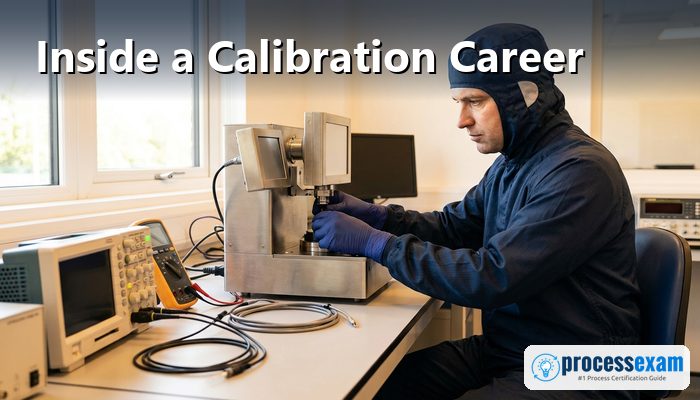
Calibration technician adjusting a precision instrument at a laboratory bench with test equipment around

How much do calibration technicians earn, and what actually moves the number?

The wage figures above come from the Bureau of Labor Statistics occupational profile for calibration technologists and technicians, which is drawn from its national employer wage survey rather than from self-reported job-board entries. Alongside the median it records typical entry-level education as an associate degree, growth of 5 percent between 2025 and 2035 - faster than the average across all occupations - and about 1,500 openings a year over that decade, most of them replacing people who retire or move into engineering roles.

APICS CLTD Certification: The Nine Modules and a Study Plan

Updated on 23 September 2026. What’s new: CLTD now follows ASCM's exam content manual version 3.0, the basis of the 2026 CLTD Learning System, in place of the 2024 version named before.

Everything in the CLTD exam comes down to one number: 300 out of 350. To reach it you answer 150 multiple-choice questions in 210 minutes, for an exam fee of USD $1,100, across the nine modules ASCM sets out in its CLTD content outline. This guide reads those nine modules one by one, says plainly who the credential suits, and turns the outline into a study plan you can hold yourself to.

Logistics professional overlooking a distribution centre from a mezzanine with a tablet in hand

One thing you will not find here is a success statistic. ProcessExam has never run a controlled study of CLTD pass rates, so this article quotes none, and it gives no salary figure that cannot be traced to a published survey. What it does give you is the exam as ASCM publishes it today, the content outline read section by section, and preparation advice that follows from how the paper is actually built.

Here are the numbers to plan around.

ISTQB CTAL-TAE v2.0 Syllabus: What Changed Since the 2016 Edition

Updated on 12 October 2026. What’s new: the current pass mark is 43 points out of 66, across 40 questions, on ISTQB's exam page

ISTQB did not patch the Test Automation Engineering syllabus for version 2.0. It rewrote it. The May 2024 release replaced the 2016 edition, kept the engineer's own work (architecture, pipelines, upkeep) and moved the strategy material into a separate CT-TAS syllabus. The paper is 40 questions in 90 minutes, and you need 43 of the 66 points to pass.

ISTQB CTAL-TAE v2.0 cover for the Test Automation Engineering syllabus article

Many articles about this exam still describe it as a light refresh with "AI and DevOps added". That is not what the syllabus says about itself. Below is what ISTQB actually changed, what each chapter now examines, how the six scripting approaches differ, and a study route that fits someone who already writes automation code. Everything about the syllabus comes from ISTQB's own v2.0 PDF, and everything about the exam from the vendor's exam page, both read in October 2026.

What did ISTQB change when it replaced the 2016 syllabus?

The syllabus's own revision history lists two releases: the general availability release of 21 October 2016 and the v2.0 release of 3 May 2024. Its release-notes appendix is short and unusually frank. It calls the 2024 text "a major update and rewrite of release 2016", says that for this reason there are no release notes chapter by chapter, and gives two reasons: the content has been "significantly enhanced for the test automation engineering role", and strategic content has moved to the new Test Automation Strategy syllabus.

Syndicate content