admin's blog

8 Pega Certifications That Make You Stand Out: Cost, Exams and Path

Updated on 21 September 2026. What’s new: every Pega exam live today with its questions, time, pass mark and fee, replacing the old list built on CPSA Version 23.

Pega offers eight live certifications, each tied to a role: three System Architect levels (CPSA, CPSSA and CPLSA) for developers, plus Business Architect, Decisioning Consultant, Data Scientist, Robotics System Architect and Customer Service Developer. Every exam costs USD $190 and has 50 or 60 questions. Most beginners should start with the System Architect exam.

Pega professionals working through system architect, business architect and decisioning certification paths

Pega (Pegasystems) builds a low-code platform for case management, workflow automation, customer decisioning and robotic automation. Banks, insurers, telecom providers and government agencies run large parts of their operations on it, and they need people who can prove they know how to build on it. A Pega certification is that proof. It is issued by Pega Academy and tested by Pearson VUE, and each one is tied to a specific product release, so a current credential shows your skills match the platform as it is used today.

This guide replaces our older article on four Pega certifications. Pega's line-up has grown and changed since then, so here you will find every exam that is live today, what each one costs, how the exams compare, which path to follow and how to prepare for your first attempt.

10 Reasons to Get a TOGAF Certification

Open Group, Open Group Certification, Open Group Exam, Open Group Practice Test, Open Group Certifications, TOGAF Body of

TOGAF Certification is one of the most popular enterprise architecture certifications that many EA professionals should be aiming for. Getting TOGAF certified demonstrates that you are at the top of the enterprise architecture field. This is due to its longevity, versatility, and return on investment in many areas.

It helps you learn and validate a full understanding of the reasons behind every element of its structure. It helps organizations gain a much understanding of their IT infrastructure while also contribute to understanding to employees where collaboration exists among teams. With the knowledge of the IT infrastructure, organizations can restructure and improve usage, significantly reduce redundancies, and increase effectiveness.

As great as this is, there much more benefits of TOGAF that exceed this, making you more worthy of your business and the rest of your team. Plus, there are industry-wide factors that are fantastic motivation to get TOGAF certified.

The Evolution of the Business Architect

The way we communicate with business is changing, from online to offline. Organizations are going through fundamental change. At the heart of this transformation is the business architect.

Business Architect, Business Architect Certificate, Business Architect Certification, Business Architect Exam, Business

Who is a Business Architect?

A Business Architect understands and contextualizes strategy for operational requirements, develops specific remainders such as business capability maps. And value streams to help connect the gap between strategy and execution, and assists streamline and rationalize the IT enablement process.

In addition to developing particular deliverables, views, and viewpoints, a business architect synergies and synthesizes the work of others drawing from methods such as strategy process management, development, systems analysis, business analysis, and operations.

However, in fact, in many large companies, the role of a business architect has devolved into an arm of IT and has run into uncertainty about the specific nature, deliverables, and intended outcomes from the position. The change has to do with a lot of factors, and none of which alone can resolve the status quo.

How to Become a Better Software Tester: Skills, Habits and Techniques

A tester files her fourth bug of the week and it comes back stamped "cannot reproduce". The code was fine; the report was the weak link. Becoming a better software tester mostly means getting five things right: reports a developer can act on, tests chosen on purpose, curious exploration, enough technical reach to look under the surface, and a calm way of delivering bad news. Each one is a habit you can train, and this guide takes them in that order.

Software Testing as a Career Path cover with a laptop, a target and testers at work

It is written for testers with anything from six months to six years behind them, and it keeps to the practical level: what to do on Monday that you did not do last Friday. The ISTQB Certified Tester Foundation Level (CTFL) appears once, in its own section, as one structured route to the same skills rather than a requirement for any of them.

Why do your bug reports keep coming back with "cannot reproduce"?

Because the person reading the report cannot see what you saw. A developer opening your ticket has the code, a different machine and a dozen other tickets. What you pasted is the only evidence that your failure ever happened. A bounced report is rarely a developer being lazy; it is usually a missing step, a missing build number or an "expected result" that exists only in your head.

How to Become an ASQ Certified Quality Engineer (CQE) in 5 Steps

Updated on 19 September 2026. What’s new: CQE exam fees corrected to $450 for ASQ members, $550 for non-members and $350 for retakes.

To become a Certified Quality Engineer, you meet ASQ's experience requirement of eight years in quality engineering work (three in a decision-making role, with up to five years waived for a degree), apply to ASQ, study the seven areas of the CQE Body of Knowledge, pass the 175-question exam with a score of 550/750, and then recertify every three years. The five steps below walk through each one.

How to become a Certified Quality Engineer, quality engineer reviewing a checklist in a production plant

The ASQ Certified Quality Engineer (CQE) credential is one of the longest-standing certifications in the quality profession. It is awarded by the American Society for Quality (ASQ) and recognises engineers who can design quality systems, control products and processes, apply statistics to real production data and lead improvement work. Because the exam is demanding and the experience requirement is strict, employers read the letters CQE as proof of both knowledge and practice.

This guide is for quality engineers, quality assurance specialists, manufacturing and process engineers, and supplier quality professionals who want to know exactly what it takes to earn the credential. It covers the requirements, the fees, the exam format, every area of the Body of Knowledge, a preparation plan, the mistakes that cost candidates a pass, and how to keep the certification once you have it.

How to Become a Certified Quality Inspector: The ASQ CQI Route

Updated on 22 September 2026. What’s new: CQI eligibility corrected to three years of paid experience, two waived by a diploma or degree, and the syllabus updated to ASQ's 2025 Body of Knowledge.

You do not need a degree to become a quality inspector. Most inspectors start with a high school diploma or GED, learn to read drawings and handle gauges on the shop floor, and then prove that skill with the ASQ Certified Quality Inspector (CQI) credential once they have the paid experience ASQ asks for. That is the whole route: foundation, floor time, then certification.

Why become an ASQ Certified Quality Inspector, a candidate studying for the CQI exam

The rest of this guide fills in each stage. It covers what the job looks like hour by hour, which school subjects and training actually pay off, how much experience ASQ counts and how a diploma or degree shortens it, what the CQI exam asks under ASQ's 2025 Body of Knowledge, and how to prepare for a test where roughly one question in five needs a calculation. It closes with where the credential can take you once you hold it.

What does a quality inspector actually do on a shift?

An inspector's job is to decide, with evidence, whether a product or material meets its requirements, and to say so in a way that other people can act on. The requirements live in drawings, specifications, purchase orders, standards and customer agreements. The evidence comes from measurement, testing and observation. Everything else in the role supports those two things.

8 Project Management Methodologies Compared: How to Choose

A retail replatform ran as strict Waterfall: nine months of requirements, one go-live date, a change board for every amendment. By month four the business had rethought checkout, the specification was frozen, and the team shipped the document rather than the product. The rework cost more than the original build. Waterfall was not the problem; it was the wrong fit. There is no best project management methodology, only the one that matches your scope, your rate of change and your governance.
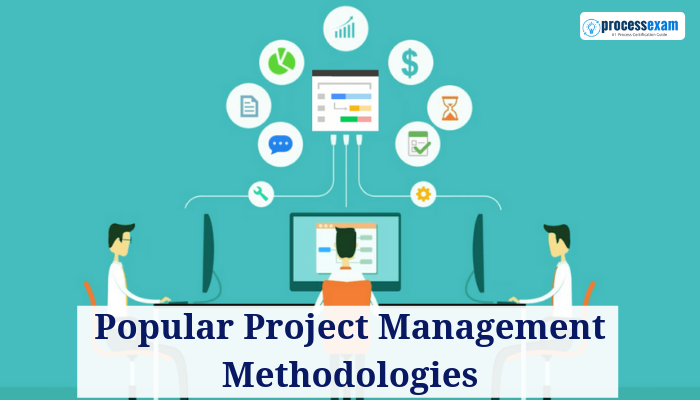
Popular project management methodologies banner with a team planning work on shared screens

That mismatch is the real question hiding behind “which methodology is best”. This guide maps eight approaches – Waterfall, Agile, Scrum, Kanban, Lean, Six Sigma, PRINCE2 and hybrid – and for each one explains what it actually changes about how work is planned, controlled and handed over, where it breaks, and which credential proves you can run it. Treat it as a decision aid rather than a ranking.

What separates one project management methodology from another?

Strip away the vocabulary and the eight approaches differ on one thing above all: when the scope is decided. Everything else – the ceremonies, the documents, the roles, the reporting – follows from that single choice. Decide the scope once at the start and you need change control, stage gates and a detailed plan. Decide it repeatedly as you learn, and you need short cycles, a prioritised backlog and someone empowered to say what comes next.

That gives three families, plus a deliberate blend:

6 Unexpected Ways Six Sigma Can Benefit Your Company

ASQ, American Society for Quality, Certified Six Sigma Black Belt (CSSBB), Certified Six Sigma Green Belt (CSSGB), Certified Six Sigma Yellow Belt (CSSYB), CSSBB, CSSGB, CSSYB, Six Sigma, Six Sigma Black Belt, Six Sigma Green Belt, Six Sigma Yellow Belt, Six Sigma methodology, Six Sigma Certification, Six Sigma Exam, Six Sigma project, Six Sigma Yellow, Six Sigma Green, Six Sigma Black

Over the last few years, Six Sigma has almost become a household word.

The term “Six Sigma” is an evaluationof quality. However; Six Sigma is a business initiative, not a quality drive. It is a way of doing business that enhances quality and productivity. It also increases competitiveness and decreases cost.

Establish a Career in ITIL with ITIL Foundation Certification

IT Service Management (ITSM), ITIL Foundation, ITIL Foundation Body of Knowledge (BOK), ITIL Foundation Certification, ITIL Foundation Exam, ITIL Foundation Exam Questions, ITIL Foundation Practice Test, ITIL Foundation Question Bank, ITIL Foundation Questions, ITIL Foundation Quiz, ITIL Foundation Sample Exam, ITIL Foundation Study Guide, ITIL Foundation Study Guide Material, ITIL Foundation Test Questions, ITIL Tutorial

The ‘Information Technology Infrastructure Library (ITIL)’ is a set of ITSM practices employed by some of the most prominent organizations in the world, including IBM, HSBC, and even NASA. Originally released as a series of books, ITIL was designed to standardize the procedures for proper IT management, helping businesses to evade the common obstacles to present the excellent quality services possible.

ITIL was first developed in Great Britain almost 20 years ago to generate a set of absolute best practices for utilization in government data centers. Since then, ITIL has been adopted, revised, and developed into a broad framework for directing IT service delivery in organizations of all scales and across industries.

Scrum Master Certification Benefits: Which Ones Are Real?

Does a two-day course and a test make anyone a Scrum Master? No. What the certificate does is show that you learned a shared vocabulary and passed a timed check on it, and employers read it that way. Scaled Agile's SAFe Scrum Master (SSM) exam, for example, is 45 questions in 90 minutes with an 80% pass mark. Some benefits of that paper hold up in daily work, some are oversold, and which one fits depends on your workplace.

Scrum Master leading a stand-up with a team at a task board

Which of the six usual benefits survive a reality check?

Articles on this topic, including the earlier version of this one, tend to list the same six advantages: a wider knowledge base, staying relevant, a change of mindset, better teamwork, benefits for the organisation and a badge of pride. They are not all equally true. The table gives a plain verdict on each, and the notes below explain the reasoning.

Syndicate content