
PMI-CPMAI: Mastering AI Project Management for Career Growth
The PMI Certified Professional in Managing AI (PMI-CPMAI) certification establishes a recognized standard for professionals leading artificial intelligence projects. This credential validates an individual's ability to effectively integrate project management principles with AI-specific considerations, ensuring successful implementation and ethical deployment of AI solutions. This article delves into the intricacies of the PMI-CPMAI certification, examining its core purpose, exploring the associated costs, and analyzing the significant return on investment (ROI) it offers to professionals navigating the complex landscape of AI project management. It is designed for project managers, business analysts, data scientists, and technical leaders seeking to enhance their capabilities and formalize their expertise in orchestrating AI initiatives.
Establishing Competence in AI Project Management
The PMI-CPMAI credential signifies a professional's deep understanding of how to manage AI projects from conception through deployment and ongoing operations. In an era where AI is rapidly transforming industries, the ability to manage these complex, often ambiguous, and data-intensive projects is paramount. PMI, as a global authority in project management, has tailored this certification to equip leaders with the specialized knowledge and skills required to address the unique challenges inherent in AI development and implementation. This includes navigating data ethics, managing algorithmic bias, overseeing model lifecycle, and fostering collaboration across diverse technical teams.
Validating Core AI Project Leadership Skills
The certification is designed to validate a comprehensive set of skills essential for managing AI projects effectively. Professionals holding the PMI-CPMAI demonstrate proficiency in areas critical for mitigating risks and maximizing value in AI initiatives. This encompasses a blend of traditional project management acumen and AI-specific knowledge, creating a holistic skill profile that is highly sought after in the current job market.
- Ethical Frameworks: Applying ethical principles and guidelines to AI project planning and execution, ensuring responsible AI development.
- Data Governance: Managing data acquisition, quality, privacy, and security, which are foundational for reliable AI models.
- Model Lifecycle Management: Overseeing the entire journey of an AI model, from experimentation and training to deployment, monitoring, and recalibration.
- Stakeholder Engagement: Effectively communicating complex AI concepts and project progress to diverse audiences, including technical teams, business leaders, and end-users.
- Risk Management in AI: Identifying, assessing, and mitigating risks unique to AI projects, such as performance drift, interpretability challenges, and regulatory compliance.
- Value Realization: Focusing on how AI projects deliver tangible business value, beyond just technical implementation.
This combination ensures that certified professionals are not merely overseeing technical tasks but are strategically guiding AI projects towards impactful, responsible, and sustainable outcomes.
Eligibility Pathways for PMI-CPMAI Certification
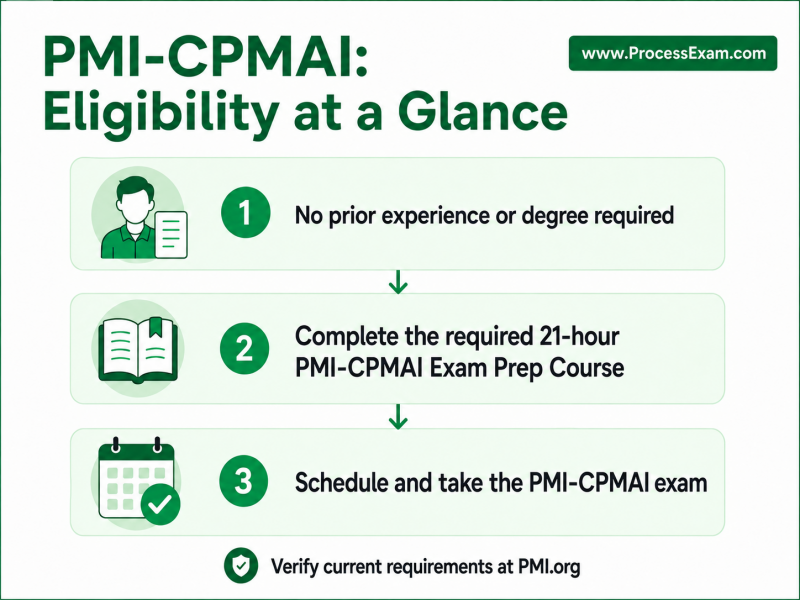
Prospective candidates for the PMI-CPMAI certification must meet specific eligibility criteria established by PMI to ensure a foundational level of experience and knowledge in project management and AI concepts. These requirements are designed to affirm that candidates possess the practical background necessary to succeed in the exam and apply the certification's principles in real-world scenarios. While the exact requirements may evolve, they typically involve a combination of educational attainment and professional experience.
Educational and Professional Prerequisites
The eligibility requirements for the PMI-CPMAI generally consider a candidate's formal education and their practical involvement in project management, particularly with exposure to AI or related data-intensive projects. Candidates must typically possess either a secondary degree (high school diploma, associate’s degree, or global equivalent) with a certain number of project management experience hours, or a four-year degree with fewer project management experience hours. Additionally, specific hours of experience in AI-related projects or a designated amount of AI project management training may be required to qualify.
For detailed and up-to-date eligibility requirements, candidates should always consult PMI's official page for the PMI-CPMAI certification. This ensures access to the most current criteria for application and qualification.
Refining Your Eligibility Profile
Understanding the precise eligibility criteria is the first critical step toward certification. Candidates who may not immediately meet the AI project experience hours might consider accumulating relevant experience through participation in AI initiatives, volunteer work, or specialized training courses that count towards the requirement. PMI also often specifies a certain number of contact hours in project management education, which can be fulfilled through various training providers or PMI-approved courses. This structured approach helps ensure that individuals pursuing the PMI-CPMAI credential have a solid foundation upon which to build their specialized AI project management expertise.
Deciphering the PMI Certified Professional in Managing AI Certification Cost
The financial investment required for the PMI-CPMAI certification is a crucial factor for many aspiring professionals. This cost typically encompasses the exam application fee, which can vary based on factors such as PMI membership status and geographic location. Understanding this breakdown is essential for budgeting and evaluating the overall value proposition of the credential.
Exam Fees and Membership Advantages
The core cost of the PMI-CPMAI certification is the exam fee itself. PMI often offers a discounted rate for its members, making a PMI membership a worthwhile consideration for candidates. Membership not only reduces the exam cost but also provides access to a wealth of resources, including official study materials, professional development opportunities, and networking events, which can significantly aid in preparation and ongoing career growth. Non-members typically pay a higher fee for the exam, balancing the immediate savings against the broader benefits of membership.
The exact fee structure is dynamic and subject to change by PMI. It's advisable for all candidates to check the official PMI website for the most current pricing details before applying. This ensures accurate financial planning and avoids any surprises during the application process.
Influencing Total Investment Beyond the Exam
Beyond the direct exam fee, several other components can contribute to the total investment in achieving PMI-CPMAI certification. These indirect costs are vital to consider for a complete financial overview and include:
- Training Courses: While not always mandatory, enrolling in a structured training course can significantly enhance preparation. These courses, offered by authorized training partners, provide in-depth content review, practical exercises, and expert guidance.
- Study Materials: Official PMI study guides, practice books, and digital resources, such as PMI Study Hall resources, are crucial. Their costs should be factored into the overall budget.
- Practice Exams: Investing in high-quality PMI-CPMAI practice exam questions helps candidates gauge their readiness and identify areas for improvement. Platforms such as ProcessExam.com offer various practice exam questions that simulate the actual exam environment.
- Retake Fees: In the event a candidate needs to retake the exam, additional fees will apply. Comprehensive preparation aims to minimize this risk, but it's a potential cost to be aware of.
Careful planning around these elements allows candidates to optimize their preparation while managing their financial commitment effectively. Many candidates find that the investment in quality study resources and training far outweighs the cost of a potential retake, leading to a more efficient path to certification.
Strategic Preparation for the PMI-CPMAI Exam
Effective preparation is the cornerstone of success for any challenging certification exam, and the PMI-CPMAI is no exception. Given the specialized nature of managing AI projects, a structured and comprehensive study approach is essential to master the diverse topics covered by the credential. Candidates must move beyond rote memorization to truly grasp the analytical and ethical dimensions of AI project leadership.
Crafting a Comprehensive Study Plan
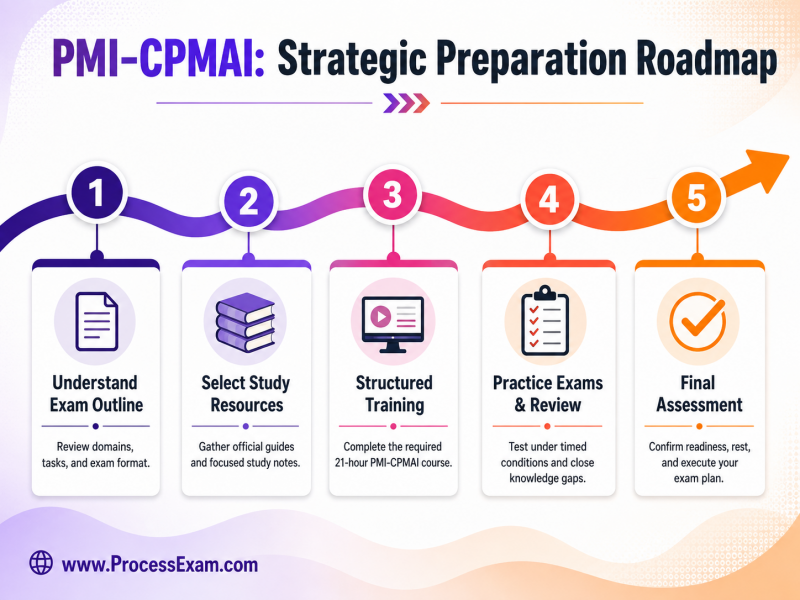
A well-defined study plan is critical for navigating the breadth of knowledge required for the PMI-CPMAI exam. This plan should integrate a variety of resources and techniques to ensure thorough coverage of all core concepts. Start by obtaining the official exam content outline from PMI, which details the domains, tasks, knowledge, and skills assessed. This outline serves as your primary roadmap for study.
Your study plan should incorporate:
- Official PMI Materials: Utilize any official study guides, handbooks, or recommended readings provided by PMI. These resources are designed to align directly with the exam content.
- Structured Training: Consider enrolling in a formal PMI-CPMAI training course, either in-person or online, offered by Authorized Training Partners (ATPs). These courses provide expert instruction, structured learning paths, and opportunities for peer interaction.
- Self-Study: Supplement formal training with independent study, focusing on areas identified as weaker points. This could involve reading books on AI project management, reviewing relevant articles, or exploring free resources such as PMI's introductory e-learning module.
- Time Management: Allocate dedicated study blocks, consistent with your personal learning style and schedule. Break down complex topics into manageable segments to avoid burnout.
Consistency in execution of this plan is more important than sporadic cramming. Regular review and self-assessment are key components of a successful preparation strategy, building confidence and reinforcing understanding over time.
Utilizing Practice Questions for Mastery
Practice exam questions are invaluable tools for PMI-CPMAI exam preparation, serving multiple purposes beyond mere content review. They help candidates familiarize themselves with the exam format, pacing, and the types of questions they can expect. Engaging with practice questions should be an iterative process aimed at understanding the reasoning behind correct answers and identifying knowledge gaps.
To maximize the benefit of practice questions:
- Simulate Exam Conditions: Whenever possible, take practice tests under timed conditions to get accustomed to the pressure and develop effective time management skills. This helps reduce anxiety on the actual exam day.
- Analyze Explanations: Do not just look at whether an answer is right or wrong. Critically analyze the explanations for both correct and incorrect options. Understanding why an answer is correct—and why others are not—deepens your comprehension of the underlying concepts.
- Identify Weak Areas: Use the results of practice exams to pinpoint specific knowledge domains or question types where you consistently struggle. Dedicate extra study time to these areas to strengthen your understanding.
- Review and Re-evaluate: After completing a set of practice questions, review all questions, even those answered correctly. This reinforces learning and helps solidify your grasp of the material.
Regular engagement with high-quality practice questions, combined with a disciplined review process, is crucial for building the confidence and competence needed to pass the PMI-CPMAI exam. It's a key component of effective self-assessment and targeted learning.
Evaluating the Return on Investment (ROI) of PMI-CPMAI
Investing time, effort, and financial resources into a professional certification like PMI-CPMAI naturally prompts an inquiry into its potential return on investment. The value derived from this certification extends beyond a mere badge of honor; it translates into tangible career advantages, enhanced professional credibility, and often, significant financial benefits within the rapidly expanding field of AI.
Career Advancement and Role Enhancement
The PMI-CPMAI certification can be a powerful catalyst for career advancement, particularly for professionals aiming for leadership roles in AI-driven initiatives. In an increasingly competitive landscape, employers are actively seeking individuals who can bridge the gap between technical AI expertise and effective project delivery. The PMI-CPMAI credential signals to prospective employers and current management that an individual possesses this crucial intersection of skills, distinguishing them from peers.
Key career benefits include:
- Enhanced Credibility: The certification provides a globally recognized validation of specialized skills, boosting professional standing and trust among colleagues and clients.
- Leadership Opportunities: Certified professionals are better positioned for roles such as AI Project Manager, AI Solutions Lead, or AI Program Manager, taking on greater responsibility in strategic AI implementations.
- Increased Employability: With the demand for skilled AI project managers outstripping supply, the PMI-CPMAI acts as a differentiator, making candidates more attractive to leading organizations.
- Navigating AI Complexity: The certification equips professionals with frameworks and best practices to manage the unique complexities of AI projects, from ethical considerations to model deployment, leading to more successful project outcomes.
By fostering a deeper understanding of AI project lifecycles and the ethical implications of AI development, the PMI-CPMAI empowers professionals to not only manage projects but also to shape the strategic direction of AI adoption within their organizations. This translates into a more impactful and fulfilling career trajectory, aligning with the "PMI Certified Professional in Managing AI career path" narrative.
Potential Salary Impact for Certified Professionals
Beyond career progression, the PMI-CPMAI certification holds significant potential for a positive impact on earning potential. While salary figures can vary widely based on experience, location, industry, and specific role, certifications like the PMI-CPMAI are often associated with higher salaries compared to uncertified counterparts. This premium reflects the specialized knowledge and value certified individuals bring to organizations.
Factors contributing to a positive salary impact include:
- Specialized Skill Premium: The unique blend of AI knowledge and project management expertise is in high demand, commanding higher compensation.
- Negotiating Power: Certification strengthens a professional's position during salary negotiations, as it quantifies their commitment to continuous learning and professional excellence.
- Market Benchmarking: Industry salary reports frequently show a clear correlation between specialized certifications and elevated compensation levels for roles that require those specific skills.
- Organizational Value: Companies recognize that certified professionals can drive more efficient, ethical, and successful AI projects, directly contributing to business growth and innovation, thereby justifying a higher investment in their talent.
For many, the question "is PMI-CPMAI certification worth it" is answered by the long-term career resilience and enhanced earning potential it offers. The initial investment in the exam and preparation is often recouped through career advancement and salary increases over time, solidifying its status as a valuable asset for professionals aiming for leadership in the AI domain.
Leveraging PMI-CPMAI for Project Success in AI Initiatives
The true value of the PMI-CPMAI certification manifests in its application within real-world AI projects. It provides a robust framework for leaders to navigate the inherent uncertainties and complexities of AI development, ensuring that projects not only meet technical specifications but also deliver tangible business benefits responsibly. Certified professionals are uniquely positioned to translate theoretical AI concepts into practical, impactful solutions.
Guiding Ethical and Responsible AI Development
One of the most critical aspects of modern AI project management is ensuring ethical considerations are embedded from the outset. PMI-CPMAI certified individuals are trained to identify and mitigate risks related to data privacy, algorithmic bias, and transparency. This expertise is vital for building public trust and ensuring regulatory compliance, preventing costly reputational damage and legal issues. By championing responsible AI, these professionals contribute to the creation of AI systems that are fair, accountable, and beneficial to society.
Driving Innovation Through Structured AI Management
AI projects often involve iterative development, experimentation, and rapid learning cycles. The PMI-CPMAI equips professionals with agile methodologies adapted for AI, enabling them to manage these dynamic environments effectively. They can structure projects to accommodate evolving data sets, model refinements, and shifting business requirements, fostering an environment where innovation thrives within a controlled and predictable framework. This structured approach helps in managing scope creep and ensuring that resources are optimally allocated, accelerating the journey from concept to deployment.
Key contributions to project success include:
- Risk Mitigation: Proactively identifying and managing risks specific to AI, such as data quality issues, model drift, and integration challenges.
- Cross-Functional Collaboration: Facilitating seamless communication and collaboration between data scientists, engineers, business stakeholders, and ethical committees.
- Strategic Alignment: Ensuring that AI projects are always aligned with overarching business objectives and contribute directly to organizational strategy.
- Performance Monitoring: Implementing robust monitoring mechanisms to track AI model performance post-deployment, ensuring continuous improvement and problem detection.
By providing a comprehensive understanding of these dimensions, the PMI-CPMAI certification empowers leaders to guide AI projects through their entire lifecycle with a higher probability of success, transforming technological potential into realized value.
Sustaining Professional Growth After PMI-CPMAI Certification
Achieving the PMI-CPMAI certification is a significant milestone, but it also marks the beginning of an ongoing journey of professional development. The field of artificial intelligence is characterized by rapid advancements, evolving ethical standards, and new technological paradigms. Therefore, continuous learning and active engagement within the professional community are essential for maintaining relevance and maximizing the long-term value of the credential.
Embracing Continuing Education and Skill Enhancement
Certified professionals must actively pursue opportunities to update their knowledge and skills in both project management and AI. PMI, for example, requires credential holders to earn Professional Development Units (PDUs) to maintain their certification, encouraging ongoing learning. This can involve:
- Advanced AI Courses: Enrolling in specialized courses that delve deeper into specific AI technologies, machine learning algorithms, or data science techniques.
- Ethical AI Workshops: Participating in workshops focused on emerging ethical guidelines, regulatory changes, and best practices for responsible AI development.
- Conferences and Webinars: Attending industry conferences, summits, and webinars provides exposure to cutting-edge research, new tools, and real-world case studies in AI.
- Reading and Research: Staying current with academic papers, industry publications, and thought leadership pieces on AI and project management trends.
This commitment to continuous learning ensures that PMI-CPMAI holders remain at the forefront of the field, capable of adapting to new challenges and leveraging the latest innovations for project success.
Engaging with the AI Project Management Community
Beyond formal education, active participation in the professional community offers invaluable opportunities for growth, networking, and knowledge exchange. Joining local PMI chapters or online forums dedicated to AI project management allows professionals to connect with peers, share experiences, and collaborate on solutions to common challenges.
Benefits of community engagement include:
- Networking: Building a strong professional network can open doors to new career opportunities, mentorship, and partnerships.
- Knowledge Sharing: Learning from the experiences and insights of other practitioners, and contributing your own expertise, enriches the collective knowledge base.
- Mentorship: Both giving and receiving mentorship can accelerate professional growth, providing guidance for career trajectory and practical problem-solving.
- Influence and Advocacy: Contributing to discussions around best practices, standards, and ethical considerations in AI project management can help shape the future of the profession.
By fostering a culture of continuous learning and community involvement, PMI-CPMAI certified professionals not only maintain their credential but also solidify their position as influential leaders in the dynamic and critical domain of AI project management.
Conclusion
The PMI-CPMAI certification stands as a pivotal credential for professionals aspiring to lead and excel in the realm of artificial intelligence projects. It systematically addresses the unique challenges and opportunities presented by AI, offering a robust framework for managing complex initiatives with an emphasis on ethical considerations, data governance, and strategic value realization. The investment in this certification, encompassing both financial outlay and dedicated preparation, is demonstrably justified by its substantial return on investment in terms of career advancement, enhanced earning potential, and heightened professional credibility within a high-demand sector.
For individuals committed to mastering the intersection of project management and AI, the PMI-CPMAI offers a clear pathway to establishing expertise and leadership. It equips professionals not just with theoretical knowledge but with the practical acumen to drive successful, responsible, and impactful AI projects. Embrace the journey of certification, confident in the profound value it brings to your professional trajectory.
To embark on your certification journey and gain deeper insights into the exam structure and preparation, explore resources like the comprehensive guide on managing AI projects credential. For a full breakdown of topics, review the detailed certification syllabus to begin charting your course towards becoming a certified leader in AI project management.
Frequently Asked Questions
1. What is the PMI-CPMAI certification and its primary focus?
The PMI-CPMAI (PMI Certified Professional in Managing AI) certification is a credential offered by the Project Management Institute that validates a professional's expertise in leading and managing artificial intelligence projects. Its primary focus is on integrating project management best practices with the unique challenges and considerations of AI development and deployment, including ethical AI, data governance, and model lifecycle management.
2. What are the eligibility requirements for the PMI-CPMAI exam?
Eligibility for the PMI-CPMAI exam typically requires a combination of educational background and professional experience in project management, often including a specified amount of experience in AI-related projects or dedicated AI project management training hours. Candidates usually need either a secondary degree with substantial project experience or a four-year degree with fewer project experience hours. Specific details are on the official PMI website.
3. How much does the PMI-CPMAI certification typically cost?
The cost of the PMI-CPMAI certification primarily includes the exam application fee, which may vary based on PMI membership status and geographical location. Members usually receive a discounted rate. Additional costs may involve training courses, study materials, and practice exams. It is recommended to check the official PMI website for the most current fee structure.
4. Is the PMI-CPMAI certification worth the investment for career growth?
Yes, for professionals involved in or aspiring to lead AI initiatives, the PMI-CPMAI certification is generally considered a valuable investment. It enhances credibility, opens doors to leadership roles in AI project management, and can positively impact earning potential due to the high demand for specialized skills at the intersection of AI and project management. It validates an in-demand skill set in a growing field.
5. What are effective strategies for preparing for the PMI-CPMAI exam?
Effective preparation for the PMI-CPMAI exam includes crafting a comprehensive study plan based on the official exam content outline, utilizing official PMI study materials, considering a structured training course, and consistently engaging with high-quality practice questions under timed conditions. Analyzing explanations for answers and identifying weak areas for focused study are also crucial for success.
- Specialized |
- PMI Managing AI Professional Test Questions |
- PMI-CPMAI Question Bank |
- Managing AI Professional Simulator |
- Managing AI Professional Mock Exam |
- PMI Managing AI Professional Book |
- Managing AI Professional Certification Cost |
- Managing AI Professional Certification Requirements |
- PMI Managing AI Professional Sample Questions |
- PMI-CPMAI Exam Questions Download |
- PMI-CPMAI Test Questions |
- Managing AI Professional PDF


