admin's blog

The Untold Levels of OMG-OCSMP-MBF200 Progression

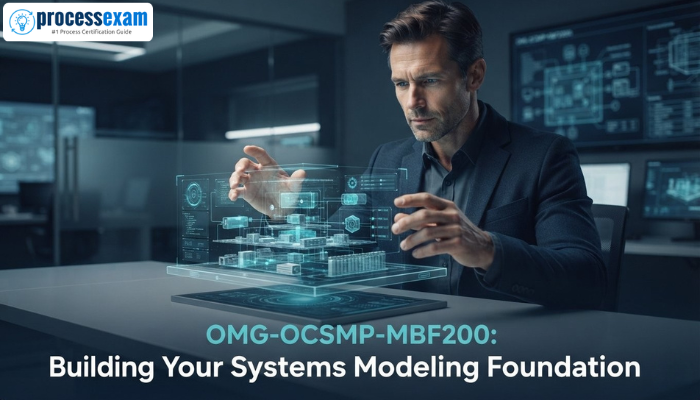
An adult man, a systems engineer, interacting with a holographic projection of a complex system model, emphasizing the

The OMG-OCSMP-MBF200 certification, known formally as the OMG-Certified Systems Modeling Professional - Fundamental, stands as a pivotal credential for professionals aiming to validate their foundational understanding and practical skills in systems modeling. Offered by the OMG (Object Management Group), this examination is designed for individuals who work with or aspire to work with systems modeling languages and methodologies, particularly SysML. This article delves into the various facets of this certification, from its core objectives and exam structure to the strategic preparation required, career benefits, and pathways for advanced professional development within the realm of systems modeling.

What Is CSSBB? What the ASQ Black Belt Changes at Work

CSSBB stands for Certified Six Sigma Black Belt, the ASQ credential for people who lead improvement projects. Passing it does not hand you a title. It changes what you are trusted with: cross-functional projects that carry a benefit target, Green Belts to coach, and a voice in how improvement work is chosen. It also adds upkeep, because ASQ asks for 18 recertification units every three years. This guide covers what shifts after the exam, and what does not.

Six Sigma Black Belt professional leading a team meeting beside data displays on a wall screen

Most pages about the CSSBB stop at the exam: how many questions, what it costs, which topics to revise. This one starts where the exam ends. The question it answers is the one a candidate asks quietly the night before booking: if I pass, what will actually be different on Monday morning, and in three years?

The honest answer has three parts. Some things change quickly, because an employer or client can now verify what you can do. Some change only when you push them, because a credential opens a door rather than walking you through it. And some things become obligations you did not have before, chiefly the recertification cycle. The sections below take each in turn, using ASQ's own pages for every figure that comes from the vendor.

ES-M APMP: Your Guide to a Confident Career Switch

A professional woman, dressed in business attire, intently reviews a digital executive summary on a tablet, showcasing focus

The ES-M APMP Micro-Certification offers a focused pathway for proposal and business development professionals aiming to refine their executive summary writing prowess and enhance their career trajectory. This specialized credential from APMP (Association of Proposal Management Professionals) validates a candidate's ability to craft concise, compelling executive summaries—a critical skill for securing successful bids and advancing in competitive professional landscapes. It is designed for individuals seeking to transition into roles requiring stronger persuasive communication, providing a structured approach to master a key aspect of proposal development. This comprehensive guide will explore the profound benefits of the ES-M APMP certification, detail effective preparation strategies, and outline how this micro-credential can serve as a powerful catalyst for a confident career switch.

Boost Your Testing Career: The CTFL Certification Edge

A professional adult man confidently overlooking a thriving city skyline at dawn, symbolizing career advancement and

The ISTQB Certified Tester - Foundation Level (CTFL) certification is a globally recognized credential designed to validate fundamental knowledge in software testing. It serves as a crucial benchmark for professionals seeking to establish a solid career in quality assurance, providing a common understanding of testing concepts, processes, and terminology. This article delves into an often overlooked strategic approach to passing the CTFL exam, offering practical insights and confidence-building advice for aspiring certified testers. Understanding the nuances of the exam and adopting a targeted preparation strategy can significantly boost your chances of success and differentiate you from the 90% who might be missing this critical edge.

Mastering the CTFL Exam Fundamentals

The ISTQB CTFL certification is a foundational stepping stone for anyone involved in software testing. This credential, known by its exam code CTFL, confirms a candidate's essential knowledge of software testing, making it highly valuable in various IT environments. For those preparing to undertake this crucial assessment, a clear understanding of its structure and prerequisites is paramount.

To successfully navigate the CTFL exam, candidates should be aware of the following key details:

  • Exam Name: ISTQB Certified Tester - Foundation Level

  • Exam Code: CTFL

  • Exam Price: USD $229, though this can vary by region and testing center.

Unlock APMP Graphics Micro-Certification with Strategic Study

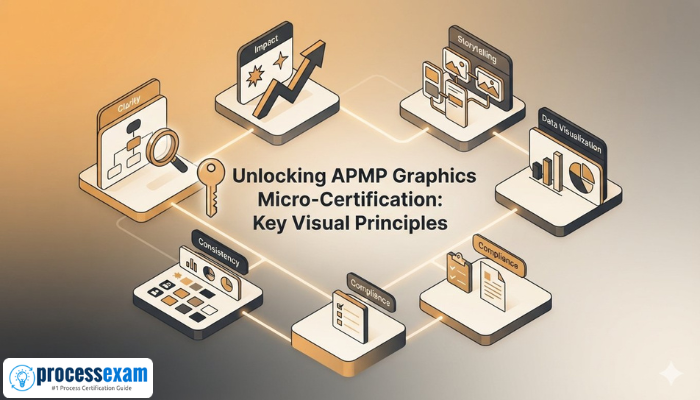
An isometric 3D illustration shows interconnected blocks representing core visual principles for the APMP GR-M APMP

APMP Graphics Micro-Certification (GR-M APMP) offers a targeted credential for proposal professionals dedicated to enhancing visual communication. This certification validates a practitioner's ability to create compelling and effective graphics that significantly improve proposal readability, impact, and win rates. It is ideally suited for proposal managers, graphic designers, technical writers, and business development professionals who understand the critical role visual elements play in conveying complex information and persuasive arguments. This comprehensive guide will equip candidates with a smart, structured approach to prepare for the APMP GR-M APMP exam, covering crucial details, strategic study methods, and the tangible benefits of achieving this specialized recognition.

Gaining Clarity on the APMP GR-M APMP Exam

The APMP Graphics Micro-Certification (GR-M APMP) is designed to assess a candidate's proficiency in applying best practices for visual communication within the proposal development lifecycle. This certification stands as a testament to one's commitment to excellence in bid and proposal management, specifically focusing on the graphical representation of information. Understanding the foundational aspects of the exam is the first step toward successful preparation.

Unlock CPGP Secrets: What Elite Pros Know About GMP

An adult man in a cleanroom examines a document, representing the precision and expertise of an ASQ Certified Pharmaceutical

The ASQ Certified Pharmaceutical GMP Professional (CPGP) certification validates an individual’s deep understanding and application of Good Manufacturing Practices within the pharmaceutical industry. This credential signifies a professional's expertise in regulatory requirements, quality systems, and operational controls essential for producing safe and effective pharmaceutical products. Earning the CPGP is crucial for quality professionals, auditors, and regulatory specialists aiming to demonstrate their mastery of global GMP principles and elevate their impact in the highly regulated pharmaceutical landscape. This advanced guide delves into the core components of the CPGP exam, offering insights into its structure, syllabus, benefits, and strategic preparation to empower candidates for success.

Evaluating the ASQ CPGP Certification Program

The ASQ Certified Pharmaceutical GMP Professional certification stands as a testament to specialized knowledge in ensuring product quality and safety across the pharmaceutical lifecycle. It is specifically designed for individuals engaged in or responsible for pharmaceutical manufacturing, quality assurance, quality control, regulatory affairs, and auditing. Pursuing the ASQ CPGP certification confirms a professional's competence in navigating complex GMP regulations and implementing robust quality systems, which are paramount in an industry where compliance directly impacts public health.

Is the IIBA Agile Analysis Certification Worth It for Business Analysts?

Yes, for most business analysts who already work in sprints, the IIBA Agile Analysis Certification is worth its $250 member or $405 non-member exam fee. It proves you can do analysis inside an agile team, not just talk about it. It is a poor fit if you never touch a backlog. This guide shows how to decide, what the exam covers and how to prepare.

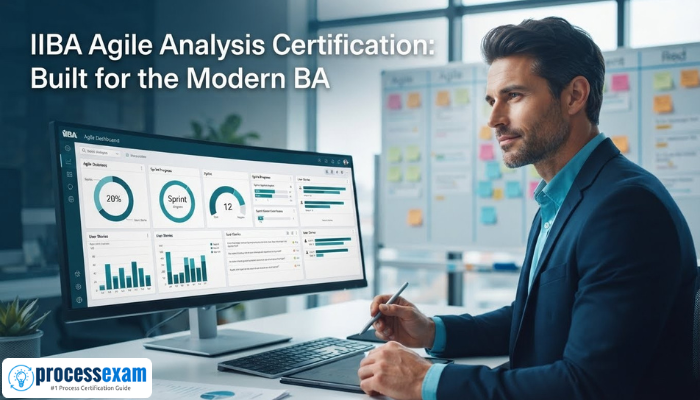
Business analyst reviewing an agile dashboard beside a sprint board in an office

Searchers often ask whether an agile certification for a business analyst is a career move or just another badge. The honest answer depends on where your work sits today. The IIBA credential, known as the AAC, is one of the few that are written for the analyst rather than the delivery manager, so the value shows up in specific situations. Below, each situation is spelled out with the exam facts, and the figures are the ones we hold for the exam in September 2026.

Is the IIBA Agile Analysis Certification worth it for a business analyst?

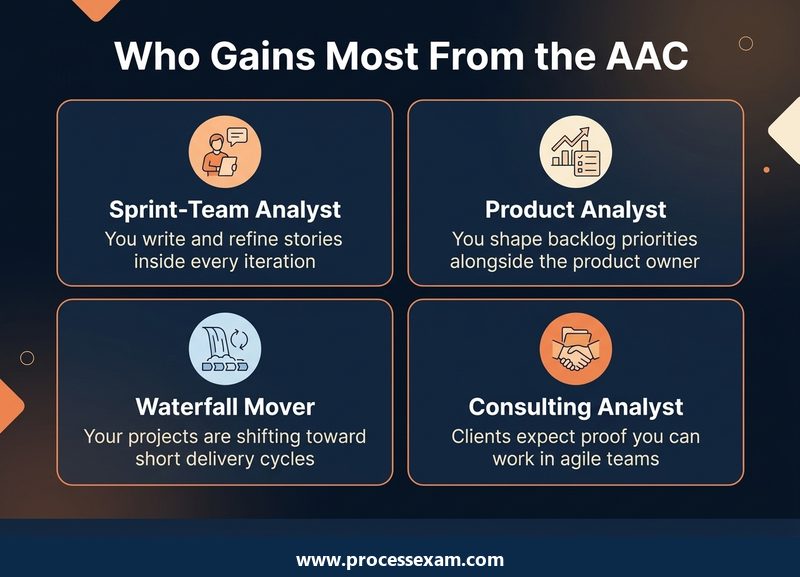
Dark card grid of four kinds of business analyst who gain most from the IIBA Agile Analysis Certification

It is worth it when three things are true: your team already delivers in short cycles, your title or your daily work involves shaping backlog items, and you want a credential that says so in the vocabulary of business analysis. It is worth less when your projects are still plan-driven, because you would be certifying a way of working you cannot practise yet.

The Pega CPSSA Secret Reshaping Senior Careers

An adult man, a Senior Pega System Architect, contemplating architectural diagrams on a futuristic screen, illustrating

The Certified Pega Senior System Architect (CPSSA) certification, identified by exam code CPSSA, stands as a pivotal credential for experienced Pega professionals aiming to validate their advanced expertise in designing and building Pega applications. This certification is specifically tailored for Senior System Architects who are proficient in leveraging the Pega Platform to develop complex business solutions, focusing on application architecture, data integration, and system security. Professionals seeking to demonstrate their capability in leading Pega development projects and ensuring optimal system performance will find this credential essential. This article delves into the core aspects of the CPSSA exam, its profound impact on career trajectories, and provides insights into effective preparation strategies, preparing candidates to harness the full potential of Pega for career acceleration.

The Certified Pega Senior System Architect Role: Architects of Digital Transformation

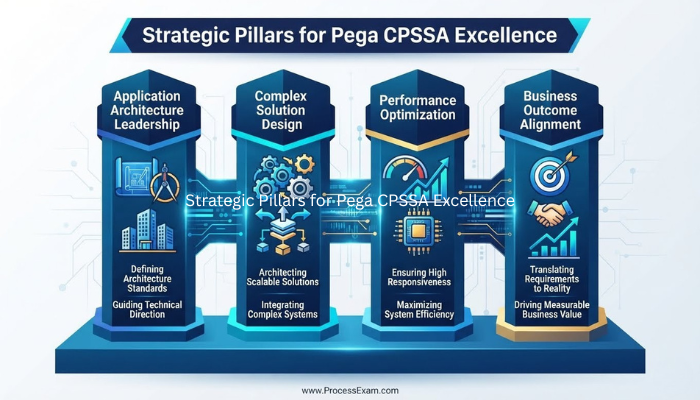
Infographic illustrating the strategic pillars of a Pega CPSSA, highlighting key responsibilities like application

Unseen Shifts: What IIBA CPOA Reveals About Tomorrow's Market

An adult woman, a product owner, gazes at a futuristic city, symbolizing strategic foresight and market analysis for IIBA

The IIBA Certificate in Product Ownership Analysis (IIBA CPOA) validates an individual's ability to effectively perform product ownership analysis, bridging the gap between strategic vision and tactical execution in agile and adaptive environments. This certification is specifically designed for product owners, business analysts, product managers, and anyone involved in defining and delivering value through product development. Professionals who earn the IIBA CPOA credential demonstrate a forward-thinking grasp of product ownership, positioning themselves as indispensable contributors in an increasingly dynamic market. This comprehensive article delves into what the IIBA CPOA reveals about future market demands, exploring its core objectives, strategic importance, and how it prepares professionals to navigate tomorrow’s unseen shifts.

ISTQB CTAL-TAE: What the Exam Costs and How It Is Scored

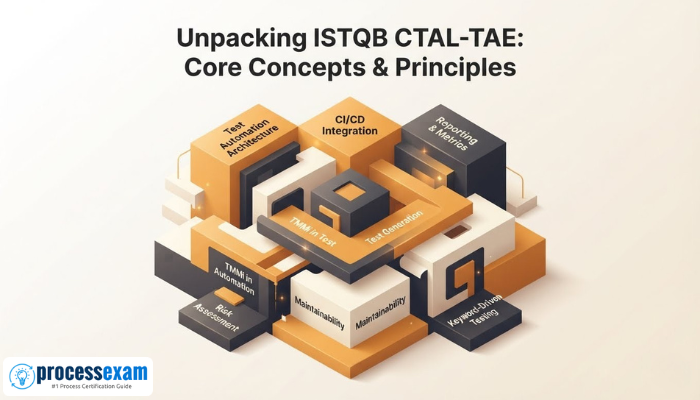
An isometric 3D illustration shows interconnected geometric blocks, each labeled with ISTQB CTAL-TAE syllabus concepts like

The ISTQB Certified Tester Advanced Level Test Automation Engineering (CTAL-TAE) certification is designed for test professionals who want to advance their skills in designing, developing, and maintaining test automation solutions. This advanced-level credential, represented by the exam code CTAL-TAE, validates a candidate's in-depth understanding of the principles, methods, and techniques required to implement robust and scalable test automation frameworks. If you're considering this specialization, this guide will clarify the path ahead, explore the syllabus, discuss preparation strategies, and reveal insights often overlooked by prospective candidates.

Understanding the ISTQB CTAL-TAE Credential

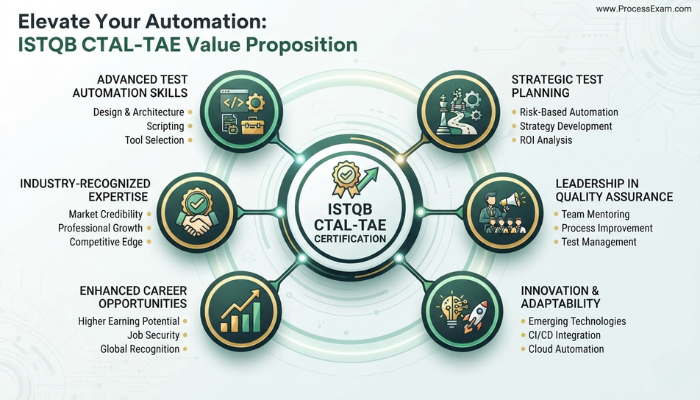
Infographic illustrating the value proposition of ISTQB CTAL-TAE certification, showing how it elevates skills, career

Syndicate content