
Unlock APMP Graphics Micro-Certification with Strategic Study
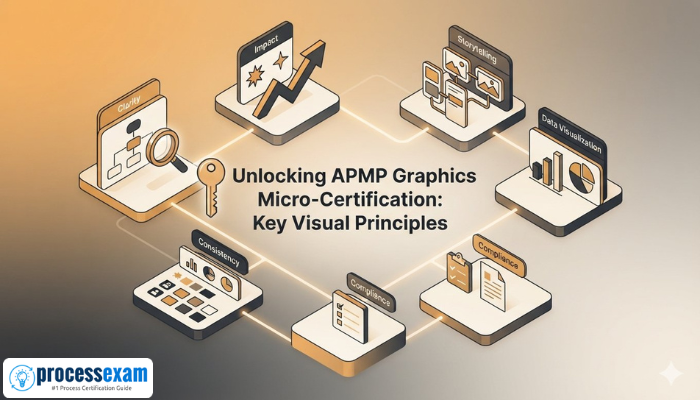
APMP Graphics Micro-Certification (GR-M APMP) offers a targeted credential for proposal professionals dedicated to enhancing visual communication. This certification validates a practitioner's ability to create compelling and effective graphics that significantly improve proposal readability, impact, and win rates. It is ideally suited for proposal managers, graphic designers, technical writers, and business development professionals who understand the critical role visual elements play in conveying complex information and persuasive arguments. This comprehensive guide will equip candidates with a smart, structured approach to prepare for the APMP GR-M APMP exam, covering crucial details, strategic study methods, and the tangible benefits of achieving this specialized recognition.
Gaining Clarity on the APMP GR-M APMP Exam
The APMP Graphics Micro-Certification (GR-M APMP) is designed to assess a candidate's proficiency in applying best practices for visual communication within the proposal development lifecycle. This certification stands as a testament to one's commitment to excellence in bid and proposal management, specifically focusing on the graphical representation of information. Understanding the foundational aspects of the exam is the first step toward successful preparation.
Decoding the APMP GR-M APMP Exam Details
The APMP GR-M APMP exam has a defined structure that candidates should familiarize themselves with to manage their study time effectively. Knowing these parameters can help in setting realistic expectations and planning an efficient preparation journey. For comprehensive exam details, candidates can explore resources such as the APMP Graphics Micro-Certification information page.
-
Exam Name: APMP Graphics Micro-Certification
-
Exam Code: GR-M APMP
-
Exam Price: APMP Members: USD $165, Nonmembers: USD $300
-
Duration: 30 Minutes
-
Number of Questions: 30
-
Passing Score: 67%
This concise structure highlights the need for focused, accurate knowledge rather than broad theoretical understanding. Each question demands a precise application of visual communication principles specific to proposal contexts.
Why Pursue APMP Graphics Certification?
Acquiring the APMP Graphics Micro-Certification offers a distinct advantage in a competitive professional landscape, distinguishing individuals who possess specialized skills in an increasingly visual world. This credential signals to employers and clients a verified capability to transform complex data and concepts into clear, persuasive graphics, crucial for impactful proposals. Beyond personal recognition, it contributes directly to organizational success by enhancing proposal quality and effectiveness. Candidates can delve deeper into the value proposition by visiting the official APMP certification page.
Elevating Professional Credibility
Certification by a respected body like APMP instantly elevates a professional's standing. It objectively validates expertise in a niche yet vital area of proposal management: visual communication. For many, it reinforces their dedication to continuous learning and adherence to industry best practices.
Unlocking Career Advantages
Professionals holding this certification often find themselves with enhanced career prospects. The demand for individuals who can effectively bridge the gap between technical content and visual storytelling is growing. This certification can lead to:
-
Specialized Roles: Opportunities in visual communication, technical illustration for proposals, or bid design.
-
Increased Earning Potential: Specialized skills are often compensated at a higher rate.
-
Competitive Edge: Stand out among peers in job applications and promotion considerations.
-
Leadership Opportunities: Position yourself as a subject matter expert, leading teams in proposal graphic development.
Boosting Proposal Success Rates
The direct impact of effective graphics on proposal success is undeniable. Proposals with well-designed visuals are more likely to be read, understood, and remembered by evaluators. This certification provides the methodologies to create graphics that:
-
Clarify Complex Information: Simplify intricate data, processes, and concepts.
-
Enhance Readability: Break up text-heavy sections, making proposals more digestible.
-
Strengthen Persuasion: Visually reinforce key messages and value propositions.
-
Improve Professionalism: Project a polished, credible image of the bidding organization.
Crafting Effective Visuals for Proposals
Successful proposal graphics extend beyond aesthetics; they serve a strategic purpose, guiding the evaluator through information and highlighting key benefits. The APMP GR-M APMP certification focuses on this practical application, emphasizing how visual elements contribute to the overall persuasiveness and clarity of a bid. Mastering this aspect involves understanding the principles of visual storytelling and information design within tight deadlines.
Strategic Integration of Graphics
Graphics should not be an afterthought but an integral part of the proposal strategy. From the initial concept development to final submission, visuals must align with the overarching message and support the narrative flow. This requires foresight and collaboration across the proposal team. Considerations include:
-
Early Planning: Identifying opportunities for graphics during outlining and storyboarding.
-
Audience Focus: Tailoring visuals to the evaluators' preferences and technical understanding.
-
Consistency: Maintaining a uniform style, color palette, and branding throughout the document.
Principles of Visual Storytelling in Proposals
Every graphic in a proposal tells a part of the story. Whether it’s a diagram explaining a solution or a chart illustrating cost savings, the visual must convey its message clearly and concisely. Effective visual storytelling uses:
-
Clarity: Graphics should be unambiguous and easy to interpret at a glance.
-
Relevance: Each visual must directly support a key point or argument.
-
Impact: Graphics should capture attention and leave a lasting impression.
-
Data Visualization: Presenting complex data in understandable formats like bar charts, line graphs, or infographics.
Understanding the broader range of micro-certifications from APMP can provide context on how this graphics credential fits into a comprehensive professional development path.
Developing a Smart Study Strategy
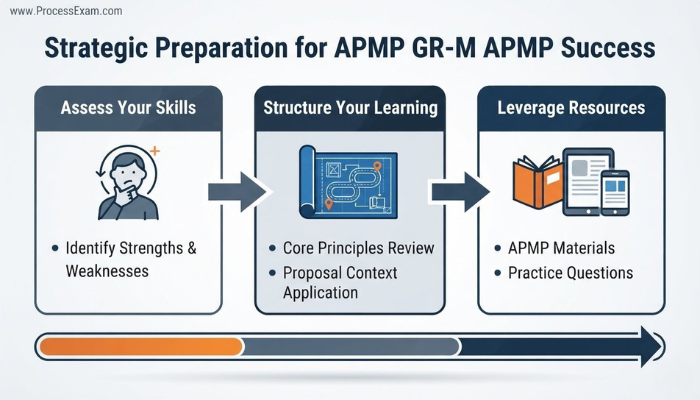
Instead of rote memorization, a smart study strategy for the APMP GR-M APMP exam involves understanding the application of visual communication principles in real-world proposal scenarios. This approach requires active learning, critical thinking, and a focus on practical problem-solving. It's about building competence, not just passing a test.
Assessing Your Current Skill Set
Begin by honestly evaluating your existing knowledge of visual communication, graphic design principles, and their application in proposal contexts. Identify areas where your understanding is strong and those that require more attention. This self-assessment forms the bedrock of a personalized study plan.
Structuring Your Learning Path
A well-structured learning path ensures comprehensive coverage of all relevant topics without wasted effort. Given the 30-minute exam duration and 30 questions, each question effectively has a one-minute time limit, emphasizing quick, accurate decision-making. Focus your study on:
-
Core Principles: Revisit fundamental design principles like layout, typography, color theory, and visual hierarchy.
-
Proposal Context: Apply these principles specifically to proposal elements such as executive summaries, technical sections, and management plans.
-
Tools and Techniques: Understand how different software tools can be used to create effective graphics, even if the exam itself isn't tool-specific.
-
Best Practices: Study established guidelines for creating compelling and compliant proposal visuals.
Leveraging APMP Resources
APMP, as the certifying body, often provides resources that can be invaluable for exam preparation. These might include white papers, webinars, or recommended reading lists focusing on proposal graphics and visual communication. Utilizing these official materials ensures alignment with the exam's objectives and the APMP's standards. Furthermore, engaging with exclusive member resources can offer deeper insights and community support.
Optimizing Your Preparation Through Practice
Theoretical knowledge is essential, but applying it under exam-like conditions is where true mastery develops. Optimizing preparation involves systematic practice, continuous self-assessment, and refinement of techniques to ensure readiness for the GR-M APMP examination. This iterative process helps solidify understanding and build confidence.
Sharpening Skills with Practice Questions
Engaging with practice questions is paramount for the APMP GR-M APMP exam. This helps familiarize candidates with the question format, identify knowledge gaps, and improve time management. Look for questions that mirror the analytical and application-based nature of the actual exam. Resources like APMP GR-M APMP certification exam sample questions can be highly beneficial for this purpose.
When tackling practice questions, consider:
-
Simulated Environment: Try to replicate exam conditions, including time limits.
-
Detailed Review: After completing a set, thoroughly review both correct and incorrect answers to understand the underlying principles.
-
Pattern Recognition: Identify recurring themes or types of questions that test similar concepts.
Developing Time Management Acumen
With 30 questions in 30 minutes, efficient time management is critical. Each question requires a quick, decisive answer. Practice helps in:
-
Pacing: Learning to allocate approximately one minute per question.
-
Quick Assessment: Rapidly understanding the question's core and potential answer choices.
-
Strategic Skipping: Knowing when to mark a difficult question for review and move on, preventing getting stuck.
Feedback and Iteration
Learning is an iterative process. Seek feedback on your practice performance, perhaps by discussing challenging questions with peers or mentors. Use this feedback to refine your understanding and adjust your study plan. This continuous loop of practice, review, and adjustment is key to optimizing your preparation.
Avoiding Common Preparation Pitfalls
Many candidates, despite their diligence, encounter obstacles that hinder effective preparation for certification exams. For the APMP GR-M APMP, specific pitfalls relate to misconceptions about visual communication or inadequate preparation strategies. Recognizing and proactively avoiding these can save time and reduce stress, leading to a smoother path towards certification.
Overlooking the "Why" Behind Visuals
A common mistake is focusing purely on the aesthetics of graphics without understanding their strategic purpose within a proposal. The exam tests the application and effectiveness of graphics, not just design proficiency. Ensure your study emphasizes:
-
Purposeful Design: Every graphic should have a clear objective, whether to inform, persuade, or clarify.
-
Audience Impact: How will the target audience (the evaluators) perceive and interpret this visual?
-
Message Reinforcement: Does the graphic strengthen the key messages of the proposal?
Neglecting Practical Application
The APMP GR-M APMP is not a theoretical exam; it assesses practical knowledge. Simply reading about visual communication is insufficient. Candidates must engage with case studies, analyze effective (and ineffective) proposal graphics, and mentally apply principles to various scenarios. Without this practical context, abstract knowledge can be difficult to recall and apply under exam pressure.
Insufficient Practice with Time Constraints
Underestimating the time pressure of 30 questions in 30 minutes is a significant pitfall. Many capable individuals struggle due to poor pacing or getting bogged down by a single challenging question. Incorporate timed practice sessions into your routine early on to build endurance and speed, ensuring you can complete the exam confidently within the given timeframe.
Realizing the Benefits for Career Trajectory
Achieving the APMP Graphics Micro-Certification is more than just adding another line to your resume; it's an investment in your professional future. It signals a specialized skill set that is highly valued in the bid and proposal industry, directly impacting your career trajectory and opening doors to new opportunities. This credential reinforces your commitment to excellence and professional development within visual communication.
Enhancing Professional Value
In a market where many professionals possess general proposal management skills, the GR-M APMP certification provides a sharp, competitive edge. It showcases your ability to not only manage proposals but also to elevate their quality through superior visual storytelling. This makes you a more valuable asset to any organization.
Expanding Network and Recognition
As an APMP-certified professional, you join an exclusive community of experts. This network provides opportunities for collaboration, mentorship, and staying abreast of industry trends. The recognition associated with APMP certification can also lead to speaking engagements, publications, and other forms of professional visibility.
Driving Organizational Impact
Your enhanced skills in visual communication directly translate into tangible benefits for your employer. By producing more compelling and compliant proposals, you contribute to increased win rates, improved client perception, and a stronger competitive position for your organization. This makes you an invaluable contributor to strategic business growth.
Sustaining Your Visual Edge
Earning the APMP Graphics Micro-Certification is a significant achievement, but the field of visual communication, particularly in digital contexts, is constantly evolving. To truly "Stop Studying Hard, Start Studying Smart" means embracing lifelong learning and continually adapting your skills to new tools, trends, and best practices. Sustaining your visual edge ensures your certification remains relevant and your skills remain cutting-edge.
Staying Abreast of Design Trends
Graphic design principles might be timeless, but their application and the tools used to implement them change frequently. Keeping up with modern design trends, software updates, and new visualization techniques ensures your proposal graphics remain fresh, impactful, and aligned with contemporary expectations.
Continuous Skill Development
The certification provides a strong foundation, but continuous practice and skill development are crucial. This might involve:
-
Experimenting with New Tools: Exploring different graphic design software or AI-powered visualization tools.
-
Attending Workshops: Participating in specialized training on data visualization, infographic design, or presentation techniques.
-
Reviewing Case Studies: Learning from successful (and unsuccessful) uses of graphics in real-world proposals.
Contributing to the APMP Community
Actively participating in the APMP community, sharing insights, and mentoring aspiring professionals can deepen your understanding and reinforce your expertise. This engagement fosters a culture of shared learning and helps you stay connected to the pulse of the industry, ensuring your knowledge is both broad and current.
Navigating the Exam Day with Confidence
The final step in your APMP GR-M APMP certification journey is the exam day itself. All your smart studying, strategic preparation, and diligent practice culminate in this 30-minute assessment. Approaching the exam with a calm, confident mindset, supported by practical readiness steps, is crucial for optimal performance.
Pre-Exam Logistics
Ensure all logistical aspects are handled well in advance. This includes:
-
Confirming Exam Details: Double-check the exact time, date, and online proctoring requirements.
-
Technical Checks: If taking the exam remotely, verify your internet connection, computer hardware, and webcam are functioning perfectly.
-
Environment Preparation: Create a quiet, distraction-free space for the duration of the exam.
Mindset and Strategy During the Exam
On exam day, adopt a strategic mindset focused on accuracy and efficiency. Remember the time constraint:
-
Read Carefully: Even under pressure, take a moment to fully understand each question and all answer choices before selecting.
-
Trust Your Preparation: Rely on the knowledge and skills you've meticulously built through smart study.
-
Manage Time Actively: Keep an eye on the clock. If a question is proving too difficult, make an educated guess or mark it for review if the platform allows, and move on.
-
Review (if time permits): If you finish early, use any remaining time to review marked questions or double-check answers.
Confidence on exam day stems from thorough preparation. By following a smart study plan and addressing potential pitfalls, you will be well-equipped to demonstrate your proficiency and successfully achieve your APMP Graphics Micro-Certification.
Conclusion
The APMP Graphics Micro-Certification (GR-M APMP) serves as a powerful testament to a professional's expertise in visual communication within proposal management. This article has outlined a strategic pathway, moving beyond mere hard work to smart, targeted preparation. By understanding the exam structure, valuing the career benefits, and employing effective study techniques—including ample practice and critical self-assessment—candidates can approach the GR-M APMP exam with confidence and precision. Investing in this certification is not just about passing an exam; it's about cementing your role as a vital contributor to successful bids and advancing your professional trajectory.
Ready to solidify your expertise and elevate your proposal graphics? Equip yourself with the right tools and knowledge. Begin your journey toward certification by exploring premium exam resources designed to refine your skills and enhance your preparation, ensuring you are thoroughly prepared to achieve the APMP Graphics Micro-Certification.
FAQs
1. What specific skills does the APMP GR-M APMP certification validate?
The APMP GR-M APMP certification validates a professional's ability to apply best practices for visual communication and graphic design within the context of proposal development. It confirms skills in creating clear, compelling, and persuasive graphics that enhance proposal readability and impact.
2. Who is the target audience for the APMP Graphics Micro-Certification?
This certification is designed for proposal managers, graphic designers, technical writers, business development professionals, and anyone involved in creating or overseeing visual elements within proposals who seeks to specialize and formalize their expertise in this critical area.
3. How does this micro-certification differ from broader APMP certifications?
The APMP Graphics Micro-Certification is a highly specialized credential focusing exclusively on visual communication and graphics within proposals. Broader APMP certifications (like Foundation, Practitioner, Professional) cover the full spectrum of bid and proposal management competencies, while micro-certifications offer targeted validation in specific niche areas.
4. Is prior experience in graphic design required to attempt the GR-M APMP exam?
While formal graphic design experience is beneficial, it is not strictly required. Candidates should possess a strong understanding of visual communication principles, information design, and their application in persuasive documents like proposals, which can be gained through various forms of professional experience or dedicated study.
5. What are the continuing education requirements for maintaining APMP Graphics Micro-Certification?
APMP certifications typically require ongoing professional development and recertification to ensure practitioners maintain current knowledge and skills. Specific details regarding continuing education units (CEUs) or recertification pathways for micro-certifications can be found on the official APMP website, as policies may vary.
- APMP Graphics Exam Questions |
- APMP Graphics Question Bank |
- APMP Graphics Questions |
- GR-M APMP Question Bank |
- APMP GR-M APMP BOK PDF |
- GR-M APMP Exam Questions Download |
- GR-M APMP Test Questions |
- APMP Graphics Book |
- APMP Graphics Study Guide |
- APMP GR-M APMP Exam |
- APMP Exam |
- GR-M APMP |
- GR-M APMP Exam |
- GR-M APMP Certification |
- GR-M APMP Practice Test |
- GR-M APMP Study Guide PDF |
- GR-M APMP Study Guide Material |
- Graphics |
- Graphics Certification |
- Graphics Certification Cost |
- Graphics Certification Requirements |
- APMP Graphics Micro-Certification |
- APMP Graphics Sample Questions |
- APMP GR-M APMP Quiz |
- GR-M APMP Questions |
- GR-M APMP Sample Exam |
- Graphics PDF |
- APMP Graphics Test Questions |
- GR-M APMP Body of Knowledge (BOK) |
- Graphics Simulator |
- Graphics Mock Exam


