admin's blog

Unseen Shifts: What IIBA CPOA Reveals About Tomorrow's Market

An adult woman, a product owner, gazes at a futuristic city, symbolizing strategic foresight and market analysis for IIBA

The IIBA Certificate in Product Ownership Analysis (IIBA CPOA) validates an individual's ability to effectively perform product ownership analysis, bridging the gap between strategic vision and tactical execution in agile and adaptive environments. This certification is specifically designed for product owners, business analysts, product managers, and anyone involved in defining and delivering value through product development. Professionals who earn the IIBA CPOA credential demonstrate a forward-thinking grasp of product ownership, positioning themselves as indispensable contributors in an increasingly dynamic market. This comprehensive article delves into what the IIBA CPOA reveals about future market demands, exploring its core objectives, strategic importance, and how it prepares professionals to navigate tomorrow’s unseen shifts.

ISTQB CTAL-TAE: What the Exam Costs and How It Is Scored

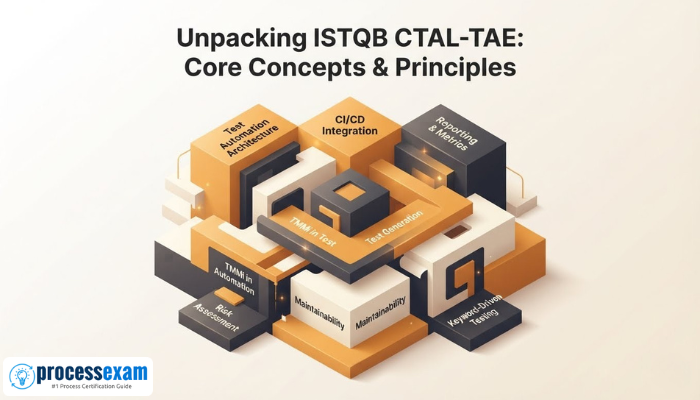
An isometric 3D illustration shows interconnected geometric blocks, each labeled with ISTQB CTAL-TAE syllabus concepts like

The ISTQB Certified Tester Advanced Level Test Automation Engineering (CTAL-TAE) certification is designed for test professionals who want to advance their skills in designing, developing, and maintaining test automation solutions. This advanced-level credential, represented by the exam code CTAL-TAE, validates a candidate's in-depth understanding of the principles, methods, and techniques required to implement robust and scalable test automation frameworks. If you're considering this specialization, this guide will clarify the path ahead, explore the syllabus, discuss preparation strategies, and reveal insights often overlooked by prospective candidates.

Understanding the ISTQB CTAL-TAE Credential

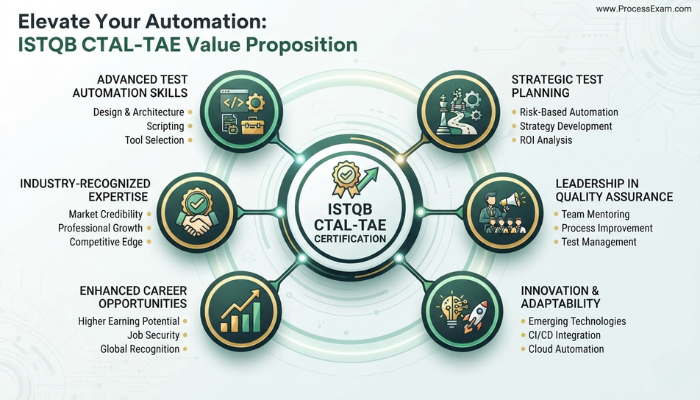
Infographic illustrating the value proposition of ISTQB CTAL-TAE certification, showing how it elevates skills, career

What Is ASCM CLTD? Your Essential Beginner's Guide

An adult woman, a logistics manager, stands before a holographic map of global shipping routes, embodying strategic control

The ASCM CLTD (Certified in Logistics, Transportation and Distribution) is a globally recognized certification offered by ASCM that validates a professional’s comprehensive understanding of logistics, transportation, and distribution processes. This credential, identified by the CLTD exam code, equips individuals with the essential knowledge to optimize efficiency, reduce costs, and enhance customer satisfaction throughout the supply chain. This essential beginner's guide provides a clear overview of the certification's purpose, benefits, eligibility, and effective preparation strategies, offering a vital starting point for anyone considering this esteemed professional credential. It will clarify what the ASCM CLTD entails, who can benefit from it, and how to embark on the certification journey successfully.

Grasping the ASCM CLTD Certification Fundamentals

An infographic titled "ASCM CLTD - Core Areas of Logistics Expertise" showing interconnected modular cards for inventory

How to Prepare for the ASQ CCQM Exam: A Study Guide for Site Engineers

A site engineer who signs off pours, raises nonconformance reports and walks punch lists every week can still be caught out by the ASQ CCQM, because most of its scored questions ask you to design, evaluate or decide rather than recall. The exam is open book, has 165 questions, runs for 258 minutes and passes at 550/750. This guide shows which parts you already know from site work and which you have to learn on purpose.

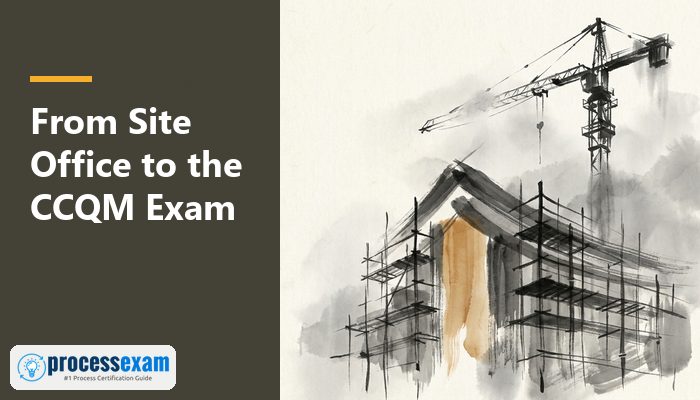
Ink-wash drawing of a building under construction with a crane

AI and IASSC ICBB: What Black Belts Need to Know

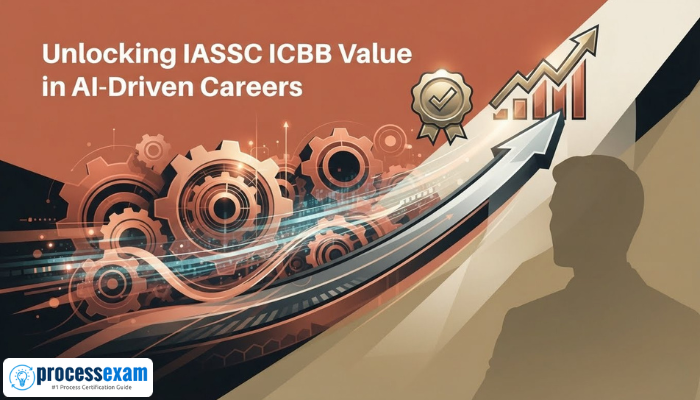
A dynamic digital illustration depicts abstract gears and data streams feeding into an upward career trajectory, symbolizing

The IASSC Certified Lean Six Sigma Black Belt (IASSC ICBB) credential signifies mastery of advanced Lean Six Sigma principles and methodologies, validating an individual's ability to lead complex improvement projects. Professionals holding this esteemed certification are crucial in driving operational excellence, reducing waste, and improving process performance within organizations. However, the landscape of process improvement is rapidly transforming, largely due to the pervasive and disruptive influence of Artificial Intelligence (AI). This article delves into the critical implications of AI for IASSC ICBB holders, outlining how this technological shift impacts existing skills, demands new competencies, and reshapes the future of process excellence.

ServiceNow Certified Application Developer Roadmap: CAD Exam to Career

Updated on 22 September 2026. What’s new: exam booking corrected to Pearson VUE, and the Managing Applications domain now covers Git source control and delegated development

If your CAD notes still say the exam is booked through Kryterion, they are out of date: ServiceNow exams are now scheduled through Pearson VUE. What has not moved is the shape of the test. The ServiceNow Certified Application Developer exam still asks 60 questions in 90 minutes, costs USD $300 and returns a Pass / Fail result. This roadmap covers the current facts, the six domains, one practice app that touches all of them, and an eight-week plan.

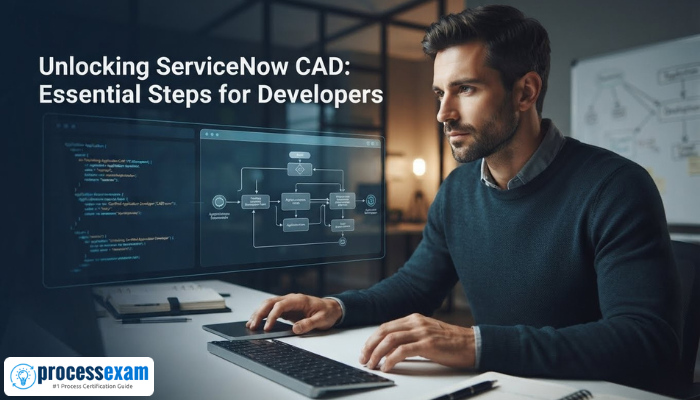
Developer at a keyboard beside a flow diagram, with the title Unlocking ServiceNow CAD Essential Steps for Developers

CAD sits one level above the administrator credential in ServiceNow's platform track. An administrator configures what the platform already offers; an application developer builds something new on it, inside its own application scope, with its own tables, scripts, security rules and automation. The exam is written to find out whether you can make those build decisions correctly, not whether you can recite menu paths.

The guide is written for three kinds of reader: administrators who have started writing scripts and want the credential that proves it, developers from other platforms who are new to ServiceNow's way of doing things, and people who already failed CAD once and want to know what to change. Each section answers one question a candidate asks on the way from first look to booked exam.

How to Get PRINCE2 Foundation Certification (Version 7)

You take over a project that is already in trouble: the money is mostly spent, the sponsor has stopped coming to meetings, and nobody can show you who approved the last three changes. PRINCE2 is built to stop a project reaching that point. To be certified in it, you pass PeopleCert's PRINCE2 Foundation (Version 7) exam: 60 multiple-choice questions in 60 minutes, closed book, 60% to pass, and no prerequisites.

Candidate reading a PRINCE2 Foundation study guide at a desk with a laptop and notes

This guide starts with the failing project, because that is the fastest way to see why the method is shaped the way it is. It then covers how PRINCE2 certification works, what the seventh edition changed, how the Foundation exam is run, the order in which to study, the terms that trip people up, how renewal works now, and where Foundation fits beside Practitioner and PMP.

What would PRINCE2 have caught on a project that was already failing?

Go back to the project you inherited and ask a simple question at each point where it went wrong: which part of PRINCE2 would have raised a hand? The answers map almost one for one onto what the Foundation exam tests.

The business case nobody reopened

Most failing projects were justified once, at the start, and never again. The costs grew, the expected benefits shrank, and the project kept going because stopping felt like admitting a mistake. PRINCE2's first principle, continued business justification, requires the business case to be checked at every stage end. If the case no longer holds, the project board changes it or closes the project. A project that is allowed to die early is a PRINCE2 success, not a failure.

Open Group OGEA-10B: The Definitive EA Credibility Boost

A futuristic 3D render showing an abstract architectural structure rising upwards with glowing strategic symbols

The Open Group OGEA-10B certification serves as a pivotal credential for experienced Enterprise Architecture professionals seeking to validate their understanding and practical application of the TOGAF Standard, Version 9.2. Formally known as The Open Group TOGAF Enterprise Architecture Practitioner Bridge, this exam is specifically designed for individuals who already hold a foundational TOGAF certification and aim to elevate their expertise to a practitioner level. It emphasizes the real-world use of the TOGAF framework within complex organizational contexts, moving beyond theoretical knowledge to practical application. Candidates pursuing the Open Group OGEA-10B demonstrate a commitment to advancing their strategic architecture capabilities, positioning themselves as indispensable assets in driving business transformation and operational efficiency. This comprehensive article delves into the OGEA-10B exam objectives, preparation strategies, benefits for career progression, and practical insights to ensure a well-informed certification journey, covering what the certification means for professional credibility and market value.

ICYB Exam Guide: IASSC Yellow Belt Cost, Syllabus and Study Plan

Updated on 29 September 2026. What’s new: iassc keeps a yellow belt current for three years, then a 30-question recertification exam is needed to renew it

Your manager has asked you to join a Lean Six Sigma project, and the Green Belt running it suggests you get a Yellow Belt first. The ICYB is that exam: the IASSC Certified Lean Six Sigma Yellow Belt, 60 multiple-choice and true/false questions in 120 minutes, a 70% pass mark and a USD $250 fee, with no prerequisites. It tests the Define, Measure and Control topics at foundation level. This guide covers what each topic asks, a worked example, a four-week study plan and how the certificate stays current.

Professional reviewing IASSC ICYB Yellow Belt study materials on a laptop at a tidy desk

What does ICYB mean, and what does the exam involve?

ICYB is the short name for the IASSC Certified Lean Six Sigma Yellow Belt, the entry-level credential from the International Association for Six Sigma Certification. IASSC describes the holder as someone who knows the foundations of Lean Six Sigma, can lead a limited improvement project, or can act as a team member on a larger project run by a Green Belt or Black Belt, usually in a part-time role.

The person who passes is not expected to design experiments or run regression models. They are expected to recognise waste, describe a process clearly, read basic statistics and graphs, judge whether a measurement can be trusted, and keep an improvement in place once the team has made it. That practical, supportive level shapes every question on the paper.

The figures below are the ones to plan around.

Stop Guessing: A New CPOP Roadmap Emerges

An adult man, a CPOP leader, confidently assessing a strategic vision board in a high-rise office, representing leadership

The ServiceNow Certified Platform Owner Professional (CPOP) certification is designed for professionals who steer the strategic direction and operational health of the ServiceNow platform within their organizations. This credential validates an individual's comprehensive understanding of how to maximize platform value, align it with business objectives, and foster a robust ecosystem that drives digital transformation. It is ideally suited for architects, senior administrators, product owners, and strategic leaders responsible for the long-term success and governance of their ServiceNow instances. This article lays out a clear roadmap for understanding the CPOP certification, preparing for the exam, and leveraging its benefits to advance your career and organizational impact.

Examining the CPOP Certification Framework

To truly lead the ServiceNow platform's evolution, understanding the certification's underlying structure and key knowledge areas is paramount. The CPOP credential signifies a strategic level of expertise, moving beyond technical implementation to encompass governance, strategy, and stakeholder management. This section breaks down the core components of the CPOP examination.

Syndicate content