admin's blog

Pass FINRA Series 79: Mistakes to Avoid and How Long to Study

To pass the FINRA Series 79, give most of your study time to data analysis and valuation, learn the offering and M&A rules by when they apply, and practise under the real clock: 75 questions in 150 minutes, with a passing score of 73. Most candidates who fail do so for predictable reasons, and this guide shows each mistake, how long to study, and how to recover if a first attempt goes wrong.

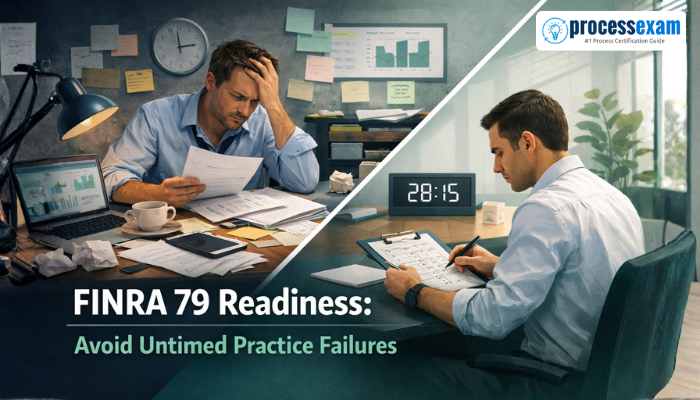
FINRA Series 79 readiness contrasting chaotic untimed study with focused timed practice

The Series 79, formally the FINRA Investment Banking Representative Exam, qualifies professionals to advise on and facilitate investment banking work: debt and equity offerings, private placements, mergers and acquisitions, tender offers and financial restructurings. It is a demanding exam because it tests judgement as much as recall. Questions describe a deal, a filing or a valuation and ask what a representative should do next.

This article keeps the practical focus of the original: the mistakes that cost candidates the exam. Around them it adds the exam facts, the content outline, a realistic study timeline, an exam-day routine and a plan for anyone who has already failed once.

What is the FINRA Series 79 exam, and who needs it?

The Series 79 is a representative-level qualification exam. Anyone at a FINRA member firm whose job involves advising on or facilitating investment banking transactions generally needs it, which usually means analysts and associates in investment banking, capital markets and corporate finance advisory teams. The registration it leads to is the Investment Banking Representative.

Why Your Experience Isn't Enough: CCRM Certification

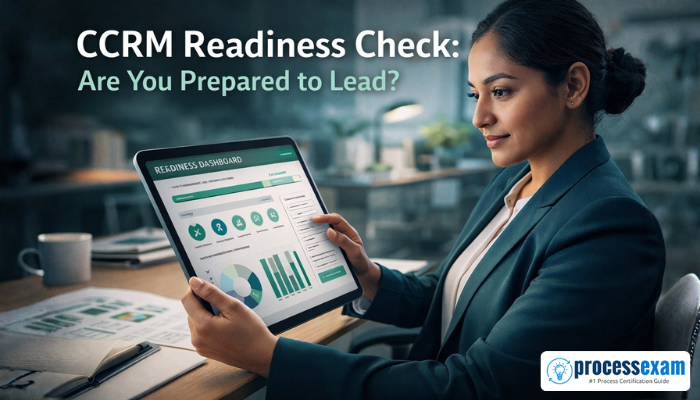
A professional reviewing a digital readiness dashboard on a tablet, symbolizing preparation and strategic thinking for the CCRM exam.

The PRMIA Credit and Counterparty Risk Management (CCRM) certification offers a robust framework for professionals seeking to formally validate and enhance their expertise in a critical area of finance. This credential, awarded by PRMIA, serves as a vital benchmark for understanding, measuring, and mitigating credit and counterparty risks across various financial institutions. Geared towards both emerging risk professionals and seasoned veterans, this article unpacks the profound value of the CCRM certification, clarifying why even extensive practical experience benefits significantly from formal accreditation and what pathways exist for diverse backgrounds.

PRMIA ORM Preparation Strategy: Expert Tips That Actually Work

Illustration of professionals collaborating with a presentation board, highlighting time management tips for PRMIA ORM exam success.

The pressure of preparing for a high-stakes certification like the PRMIA ORM exam is real. You’re balancing concepts, practice questions, time constraints and the constant doubt of “Am I doing enough?”

Here’s the truth: passing the PRMIA ORM Certification isn’t about studying harder. It’s about studying smarter with a structured, strategic approach that aligns with how the exam is designed.

This guide delivers exactly that. You’ll get a proven roadmap, practical study methods, and expert-backed tips to help you succeed in your Operational Risk Management Certification journey.

What Is PRMIA ORM Certification?

The PRMIA ORM Certification, offered by Professional Risk Managers' International Association, is a globally recognized credential focused on operational risk frameworks, governance, and real-world application.

It validates your ability to:

How to Build a Finance Career with the SIE Certification

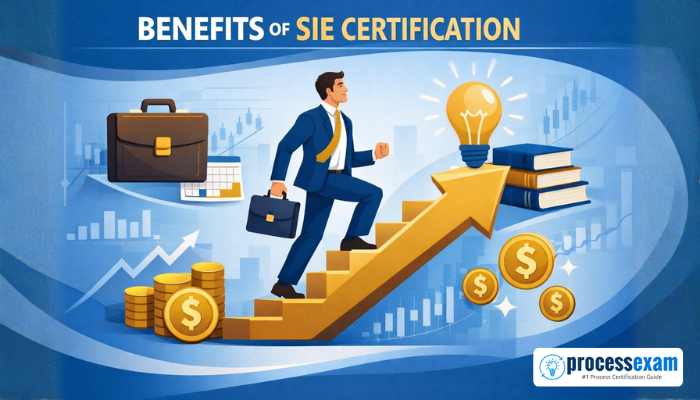
Professional climbing an upward arrow with finance icons illustrating career growth and benefits of SIE certification.

Breaking into the finance industry can feel overwhelming especially when every job seems to demand experience you don’t yet have. The SIE Certification changes that equation. It opens doors for beginners, helping you prove your foundational knowledge and readiness for a career in finance even before landing your first job.

Whether you’re a student, career switcher, or aspiring financial professional, this guide walks you through everything you need to know from understanding the FINRA SIE exam to building a thriving finance career after SIE.

What Is the SIE Certification?

The SIE Certification, also known as the Securities Industry Essentials Exam, is an entry-level qualification administered by FINRA (Financial Industry Regulatory Authority).

Unlike many finance certifications, the SIE exam:

  • Does not require sponsorship from a firm

MLARM Certification: What It Does for a Financial Risk Career

MLARM will not hand you a new job title, but it gives a market risk officer, treasury analyst or finance controller a checkable way to show they understand the trading book and the balance sheet. PRMIA's exam is 60 multiple-choice questions in 2 hours, 60% is needed to pass, and the fee runs from $549 to $599 depending on membership tier.

Treasury risk analyst reviewing liquidity charts on two monitors on a bank trading floor

PRMIA calls the credential a certificate, and most people search for it as the MLARM certification. Either way it covers three things that banks and treasuries return to after every crisis: market risk, liquidity risk and asset liability management. This guide looks at it from the career side. It asks who actually benefits, what the credential does and does not prove, what it costs, and how to fit the study around a job you already have. The exam facts come from PRMIA's MLARM certificate page and its candidate guidebook, revised March 2024, which were the current documents when this article was checked in October 2026.

CIS-DF Exam: 10 Proven Tips to Pass ServiceNow Data Foundations

To pass the ServiceNow CIS-DF exam, you need a working command of the CMDB, the Common Service Data Model (CSDM), CMDB health and the Identification and Reconciliation Engine, plus enough hands-on time to answer scenario questions. The exam has 75 questions in 90 minutes, costs USD $450 and is scored Pass / Fail. The ten tips below turn that into a two-week plan.
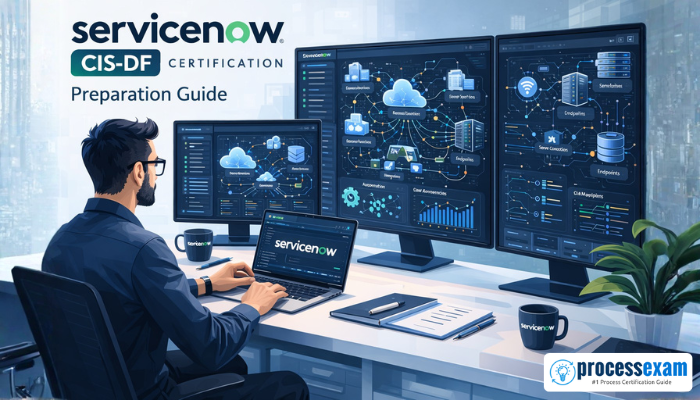
CIS-DF exam preparation checklist with steps for CMDB fundamentals, practice questions and mock tests

The Certified Implementation Specialist – Data Foundations (CMDB and CSDM) credential, known as CIS-DF, checks whether you can build and keep a trustworthy configuration management database on the ServiceNow platform. Clean configuration data sits underneath incident, change, discovery, service mapping and asset work, so this exam has become one of the most useful implementation specialist credentials for anyone who works with ServiceNow data.

This guide explains what the exam covers, how difficult it is, and exactly how to prepare. It is written for ServiceNow administrators, implementers, consultants and CMDB managers who want to pass on the first attempt without wasting weeks on the wrong material.

What is the ServiceNow CIS-DF certification, and who should take it?

CIS-DF is a ServiceNow implementation specialist certification focused on data foundations: how configuration items are modelled, related, identified, reconciled and governed. It sits alongside the other CIS exams, but it is different in one important way. Most implementation specialist exams test one product. CIS-DF tests the data layer that every product depends on.

PRMIA APRM Certification: Risk Career Guide and Study Plan

Risk teams hire people who can already speak the language of the desk: exposure, capital, governance, model limits. The PRMIA Associate PRM certificate is how many analysts, auditors, accountants and systems staff prove they can, long before they have years of front-line risk work behind them. It is one exam, 90 multiple-choice questions in 180 minutes with 60% to pass, and this guide covers how to earn it.

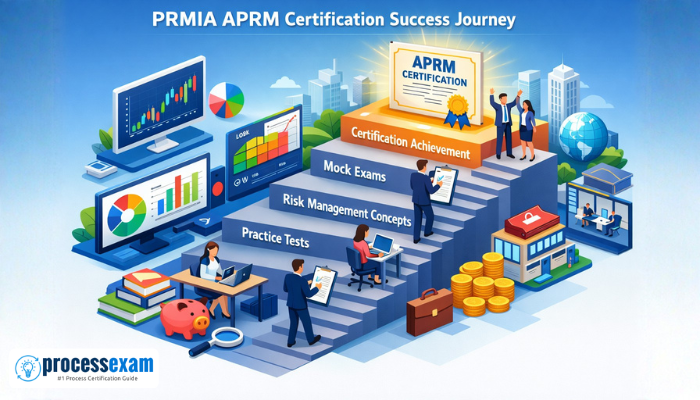
PRMIA APRM certification journey from risk management study to practice tests and certification success

APRM is the short name for the Associate Professional Risk Manager certificate, awarded by the Professional Risk Managers' International Association (PRMIA). PRMIA positions it for staff entering the risk profession and for the people who meet risk work from the side: auditing, accounting, legal, research and systems roles that still need to understand how risk is measured, reported and controlled.

What follows answers the questions candidates in that position actually ask. Which roles the certificate supports. Whether you are eligible to enrol. What the nine exam domains ask and how many questions each one carries. When you can sit the exam and how it is delivered. How the certificate differs from PRMIA's PRM designation. What it costs. And how to turn eight weeks of evenings into a pass.

Series 82 Exam Prep: Secrets to Pass on Your First Attempt

Updated on 19 September 2026. What’s new: exam time corrected to 90 minutes, with FINRA's current question count, fee and passing score of 70.

To pass the FINRA Series 82 exam on your first attempt, you need exact command of private placement rules, above all Regulation D, plus timed practice on scenario questions. The exam has 50 questions in 90 minutes, costs USD $100 and needs a passing score of 70. Half of it tests how you seek business for private offerings, so study that area first and hardest.

Finance professional reviewing Series 82 exam papers with warning icons for common preparation mistakes

The Series 82, FINRA's Private Securities Offerings Representative Exam, qualifies a representative to solicit and sell private placement securities as part of a primary offering. It is shorter and narrower than the Series 7, and that is exactly why many candidates underestimate it. The questions go deep into a small body of rules: exemptions from registration, accredited investor status, placement agent duties, suitability and the records a firm must keep.

This guide explains what the exam covers, how hard it really is, how long to study, the details most candidates miss, what to do on test day and what to do if you have already failed once. Every exam figure below comes from FINRA's published exam details.

Series 22 License: What DPPs Are and How to Pass the Exam

A direct participation program is an ordinary business - an apartment block, an oil
well, a fleet of leased equipment - wrapped in a limited partnership so that its income,
losses, deductions and credits pass straight through to the investors instead of being taxed
at the entity first. The Series 22 licenses you to sell interests in those programs. Most
candidates meet the product for the first time in this exam, which is why it feels unfamiliar
even to people who have sold securities for years.

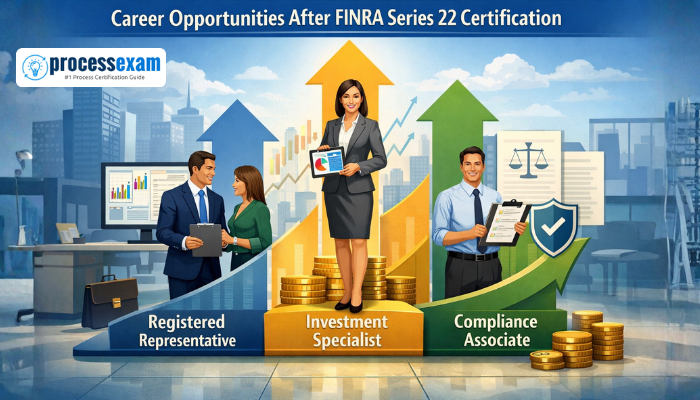
Career roles after FINRA Series 22 registration - registered representative, investment specialist, compliance associate

That unfamiliarity, not the length of the exam, is what catches people out. The Series 22
is short: 50 scored questions and 90 minutes. But almost every question assumes you already
know how a limited partnership behaves, who carries the liability, which costs are deductible
and which are not, and why an interest that cannot be sold on next week is not automatically
unsuitable. This guide starts with the product, then works outward to the exam that tests
it.

What exactly is a direct participation program?

The phrase is literal. In a direct participation program the investor participates
directly in the cash flow and the tax items of the underlying business. There is no corporate
layer in between taking a bite of the profits first. FINRA's content outline calls this the
conduit nature of the entity: the program files an informational return on IRS
Form 1065, allocates each partner a share of profits, losses, deductions and credits, and
reports that share to the investor on a Schedule K-1. The investor pays the tax.

ISTQB CT-GenAI Syllabus v1.1: What the Exam Rewards

Updated on 23 September 2026. What’s new: the pass mark is 30 of 46 points, ISTQB Foundation Level is a required entry condition, and the syllabus in force is v1.1 of 27 April 2026

ISTQB runs the CT-GenAI exam on syllabus v1.1, dated 27 April 2026. The paper is 40 multiple-choice questions in 60 minutes, marked out of 46 points, and 30 of those points pass you. What that scoring hides is how uneven the module is: one chapter of the five, prompt engineering, is worth 16 points on its own. Study time spread evenly across the syllabus is study time spent badly.

ISTQB CT-GenAI certification cover with a robot beside a neural network screen

This article works through the module the way the exam is actually built: the version in force, the entry condition, the shape of the paper, the point weight of each chapter, and then the two chapters that decide most results. Every figure below comes from one of three places, and each one is named where it appears -- the ISTQB certification page for CT-GenAI, the ISTQB Exam Structures and Rules tables, and the CT-GenAI syllabus itself. Figures were checked in September 2026.

Which syllabus version does the CT-GenAI exam run on right now?

Version 1.1, released on 27 April 2026. The module first appeared as v1.0 on 25 July 2025, so the certification is barely a year old, and v1.1 is recorded in the syllabus revision history as a minor update rather than a rewrite. The chapter structure survived it: five examinable chapters, the same names, the same recommended teaching minutes. What changed is wording and detail inside the sections, which matters if you are studying from a copy you downloaded last year.

Syndicate content