
Boost Your Testing Career: The CTFL Certification Edge

The ISTQB Certified Tester - Foundation Level (CTFL) certification is a globally recognized credential designed to validate fundamental knowledge in software testing. It serves as a crucial benchmark for professionals seeking to establish a solid career in quality assurance, providing a common understanding of testing concepts, processes, and terminology. This article delves into an often overlooked strategic approach to passing the CTFL exam, offering practical insights and confidence-building advice for aspiring certified testers. Understanding the nuances of the exam and adopting a targeted preparation strategy can significantly boost your chances of success and differentiate you from the 90% who might be missing this critical edge.
Mastering the CTFL Exam Fundamentals
The ISTQB CTFL certification is a foundational stepping stone for anyone involved in software testing. This credential, known by its exam code CTFL, confirms a candidate's essential knowledge of software testing, making it highly valuable in various IT environments. For those preparing to undertake this crucial assessment, a clear understanding of its structure and prerequisites is paramount.
To successfully navigate the CTFL exam, candidates should be aware of the following key details:
-
Exam Name: ISTQB Certified Tester - Foundation Level
-
Exam Code: CTFL
-
Exam Price: USD $229, though this can vary by region and testing center.
-
Duration: 60 Minutes, requiring efficient time management during the test.
-
Number of Questions: 40 multiple-choice questions designed to assess foundational knowledge.
-
Passing Score: Candidates must achieve at least 26 out of 40 correct answers, translating to a 65% pass mark.
There are no formal prerequisites to sit for the ISTQB CTFL exam, making it accessible to individuals at various stages of their careers, from fresh graduates to experienced professionals looking to formalize their testing knowledge. However, a solid grasp of software development and testing concepts through self-study or training courses is highly recommended.
Deconstructing the CTFL Syllabus Domains
A thorough understanding of the ISTQB CTFL exam syllabus is the bedrock of a successful preparation strategy. The syllabus is meticulously structured to cover essential testing principles and practices, ensuring certified individuals possess a comprehensive understanding of the field. Each domain carries specific learning objectives and often contributes differently to the overall exam weight, though exact weightage distribution is not explicitly provided.
The CTFL exam syllabus is organized into several key areas:
-
Fundamentals of Testing: This core section introduces the basic principles of testing, its purpose, the psychology of testing, and the seven testing principles. It lays the groundwork for all subsequent topics.
-
Testing Throughout the Software Development Lifecycle: Explores how testing integrates with different software development models (e.g., V-model, Agile), covering test levels (component, integration, system, acceptance) and test types (functional, non-functional, white-box, black-box).
-
Static Testing: Focuses on testing without executing code, primarily through reviews and static analysis. This includes understanding the review process, roles, and different types of reviews (walkthroughs, inspections).
-
Test Analysis and Design: Covers the techniques used to identify test conditions and design test cases. Topics include black-box test techniques (equivalence partitioning, boundary value analysis, decision table testing, state transition testing) and white-box test techniques (statement and decision coverage).
-
Managing the Test Activities: Addresses test organization, planning, estimation, monitoring, and control. It also touches upon configuration management, risk management, and incident management within testing.
-
Test Tools: Provides an overview of various types of test tools, their effective use, and the benefits and risks associated with their implementation in the testing process.
Candidates should allocate their study time proportional to the depth and complexity of these syllabus topics. Each area is interconnected, building a holistic view of software testing. For detailed explanations and official terminology, candidates can refer to the ISTQB Glossary, an invaluable resource for clarifying definitions and concepts.
Crafting Your CTFL Preparation Blueprint
Successful preparation for the ISTQB CTFL certification extends beyond merely memorizing facts; it involves adopting a systematic and strategic approach to learning. Many test-takers underestimate the breadth of the syllabus and the need for practical application of concepts, which is where a robust preparation blueprint becomes indispensable.
Strategic Study Material Selection
Selecting the right study materials is critical. While numerous resources exist, focusing on official and highly recommended materials ensures alignment with the exam's objectives.
-
Official Syllabus and Sample Papers: Always start with the official ISTQB CTFL syllabus, as it outlines exactly what will be tested. Supplement this with official sample papers to understand the question style and depth required.
-
Accredited Training Courses: Consider enrolling in an accredited ISTQB CTFL training course online. These courses are often taught by experienced professionals and provide structured learning, covering all syllabus topics in detail. They can also offer practical exercises and insights not easily gained through self-study alone.
-
Study Guides and Textbooks: Reputable study guides and textbooks specifically designed for the CTFL exam can provide comprehensive explanations, examples, and review questions. Look for those endorsed by testing professionals or published by well-known industry authors.
-
Online Forums and Communities: Engaging with online testing communities and forums can provide valuable peer support, clarification on difficult topics, and shared learning experiences.
Focusing on quality over quantity for study materials ensures you gain a deep understanding of the core concepts rather than getting overwhelmed by disparate information.
Leveraging Practice Exams for CTFL Success
One of the most ignored strategies by a significant portion of test-takers is the intelligent use of practice exams. Simply taking a mock test isn't enough; the real value lies in analyzing performance and learning from mistakes.
-
Simulate Exam Conditions: Take practice exams under timed conditions to get accustomed to the 60-minute duration. This helps build endurance and improves time management skills, crucial for the actual exam.
-
Identify Knowledge Gaps: After each practice test, rigorously review incorrect answers. Understand *why* an answer was wrong and pinpoint the specific syllabus area that requires further study. This targeted approach is far more effective than general re-reading.
-
Reinforce Concepts: Practice exams help solidify your understanding of concepts by presenting them in various contexts. They reveal if your knowledge is merely memorized or truly understood and applicable.
-
Access Quality Mock Tests: Utilizing reliable resources for mock tests is key. Platforms like ISTQB Certified Tester - Foundation Level practice exams offer comprehensive questions designed to mirror the actual exam, providing invaluable preparation.
Consistent engagement with practice exams, coupled with thorough review, is a powerful technique for mastering the CTFL syllabus.
Understanding the CTFL Exam Structure and Format
While the exact question distribution per syllabus area is not public, understanding the general format helps in preparation. The CTFL exam consists of 40 multiple-choice questions. Each question typically has four answer options, with only one correct answer. The questions are designed to test various cognitive levels, from recall (K1) to application (K3).
-
K1 (Remember): Questions that require you to recall facts, terms, and basic concepts.
-
K2 (Understand): Questions that assess your comprehension of concepts and principles, requiring you to explain ideas or interpret information.
-
K3 (Apply): Questions that require you to use your knowledge in a new situation or apply concepts to practical scenarios, often involving problem-solving.
A balanced study plan should prepare you for all these cognitive levels, not just rote memorization. Developing strong analytical skills will be particularly beneficial for K3-level questions.
Advancing Your Career with CTFL Accreditation: The ROI
Obtaining the ISTQB CTFL certification is more than just passing an exam; it's a strategic investment in your professional future. The benefits of ISTQB CTFL certification extend far beyond the immediate achievement, offering substantial returns on investment (ROI) in terms of career progression and industry recognition.
The CTFL credential validates a standardized understanding of testing, which is highly valued by employers globally. For individuals, this translates into:
-
Enhanced Employability: The certification signals to potential employers that you possess a globally recognized baseline of testing expertise, making your resume stand out. This is particularly beneficial for those seeking entry-level or junior testing roles.
-
Career Path Clarity: The CTFL serves as the entry point to a clear ISTQB Certified Tester - Foundation Level career path, opening doors to advanced certifications in areas like Agile Tester, Test Automation Engineer, or Test Manager. Each subsequent certification builds upon the CTFL foundation.
-
Improved Communication: By adopting a common lexicon and understanding of testing principles, certified professionals can communicate more effectively with colleagues, developers, and project managers, reducing misunderstandings and improving project efficiency.
-
Increased Earning Potential: While average salary with ISTQB CTFL certification varies greatly by region, experience, and specific role, certified professionals often command higher salaries compared to their non-certified counterparts. It demonstrates a commitment to professional development that employers are willing to reward.
-
Credibility and Confidence: Holding an ISTQB certification boosts professional credibility and personal confidence. It assures clients and stakeholders of your adherence to best practices in software quality assurance.
The CTFL is not merely a piece of paper; it's a testament to a foundational skill set that is continuously in demand in the ever-evolving software industry.
Overcoming CTFL Exam Obstacles: The Ignored Strategy
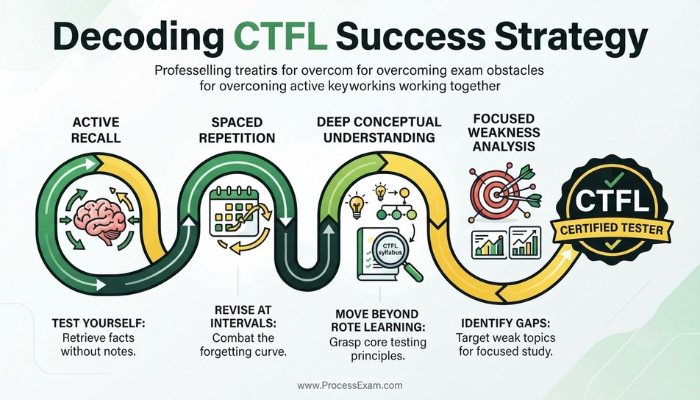
The "strategy ignored by 90% of test takers" often boils down to a lack of deep conceptual understanding and an over-reliance on surface-level memorization. Many candidates focus solely on practice questions without genuinely internalizing the underlying principles, which leads to failure when faced with scenario-based or slightly rephrased questions.
To truly unlock success, focus on:
-
Conceptual Depth Over Rote Learning: Instead of memorizing definitions, strive to understand the *why* behind each principle and technique. For example, don't just know what equivalence partitioning is; understand *why* it's effective for test case design and *when* to apply it.
-
Application in Real-World Scenarios: The CTFL exam often presents questions that require applying concepts to hypothetical situations. Think about how each syllabus topic applies to projects you've worked on or observed. This practical framing solidifies knowledge.
-
Mastering the ISTQB Glossary: The ISTQB Glossary is your ultimate reference for precise terminology. Many questions hinge on understanding the exact definitions of terms like 'error,' 'defect,' 'failure,' 'risk,' and 'test condition.' Ambiguity in understanding these terms is a common pitfall.
-
Active Recall and Spaced Repetition: Instead of passively re-reading notes, use active recall techniques (e.g., flashcards, self-quizzing) to retrieve information from memory. Combine this with spaced repetition, reviewing topics at increasing intervals, to move information into long-term memory.
-
Focused Weakness Analysis: Beyond simply identifying wrong answers in mock tests, categorize your mistakes by syllabus area and cognitive level. Are you consistently struggling with K3 (application) questions in "Test Analysis and Design"? This granular analysis informs where to direct your concentrated efforts.
This deeper engagement with the material is the differentiating factor. It equips you not just to pass the exam, but to truly understand and apply testing principles in your professional life.
Securing Your ISTQB CTFL Credential: Registration and Ethical Preparation
The final steps towards earning your ISTQB CTFL certification involve understanding the registration process and committing to ethical preparation. Adhering to professional standards throughout your journey ensures the credibility of your achievement and the integrity of the certification itself.
ISTQB Certified Tester - Foundation Level Registration Process
The registration process for the ISTQB CTFL exam is typically straightforward but varies slightly depending on your geographical location and the specific exam provider (e.g., ASTQB in the US, BCS in the UK).
-
Find an Accredited Exam Provider: The ISTQB works with various member boards and authorized exam providers around the world. You can find a list of these on the ASTQB official page or your regional ISTQB member board's website.
-
Choose Your Exam Format: Exams are usually offered in both in-person (at testing centers) and online proctored formats, providing flexibility for candidates.
-
Schedule Your Exam: Once you've selected a provider and format, you can schedule your exam date and time through their online portal.
-
Prepare for Exam Day: Ensure you have valid identification and meet any technical requirements for online proctoring. Arrive early for in-person exams.
Familiarize yourself with the specific rules and regulations of your chosen exam provider well in advance to avoid any last-minute complications.
Ethical Preparation and Resource Utilization
The integrity of the ISTQB CTFL certification relies on candidates earning it through legitimate study and honest effort. While seeking out best resources for ISTQB CTFL preparation is encouraged, it's crucial to steer clear of unethical practices.
-
Avoid "Exam Dumps": Websites offering "exam dumps" or "actual questions" often provide outdated, incorrect, or illegally obtained content. Relying on these materials undermines your learning, compromises the value of your certification, and can lead to disqualification.
-
Focus on Comprehensive Understanding: Ethical preparation means engaging with the syllabus, official textbooks, reputable training courses, and legitimate practice questions. The goal is to build genuine knowledge, not just to pass a test.
-
Utilize Free Sample Papers: Many official ISTQB member boards provide free download ISTQB CTFL sample papers. These are legitimate resources that accurately reflect the exam's style and difficulty without resorting to unethical sources.
Your CTFL certification will be a testament to your skills and dedication only if earned ethically. It is a foundation for a professional career, and integrity from the outset is key.
The ISTQB CTFL certification is an invaluable asset for anyone serious about a career in software testing. It provides a standardized body of knowledge, enhances professional credibility, and opens doors to further specialization. By focusing on deep conceptual understanding, strategic use of practice exams, and ethical preparation, you can confidently approach the exam and join the ranks of certified professionals who truly grasp the fundamentals of quality assurance.
Ready to validate your testing expertise and unlock new career opportunities? Begin your journey by exploring comprehensive study materials and engaging with high-quality practice exams today. Visit ProcessExam.com for more resources to support your ISTQB CTFL preparation and confidently achieve your certification goals.
FAQs
1. What is ISTQB CTFL certification?
The ISTQB CTFL (Certified Tester - Foundation Level) certification is an internationally recognized qualification that validates a professional's fundamental knowledge and understanding of software testing principles, processes, and terminology as defined by the International Software Testing Qualifications Board (ISTQB).
2. What are the benefits of ISTQB CTFL certification?
Benefits include enhanced career opportunities, increased earning potential, improved professional credibility, a standardized understanding of testing practices, better communication with team members, and a clear pathway for further specialization in software testing.
3. How long does it take to prepare for the ISTQB CTFL exam?
Preparation time for the ISTQB CTFL exam varies widely based on individual experience and study habits. Typically, candidates spend between 20 to 40 hours of dedicated study, which might be spread over a few weeks or months, combining self-study with practice tests.
4. Are there any prerequisites for the ISTQB CTFL exam?
No formal prerequisites are required to sit for the ISTQB CTFL exam. However, a general understanding of software development processes and basic computer literacy is highly beneficial. Experience in a testing role can also be advantageous but is not mandatory.
5. Where can I find official ISTQB CTFL sample papers?
Official ISTQB CTFL sample papers and syllabi can typically be downloaded from the websites of ISTQB member boards (e.g., ASTQB) or the main ISTQB website. These resources provide an accurate representation of the exam format and question style.
- ISTQB Tester Foundation Exam Questions |
- ISTQB Tester Foundation Question Bank |
- ISTQB Tester Foundation Questions |
- ISTQB Tester Foundation Study Guide |
- ISTQB CTFL Quiz |
- CTFL Certification |
- CTFL Questions |
- CTFL Practice Test |
- CTFL Study Guide Material |
- CTFL Sample Exam |
- Tester Foundation Certification |
- ISTQB Tester Foundation Book |
- Tester Foundation Certification Requirements |
- ISTQB Tester Foundation Sample Questions |
- CTFL Test Questions |
- Tester Foundation PDF |
- ISTQB Foundation Level Certification |
- ISTQB Foundation Level Certification Cost |
- ISTQB Foundation Level Certification Requirements |
- ISTQB Foundation Level Exam Questions |
- ISTQB Foundation Level Sample Questions |
- ISTQB Foundation Level |
- ISTQB Foundation Level Question Bank |
- ISTQB Foundation Level Study Guide |
- ISTQB Foundation Level Questions


