Lean Six Sigma

Explore 31 resources related to Lean Six Sigma on ProcessExam. These resources help certification candidates understand key aspects of exam preparation, including exam structure, study strategies, and expectations for scenario-based or applied assessments. Reviewing these materials can help improve readiness and confidence before attempting the certification exam.

Improve Presentation Skills for Six Sigma Project Reviews

Nobody has ever approved a project phase because the numbers spoke for themselves. Numbers need a speaker who says what changed, how sure the team is and what the room must decide. This guide shows how to present a Six Sigma project at tollgate reviews, on an A3 or storyboard, with charts a non-statistician can read, and at the final report-out. It closes with what the IASSC Green Belt exam expects you to know.

Six Sigma project lead presenting a process chart to managers in a meeting room

Why do the numbers never speak for themselves in a project review?

The sentence "the data speaks for itself" feels modern and rigorous, and it is the quickest way to lose a sponsor. A chart is evidence for a claim. If you do not state the claim, each person in the room invents one, and they will not all invent the same one. The finance manager sees a cost, the process owner sees criticism of her team, and the sponsor sees a delay.

Most Six Sigma people have a strong analytical habit and a weak telling habit, because the training is full of tools and thin on talking. That is why a Green Belt can run a flawless hypothesis test and still leave a review with the phase unapproved. The test answered a question the team had. The audience had a different question.

Three facts about the audience explain most of what follows.

Six Sigma Tools and Techniques: Which Tool Fits Which Business Problem

A workshop manager asks: "I have a binder of ten Six Sigma tools. Which one do I start with?" Start with the one that answers the question you cannot answer today. If you cannot say where the time goes, map the process. If you cannot say which complaint matters most, count and rank them. This guide matches six Six Sigma tools to six everyday problems, with an illustrative example for each.

Six Sigma for business excellence illustration

Which Six Sigma tool should you start with when everything feels broken?

Business excellence sounds large, but it is built from small questions that a team can answer with a page of paper. Process excellence programmes bundle those questions with methodologies such as DMAIC and Lean; the tools are the part you pick up on a Monday morning. Most training lists them by project phase. That order is tidy, yet it is not how problems arrive. A manager does not wake up thinking "I am in the Measure phase". She thinks "customers are shouting", "nobody knows why jobs take so long" or "we fixed this last year and it came back".

So this guide is organised by the problem you are holding. The table is the whole map; each row has a section below with a worked example. The examples all come from one imaginary business, a 12-person bicycle repair workshop whose promise is "ready in three working days". Every figure in the examples is illustrative, invented to show the arithmetic, and none of it is real data.

Things You Can do to Unleash Your Potentials

Everything Count

The very fact is, understanding “What” to do shouldn't be sufficient by no means, nor will it ever be sufficient. If it had been all people could be skinny, pleased and wealthy. The issue or ought to I say the true battle of curiosity in individuals' lives is rooted within the doing. Because of this, we tend to make the unsuitable calls slightly than the proper one.

Professional climbing an office staircase toward a bright window

Why do I know this? As a result of behavior by no means lies.

The true essence of reality, of who you're is not to be present in what you consider, say and even know intellectually however by what you do. Enable me to place some meat on these bones and to show the hole between figuring out and doing.

  • Everyone knows that consuming a nutritious diet is the fitting name to make, but too many people select to eat poorly.

  • Everyone knows that common train is one of the best factors we will do for our-our bodies. Nevertheless, a great variety of us doesn't even find time for a stroll.

  • Everyone knows that we should always save greater than we spend. However, the debt held by far too many individuals, corporations, and even governments supply proof of a lack of information.

  • Everyone knows that continued studying is the neatest factor we can do for our careers. Nevertheless, most don't even crack open an eBooks after they depart school.

  • Everyone knows that commitments are supposed to be honored, but when confronted with problem…resolve shortly heads for the door.

Six Sigma Tools - Others

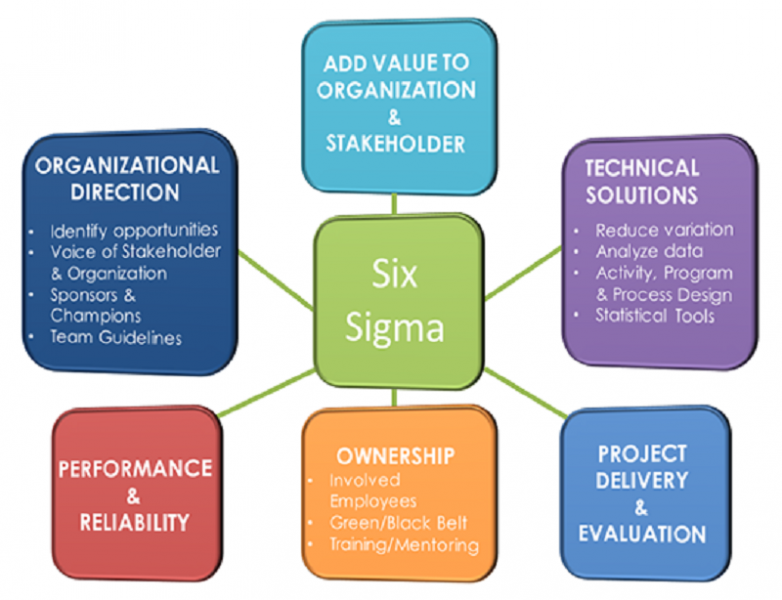
Six Sigma projects require a variety of key decisions based on data and Six Sigma techniques. Team members have at their disposal a set of tools to aid in decision-making. Depending on the decision to be made, they can use one of the several established frameworks for making decisions objectively.

decision making tools for six sigma

Six Sigma Tools - Benchmarking Method

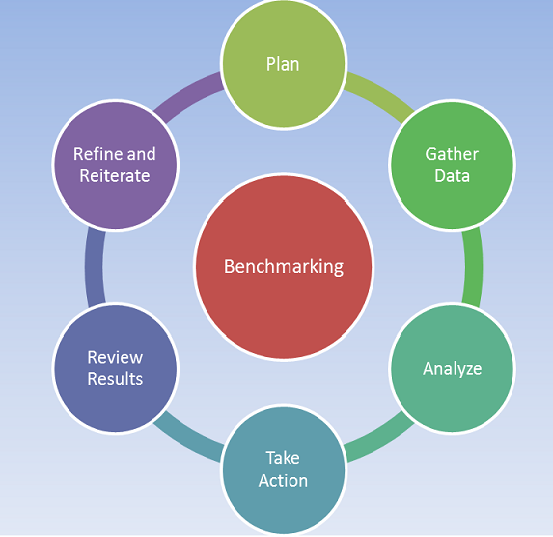
Benchmarking is a method of discovering what's the best performance being achieved – whether in a specific company, by a competitor or by an entirely different trade. This info can then be used to determine gaps in a corporation’s processes with a purpose to obtain an aggressive benefit.

Thus it is vital for Six Sigma practitioners to:

  • Understand totally the aim and use of benchmarking.
  • Understand the distinction between benchmarking and competitor analysis.
  • Acquire perception to make sure that benchmarking is in alignment with the corporate’s administration targets.

Benchmarking as a Tool

Benchmarking elements

Six Sigma Tools - Brainstorming Basics

Brainstorming is a popular methodology of group interaction in each instructional and enterprise settings. Though it doesn't seem to supply a measurable benefit in inventive output, brainstorming is a pleasant train that's sometimes properly obtained by contributors, and that has confirmed its worth many instances over. In Six Sigma, brainstorming is often most useful through the Outline part, particularly when utilizing instruments comparable to failure mode and results evaluation.

Brainstorming tool

Before brainstorming, you will need to understand not only the basics of the tactic but additionally the best way to put together for and conduct a session. With the fitting environment, crew members and encouragement, the concepts will be circulation.

How Six Sigma Can Bring Spark of Process Change in Organization

SIPOC Six Sigma Tool, Six Sigma Process Change, Six Sigma Quality, Six Sigma Roles, Six SigmaWhenever you try to carry out process improvement, whether or not for value, high quality or different causes, you'll typically end up in surroundings the place the established order is the established order. You might be new, and end up awash in a sea of this-is-how-we-do-things. Individuals are of their consolation zones. The administration might or could not get that there shall be rising pains (even for them) within the means of bettering processes and tradition. One strategy of alternative (it might not be an alternative in case you are merely a person contributor reminiscent of a producing or high-quality engineer) is to drive change one venture at a time. This may be as efficient in making a local weather of steady enhancement as an apprenticeship is in creating expert employees. The message could not get out to as many individuals as shortly as a company-wide coaching program. However, the impression might be deeper and extra sustained should be you can present success and create new change brokers in some features – one mission at a time.

Six Sigma Ignite the Idea of Driving Change by Using SIPOC

The purpose isn’t simply to enhance processes (technical aim), however, to additionally create the spark of change, and the mindset of steady, efficient enhancement (behavioral purpose). Know the distinction between an “expression of ache” and an issue definition. Hold statistician W. Edwards Deming in thoughts: It isn’t sufficient to do your finest; know what to do, then does your finest.

Six Sigma Teamwork: Roles and Communication on a Project Team

A common myth says a Six Sigma project belongs to the Black Belt, and everyone else simply hands over data when asked. In practice a project moves at the speed of its slowest conversation: the sponsor who releases budget, the process owner who opens the line for measurement, the Green Belt who gathers samples, and the operator who knows why the numbers look odd. This guide shows how those roles work and talk to each other on one project.

Blue figures assembling puzzle pieces that spell the word teamwork

Who sits on a Six Sigma project team, and what does each person own?

Job titles differ between companies, but most programmes use the same cast. The table below puts each role beside the thing it owns and the thing it needs from the others, because a project stalls at the second column far more often than at the first.

Six Sigma and Innovation: How Companies Manage the Tension

For years the argument ran one way: Six Sigma shrinks variation, innovation needs variation, so one must smother the other. Most of the current discussion has moved on to a more useful question: which work in a company deserves tight control, which deserves room to wander, and how do you keep one scoreboard from judging both? The answer is a division of labour with rules for handing ideas across, and it is something a Black Belt can set up in practice.

Design team working with prototypes and sticky notes beside a laptop showing a stable chart

Why did Six Sigma and innovation start out as rivals?

The quarrel comes from what each side treats as the enemy. Six Sigma treats variation as the enemy: if every invoice, part or call behaves the same way, defects fall and the process becomes predictable. Innovation treats sameness as the enemy: a company that only repeats what it already does has nothing new to sell. Put those two instincts in one meeting and each hears the other as a threat.

The words are also part of the problem. Six Sigma has a firm definition: a data-driven method for finding the causes of defects and removing them. Innovation has none. It can mean a new product, a new business model, a new way of delivering an old service, or a small tweak that saves a minute. When one side has a rulebook and the other has a mood, the rulebook usually wins the budget meeting, and the people who came to invent something go home feeling audited.

What has shifted in the debate

Three things have changed how people talk about it.

Six Sigma - Human Resource

Human Resource refers to the workforce inside an organization responsible for performing the duties given to them for the aim of accomplishment of objectives and aims of the organization. These days all huge firms apply Six Sigma into their HR System strategy for enhancing productiveness, position project and value determinations of their firm.

HR Professionals with the certification to Six Sigma can provoke at each strategic, and tactical degree resolution making in an organization, Leaders obtain high-level coaching on the technical elements of Six Sigma.

Human Resource and Sixsigma

HR professionals can assist the mission groups to work collectively extra successfully. Potential Six Sigma contributions on this space embody:

Syndicate content