ASQ CSSYB BOK PDF

Explore 4 resources related to ASQ CSSYB BOK PDF on ProcessExam. These resources help certification candidates understand key aspects of exam preparation, including exam structure, study strategies, and expectations for scenario-based or applied assessments. Reviewing these materials can help improve readiness and confidence before attempting the certification exam.

Practiced daily on 750+ questions mock tests

This is a great feat i achieved. Received good score in ASQ CSSYB certification exam. Very very thank you to processexam.com. It was great experience.

How CSSYB Certification Opens Up New Career Paths?

Updated on 22 September 2026. What’s new: exam fees corrected to ASQ's current $334 for members, $434 for non-members and $234 for retakes

CSSYB stands for Certified Six Sigma Yellow Belt, the entry-level Six Sigma credential awarded by ASQ, the American Society for Quality. It rarely hands you a brand-new job title on its own. What it does is earn you a seat on improvement projects, collecting data, mapping processes and holding gains for Green Belt and Black Belt leads, and from that seat many people move into quality, operations and continuous-improvement careers.
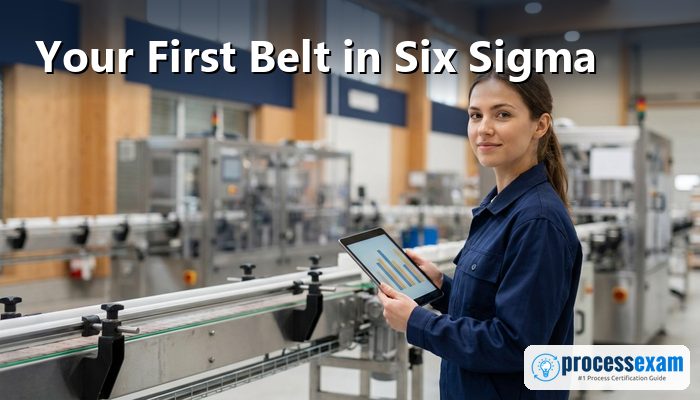
Quality technician reviewing a process chart on a tablet beside a production line

This rewrite, checked against ASQ's own pages in September 2026, follows that path in order: what the letters mean in practice, the jobs and industries where a Yellow Belt is useful, what the exam asks and how its 80 scored questions are shared out, when you can test and what it costs, a six-week plan for a complete beginner, the traps that catch first-time candidates, and where the career can go after the first belt.

What does CSSYB mean, and what does a Yellow Belt do on a real project?

Take the letters one at a time. Certified means you passed an exam set by an independent body rather than only attending a course. Six Sigma is the improvement method built on reducing variation, usually run through the five DMAIC phases: define, measure, analyze, improve and control. Yellow Belt is the first rung of the belt ladder, below Green Belt and Black Belt. The belt colours signal how deep your training goes and how much of a project you are expected to carry.

ASQ CSSYB Certification Exam Syllabus

CSSYB dumps PDF, ASQ CSSYB Braindumps, free Six Sigma Yellow Belt dumps, Six Sigma Yellow Belt dumps free downloadTo achieve the professional designation of ASQ Certified Six Sigma Yellow Belt from the ASQ, candidates must clear the CSSYB Exam with the minimum cut-off score. For those who wish to pass the ASQ Six Sigma Yellow Belt certification exam with good percentage, please take a look at the following reference document detailing what should be included in ASQ Six Sigma Yellow Belt Exam preparation.


The ASQ CSSYB Exam Summary, Body of Knowledge (BOK), Sample Question Bank and Practice Exam provide the basis for the real ASQ Certified Six Sigma Yellow Belt (CSSYB) exam. We have designed these resources to help you get ready to take ASQ Certified Six Sigma Yellow Belt (CSSYB) exam. If you have made the decision to become a certified professional, we suggest you take authorized training and prepare with our online premium ASQ Six Sigma Yellow Belt Practice Exam to achieve the best result.

Kaizen vs Six Sigma: Daily Habit or Data Project?

Walk through almost any plant or office improvement programme and you will hear Kaizen and Six Sigma used as if they were two words for the same thing. They are not. Kaizen is a habit the whole workforce keeps, in which small changes are made continuously by the people doing the work. Six Sigma is a method a trained team applies, in which data has to prove that the cause of a defect was found before anybody claims a fix.

Both end with a better process, so the muddle is forgivable. What it costs is time. Teams charter a four-month statistical project to solve something an operator could have fixed on Tuesday, or run a week of workshops at a defect whose cause nobody has measured and watch it return by the next quarter. This article sets the two side by side on origin, practice, evidence, cadence and scope, shows where a kaizen event genuinely belongs inside a DMAIC project, and ends with the belt exams that test both.

Improvement team moving a card on a board at a workbench while a colleague reviews a chart

Where did Kaizen and Six Sigma come from, and why does the origin still show?

The two approaches were born in different decades, in different industries, to solve problems their founders described in different language. That history is not trivia. It explains why one of them needs nobody's permission and the other arrives with a charter.

Syndicate content