
The Definitive IASSC ICYB Certification Blueprint
The IASSC Certified Lean Six Sigma Yellow Belt (ICYB) certification validates foundational knowledge of the Lean Six Sigma methodology, specifically focusing on the Define, Measure, and Control phases. This credential, offered by the International Association for Six Sigma Certification (IASSC), is designed for professionals who are new to process improvement or who serve as a subject matter expert on a Lean Six Sigma project team. Holding the ICYB certification demonstrates a basic understanding of key Lean Six Sigma principles and tools, enabling individuals to contribute effectively to process improvement initiatives within their organizations. This comprehensive guide will illuminate the exam's structure, delve into its core syllabus, outline effective preparation strategies, and highlight the significant benefits of earning this esteemed credential.
IASSC Certified Lean Six Sigma Yellow Belt Assessment Details
Understanding the specific parameters of the IASSC ICYB exam is crucial for effective preparation. The certification exam is meticulously structured to assess a candidate's grasp of fundamental Lean Six Sigma concepts. Knowing these details upfront helps candidates manage their study time and mental readiness more effectively.
Key examination specifics include:
-
Exam Name: IASSC Certified Lean Six Sigma Yellow Belt
-
Exam Code: ICYB
-
Exam Price: USD $250
-
Duration: 120 Minutes
-
Number of Questions: 60 multiple-choice and true/false questions
-
Passing Score: 70%
This format ensures that candidates not only understand the theoretical aspects but can also apply their knowledge to identify and support process improvement efforts. The timed nature of the exam also assesses a candidate's ability to recall and apply information efficiently under pressure.
Mastering the IASSC ICYB Knowledge Domains
The IASSC ICYB certification syllabus is meticulously designed to provide a foundational yet comprehensive understanding of Lean Six Sigma principles. It primarily covers the initial phases of the DMAIC (Define, Measure, Analyze, Improve, Control) methodology, equipping Yellow Belts to effectively support project teams. A thorough understanding of each domain is paramount for achieving success.
The core syllabus encompasses the following phases and key topics:
-
Define Phase: This section establishes the groundwork for understanding Six Sigma.
-
The Basics of Six Sigma: Introduces what Six Sigma is, its history, and its importance in business.
-
The Fundamentals of Six Sigma: Covers the core concepts, methodologies like DMAIC, and roles within Six Sigma projects.
-
Selecting Lean Six Sigma Projects: Focuses on criteria and methods for identifying suitable projects that align with business goals.
-
The Lean Enterprise: Explores Lean principles, waste reduction, and value stream mapping to enhance efficiency.
-
Measure Phase: Crucial for understanding current process performance through data.
-
Process Definition: Involves mapping processes, identifying inputs, outputs, and customer requirements (SIPOC).
-
Six Sigma Statistics: Basic statistical concepts and tools used to analyze process data.
-
Measurement System Analysis: Ensures that data collected is accurate and reliable, covering topics like gauge R&R.
-
Process Capability: Evaluates how well a process meets customer specifications and identifies areas for improvement.
-
Control Phase: Focuses on sustaining improvements and preventing regression.
-
Lean Controls: Implementation of visual controls, Standard Work, and 5S to maintain process stability.
-
Six Sigma Control Plans: Development of plans to monitor improved processes and ensure continued performance gains.
Each phase builds upon the last, providing a coherent framework for initiating and sustaining process improvements within an organization. Professionals should focus on not just memorizing terms but understanding the practical application of each concept.
Valuing the IASSC Certified Lean Six Sigma Yellow Belt Credential
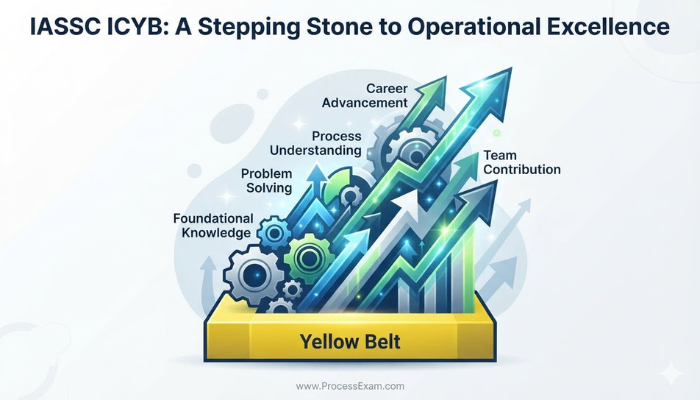
Earning the IASSC Certified Lean Six Sigma Yellow Belt credential signifies a commitment to professional growth and process excellence. This certification is widely recognized across industries as a benchmark for foundational Lean Six Sigma competency. It serves as a valuable asset for individuals looking to enhance their career prospects and for organizations aiming to foster a culture of continuous improvement. The IASSC, as an independent body, ensures the integrity and credibility of its certifications, providing a neutral standard for professionals worldwide. You can explore further details about the IASSC and their certifications on their official IASSC website.
The benefits of holding this certification extend beyond individual career advancement, impacting organizational efficiency and effectiveness:
-
Enhanced Problem-Solving Abilities: Yellow Belts gain fundamental tools and techniques to identify, analyze, and contribute to solving operational issues. This capability is vital in any role, from operations to administration.
-
Improved Process Understanding: The syllabus equips professionals with a structured approach to understand processes, identify inefficiencies, and visualize opportunities for streamlining. This insight is crucial for optimizing workflows.
-
Career Advancement Opportunities: The ICYB certification opens doors to roles requiring process improvement skills, acting as a stepping stone for further Lean Six Sigma belts (Green, Black, Master Black). It signals to employers a dedication to quality and efficiency.
-
Organizational Impact: Certified Yellow Belts can actively support Green and Black Belts on larger projects, contributing data collection, analysis, and implementation tasks. Their involvement helps drive project success and organizational savings.
-
Versatile Skillset: The principles of Lean Six Sigma are applicable across virtually all industries and departments, making the Yellow Belt a versatile credential. Whether in manufacturing, healthcare, finance, or IT, these skills are in demand.
-
Foundation for Advanced Certifications: For those aspiring to higher Lean Six Sigma roles, the Yellow Belt provides a solid base, ensuring a coherent progression through the methodology. This foundational understanding is critical before pursuing more complex concepts.
This initial certification establishes a robust framework for understanding and participating in quality improvement, making it an excellent investment for both individuals and organizations.
Strategic Preparation for the IASSC ICYB Examination
Effective preparation for the IASSC ICYB exam requires a structured approach that combines theoretical understanding with practical application. Given the exam's focus on foundational concepts across the Define, Measure, and Control phases, candidates should prioritize comprehensive study and regular review. Leveraging quality resources and developing a consistent study routine are key components of a successful strategy. Many professionals find value in dedicated training programs, such as those that might lead to IASSC Lean Six Sigma certifications through official certification resources, to structure their learning.
Developing a Robust Study Plan
A well-thought-out study plan ensures all syllabus topics are covered adequately. Break down the IASSC ICYB syllabus into manageable modules, allocating specific time slots for each phase. Begin with the Define phase to establish a strong conceptual understanding, then move sequentially through Measure and Control. Focus on understanding the interdependencies between phases and how each tool and technique contributes to the overall Lean Six Sigma methodology. Regular review sessions are essential to reinforce learning and ensure retention of key definitions and principles.
Leveraging Diverse Study Resources
To gain a comprehensive understanding, utilize a variety of study materials. This can include official IASSC study guides, reputable Lean Six Sigma textbooks, and online courses. Many resources offer detailed explanations, examples, and case studies that help contextualize the theoretical concepts. Supplementing these with video tutorials or webinars can provide alternative perspectives and clarify complex topics. Ensure your resources align with the IASSC Body of Knowledge to avoid studying irrelevant material.
Engaging with Practice Questions and Mock Exams
One of the most effective preparation techniques is consistent practice. Engage with numerous practice questions covering each syllabus domain to identify areas of strength and weakness. Understanding why an answer is correct or incorrect is as important as getting the answer right. After thorough topic review, take full-length mock exams to simulate the actual testing environment. This helps in managing time, reducing exam anxiety, and pinpointing areas requiring further study. For candidates seeking to refine their readiness, platforms such as ProcessExam’s ICYB practice resources offer valuable opportunities for assessment and focused review.
Practical Application and Real-World Context
While the IASSC ICYB exam primarily assesses theoretical knowledge, relating concepts to real-world scenarios can significantly deepen understanding. Think about how a particular tool or technique from the Measure phase might apply to a process in your current work environment. This contextualization not only makes the material more engaging but also prepares you for practical application of your certified skills. Discussing concepts with peers or experienced Lean Six Sigma practitioners can also provide valuable insights and diverse perspectives.
The Pathway to IASSC ICYB Certification and Beyond
Obtaining the IASSC Certified Lean Six Sigma Yellow Belt is not merely an endpoint but often the beginning of a broader journey in continuous improvement. This certification positions professionals to effectively contribute to Lean Six Sigma initiatives and serves as a foundational step toward more advanced credentials. Understanding the certification path helps individuals chart their long-term career development within the quality management domain. Navigating the various options for exam registration and delivery is also a crucial aspect for aspiring Yellow Belts. Official certification resources provide comprehensive certification pathways and support services for global professionals.
Enrolling in the IASSC ICYB Exam
The process of enrolling for the IASSC ICYB exam is streamlined for convenience. Candidates typically register directly through the IASSC website or through authorized testing centers. IASSC also offers on-demand web-based certification testing, which provides flexibility for individuals to take the exam from various locations, adhering to strict proctoring standards. It's essential to review the official IASSC guidelines for registration, scheduling, and system requirements to ensure a smooth testing experience. This flexibility allows candidates to pursue their certification goals at a pace that fits their professional and personal commitments.
Progressing Through the Lean Six Sigma Belt Levels
The Lean Six Sigma methodology is structured with a clear progression of "belts," each signifying increasing levels of expertise and responsibility. The Yellow Belt is the entry point, providing fundamental knowledge and the ability to support project teams. From there, professionals can advance to:
-
Green Belt: This level focuses on leading smaller projects and supporting Black Belts on more complex initiatives. Green Belts are proficient in applying DMAIC tools and statistical analysis.
-
Black Belt: Black Belts are typically full-time Lean Six Sigma professionals who lead complex, cross-functional projects. They possess advanced statistical skills and deep methodological expertise.
-
Master Black Belt: The highest level, Master Black Belts mentor Black and Green Belts, provide strategic guidance, and oversee the Lean Six Sigma program within an organization.
Each progression deepens a professional's understanding and capability, leading to greater impact and leadership opportunities in process improvement.
Sustaining Knowledge and Continuous Improvement
Certification is an important milestone, but maintaining and expanding one's knowledge of Lean Six Sigma is a continuous process. Engage in ongoing learning through advanced courses, industry workshops, and participation in improvement projects. Staying current with new tools, techniques, and best practices ensures that your certification remains a relevant and powerful asset throughout your career. Many certified professionals also contribute to the Lean Six Sigma community by sharing their experiences and insights, further solidifying their expertise.
Conclusion
The IASSC Certified Lean Six Sigma Yellow Belt (ICYB) credential offers a robust foundation in process improvement, equipping professionals with essential skills to contribute to organizational efficiency. By thoroughly preparing for the exam, leveraging comprehensive study resources, and engaging with practice questions, candidates can confidently achieve certification. This not only enhances individual career trajectories but also empowers organizations to cultivate a data-driven culture of continuous improvement.
Embark on your journey to process excellence today. Utilize the extensive resources available to solidify your understanding and ensure exam readiness. To further enhance your preparation and test your knowledge with realistic simulations, explore high-quality practice exams and study materials available. Visit ProcessExam for comprehensive resources designed to help you succeed in your IASSC ICYB certification journey.
FAQs
1. What is the IASSC Certified Lean Six Sigma Yellow Belt (ICYB) certification?
The IASSC Certified Lean Six Sigma Yellow Belt (ICYB) certification validates an individual's foundational knowledge of the Lean Six Sigma methodology, focusing on the Define, Measure, and Control phases. It demonstrates a basic understanding of process improvement principles.
2. Who should pursue the IASSC ICYB certification?
This certification is ideal for professionals new to Lean Six Sigma, those who wish to support Lean Six Sigma projects, or individuals seeking a foundational understanding before pursuing higher-level belts like Green Belt or Black Belt. It suits anyone looking to contribute to process improvement initiatives.
3. What are the main benefits of becoming an IASSC ICYB certified professional?
Benefits include enhanced problem-solving skills, a deeper understanding of process dynamics, improved career prospects, the ability to contribute effectively to process improvement teams, and a strong foundation for advancing to higher Lean Six Sigma certifications.
4. How long does it typically take to prepare for the IASSC ICYB exam?
Preparation time can vary significantly based on prior experience and study commitment. Generally, candidates may need 20-40 hours of dedicated study, spread over several weeks or months, to thoroughly cover the syllabus and practice effectively.
5. Does the IASSC ICYB certification need to be renewed?
The IASSC Lean Six Sigma certifications, including the Yellow Belt, do not have a mandatory renewal requirement. However, maintaining professional relevance often involves continuous learning and practical application of the methodology.
- ICYB |
- Lean Six Sigma |
- Lean Six Sigma Yellow Belt |
- IASSC Lean Six Sigma Yellow Belt Exam Questions |
- IASSC Lean Six Sigma Yellow Belt Questions |
- IASSC Lean Six Sigma Yellow Belt Sample Questions |
- IASSC ICYB Quiz |
- IASSC ICYB Exam |
- ICYB Exam |
- ICYB Questions |
- ICYB Exam Questions Download |
- ICYB Study Guide PDF |
- ICYB Sample Exam |
- ICYB Test Questions |
- Lean Six Sigma Yellow Belt PDF |
- IASSC Lean Six Sigma Yellow Belt Test Questions |
- Lean Six Sigma Yellow Belt Certification Requirements |
- IASSC Exam |
- IASSC Lean Six Sigma Yellow Belt Question Bank |
- IASSC Lean Six Sigma Yellow Belt Book |
- IASSC Lean Six Sigma Yellow Belt Study Guide |
- IASSC ICYB BOK PDF |
- ICYB Certification |
- ICYB Practice Test |
- ICYB Study Guide Material |
- Lean Six Sigma Yellow Belt Certification |
- Lean Six Sigma Yellow Belt Certification Cost |
- IASSC Certified Lean Six Sigma Yellow Belt |
- ICYB Question Bank |
- ICYB Body of Knowledge (BOK)


