
Beyond the Exam: What CSSBB Really Changes

The ASQ Certified Six Sigma Black Belt (CSSBB) credential signifies a high level of proficiency in leading complex process improvement initiatives. This certification is designed for professionals who possess a deep understanding of the Six Sigma methodology, including all aspects of the Define, Measure, Analyze, Improve, and Control (DMAIC) model, as well as Design for Six Sigma (DFSS) principles. Earning the ASQ CSSBB validates an individual's ability to drive significant quality improvements and cost reductions within an organization, making it a pivotal step for those aspiring to leadership roles in process excellence. This comprehensive article delves into the transformative impact of the CSSBB certification, outlining the exam structure, detailed syllabus, profound benefits, and effective preparation strategies for aspiring Black Belts.
Understanding the ASQ Certified Six Sigma Black Belt Examination
The ASQ CSSBB examination is a rigorous assessment designed to evaluate a candidate's mastery of advanced Six Sigma principles and tools. Achieving this certification from ASQ, a globally recognized leader in quality, positions professionals to spearhead critical projects that enhance operational efficiency and customer satisfaction. The exam details are structured to ensure that certified individuals are well-equipped to tackle real-world challenges.
The ASQ CSSBB exam, identified by its code CSSBB, assesses a candidate's comprehensive knowledge through 165 questions. Candidates are allotted a total appointment time of 270 minutes, with the actual exam time being 258 minutes. A passing score of 550 out of 750 points is required to earn this prestigious certification. The cost for the exam varies, with ASQ members paying USD $485, non-members paying USD $585, and retakes costing USD $385. These details emphasize the commitment required to pursue and achieve the CSSBB designation.
Deciphering the ASQ CSSBB Exam Syllabus
The ASQ CSSBB certification demands a thorough understanding of a broad range of topics, ensuring that certified professionals can address process challenges from multiple perspectives. The syllabus is meticulously structured to cover every facet of Six Sigma methodology, from foundational concepts to advanced deployment strategies.
The key domains tested in the ASQ CSSBB exam include:
-
Organization-Wide Planning and Deployment: This section focuses on the strategic implementation of Six Sigma within an organization, including leadership roles, deployment infrastructure, and strategic planning.
-
Organizational Process Management and Measures: Candidates must understand how to manage organizational processes, apply various metrics, and establish effective measurement systems for performance evaluation.
-
Team Management: Emphasizing leadership, this domain covers team formation, dynamics, motivation, and conflict resolution, crucial for successful project execution.
-
Define: This phase of DMAIC involves clearly articulating project goals, customer requirements, and problem statements to set the foundation for improvement.
-
Measure: Focuses on data collection, measurement system analysis, and process capability assessment to quantify the extent of a problem.
-
Analyze: Deals with identifying the root causes of problems through various analytical tools, hypothesis testing, and statistical analysis.
-
Improve: Concentrates on developing and implementing solutions to eliminate root causes, utilizing tools for creative thinking and robust solution design.
-
Control: Ensures that improvements are sustained over time by implementing process controls, standardization, and monitoring systems.
-
Design for Six Sigma (DFSS) Framework and Methodologies: This advanced section covers designing new processes or products to Six Sigma quality levels from the outset, often using methodologies like DMADV (Define, Measure, Analyze, Design, Verify).
A comprehensive review of these topics is essential for anyone preparing for the ASQ CSSBB exam preparation. For additional insights into the curriculum and sample questions, one can explore CSSBB sample questions.
Transformative Career Impact of ASQ Six Sigma Black Belt Certification
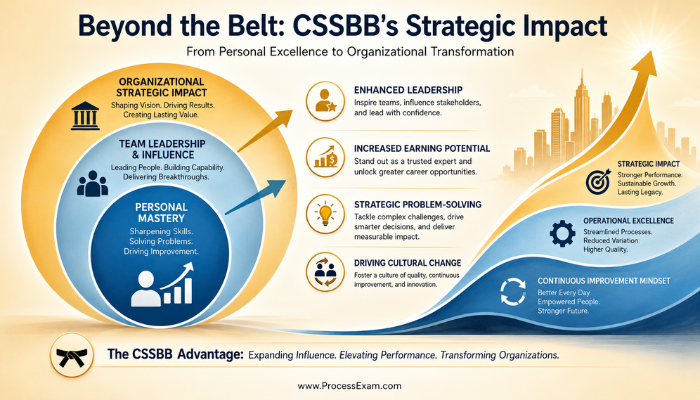
Attaining the ASQ Certified Six Sigma Black Belt certification profoundly impacts a professional's career trajectory and organizational value. It moves individuals beyond basic process understanding to becoming strategic assets capable of driving significant change. The benefits of ASQ Certified Six Sigma Black Belt are multifaceted, encompassing enhanced leadership opportunities, increased earning potential, and a deeper understanding of business operations.
Elevating Professional Credibility and Role Scope
The CSSBB credential significantly boosts an individual's professional standing. It signals to employers that the holder possesses not only theoretical knowledge but also the practical skills required to lead complex projects. This often translates into opportunities for roles such as Quality Manager, Process Improvement Director, or Six Sigma Black Belt consultant. The certification is recognized globally, making it a valuable asset for career mobility across industries and international borders. Professionals with this certification are often entrusted with high-stakes projects, directly influencing an organization's bottom line and strategic objectives.
Furthermore, the ASQ Six Sigma Black Belt career path is typically characterized by increasing responsibility and influence. Black Belts are pivotal in fostering a culture of continuous improvement, mentoring Green Belts, and ensuring that quality initiatives align with overall business goals. Their ability to apply advanced statistical tools and problem-solving methodologies makes them indispensable in today's data-driven business environment. Such roles are often associated with substantial remuneration, reflecting the high demand for these specialized skills. For more information on official ASQ offerings, the official ASQ CSSBB page provides comprehensive details.
Navigating ASQ CSSBB Exam Preparation Effectively
Successful preparation for the ASQ CSSBB exam requires a structured approach that integrates theoretical study with practical application. Given the breadth and depth of the ASQ CSSBB exam syllabus, candidates must devise a robust study plan to cover all required domains comprehensively. Effective preparation extends beyond memorization to include a deep understanding of statistical tools and their real-world applications.
Crafting Your Study Regimen
A well-organized study guide is indispensable for tackling the ASQ Certified Six Sigma Black Belt exam. Candidates should begin by reviewing the official ASQ Body of Knowledge for the CSSBB to identify areas requiring focused attention. It is crucial to allocate sufficient time to each syllabus section, particularly the statistical and analytical components (Measure, Analyze, Improve). Utilizing a combination of resources is often the most effective strategy.
Key elements of a strong study regimen include:
-
Structured Study Guide: Follow an ASQ Certified Six Sigma Black Belt study guide that breaks down the syllabus into manageable modules.
-
Official ASQ Resources: Leverage materials directly from ASQ, including their recommended textbooks and standards, available through ASQ training courses.
-
Diverse Study Materials: Supplement core texts with other reputable sources. Many candidates find success using a variety of formats, such as online courses, video lectures, and detailed notes.
-
Practice Questions: Regularly engage with CSSBB practice questions ASQ style. This helps familiarize candidates with the exam format and question types, improving time management and accuracy.
-
Hands-on Application: Where possible, apply Six Sigma tools and methodologies in real projects. Practical experience reinforces theoretical knowledge and builds confidence.
Consider joining study groups or online forums to discuss challenging topics and gain different perspectives. Resources like ASQ community discussions can offer valuable peer insights.
Optimizing Your Exam Readiness
Beyond initial study, optimizing readiness involves strategic review and simulation. Understanding the CSSBB exam format ASQ employs, which includes multiple-choice questions, is crucial. Mock exams are invaluable for simulating actual test conditions, helping candidates to identify weaknesses and refine their pacing. It's also beneficial to grasp the distinction between ASQ CSSBB and other certifications.
For example, understanding the nuances between ASQ CSSBB vs Green Belt certification can highlight the advanced statistical and leadership expectations of the Black Belt role. While a Green Belt focuses on managing smaller projects under the guidance of a Black Belt, the Black Belt is responsible for leading larger, more complex initiatives and mentoring others. This distinction reinforces the depth of knowledge required for the CSSBB. Additionally, familiarity with the ASQ Certified Six Sigma Black Belt exam blueprint provides a detailed breakdown of topic weighting, allowing for targeted review.
Managing ASQ CSSBB Certification Logistics and Renewal
Successfully achieving the ASQ CSSBB is a significant milestone, but maintaining the credential involves understanding its logistical aspects, including costs and renewal processes. Prospective candidates often inquire about the full financial commitment and long-term maintenance requirements. Knowing the ASQ CSSBB certification cost upfront helps in planning.
Financial Considerations and Investment Returns
The investment in the ASQ CSSBB certification extends beyond the exam fee. It often includes costs for training courses, study materials, and potentially travel if a physical exam center is chosen. While the initial outlay can be substantial, the return on investment is often significant. Certified Black Belts typically command higher salaries due to their specialized skills and their ability to deliver measurable improvements. The ASQ Six Sigma Black Belt salary expectation is generally robust, reflecting the strategic value these professionals bring to an organization. This financial benefit, coupled with career advancement opportunities, makes the certification a worthwhile investment for many.
Sustaining Your Credential: Renewal Process
Maintaining the ASQ CSSBB certification requires adherence to ASQ's recertification policy. This typically involves earning continuing education units (CEUs) or recertification units (RUs) over a three-year period. The ASQ CSSBB certification renewal process ensures that certified professionals stay current with evolving methodologies, tools, and industry best practices. Activities that contribute to recertification include participation in quality-related projects, attending workshops, publishing articles, or presenting on Six Sigma topics. This ongoing commitment to professional development underscores the long-term value and relevance of the ASQ CSSBB credential in the quality improvement field. Even engaging with global quality initiatives, such as those highlighted by ASQ's global reach, can count towards professional development.
Advantages of Securing the CSSBB Credential
The ASQ Certified Six Sigma Black Belt credential offers a distinct competitive edge in the professional landscape, distinguishing its holders as leaders in quality and process optimization. The advantages extend beyond individual career growth to significant organizational benefits, making it a highly sought-after certification. Professionals gain a toolkit that empowers them to not only identify problems but to implement sustainable, data-driven solutions.
Black Belts are adept at leading cross-functional teams, facilitating complex problem-solving sessions, and effectively communicating findings to stakeholders at all levels. This leadership capability is critical for driving successful change initiatives and fostering a culture of continuous improvement within an organization. The certification provides a comprehensive understanding of statistical tools, allowing professionals to make informed decisions based on robust data analysis rather than intuition. This proficiency in data interpretation leads to more effective and reliable solutions, significantly impacting an organization's efficiency and profitability.
Conclusion: The Enduring Value of CSSBB
The ASQ Certified Six Sigma Black Belt certification is far more than just an exam; it is a profound professional transformation. It equips individuals with the advanced analytical, leadership, and problem-solving skills necessary to drive significant, measurable improvements in any organization. From enhancing personal career prospects and earning potential to enabling organizations to achieve operational excellence and competitive advantage, the CSSBB credential serves as a powerful catalyst for change. Embracing this certification journey is an investment in both individual growth and organizational success, fostering a mindset of continuous quality and strategic impact.
Embark on your journey to becoming an ASQ Certified Six Sigma Black Belt and unlock unparalleled career opportunities. For comprehensive study materials and to further explore ASQ certifications, consider the robust resources available to aid your preparation and ensure your success.
FAQs
1. What skills does the ASQ CSSBB certification validate?
The ASQ CSSBB certification validates a professional's advanced skills in Six Sigma methodologies, including statistical analysis, process improvement leadership, project management, and the ability to lead complex DMAIC and DFSS initiatives to deliver measurable results and solve critical business problems.
2. How does the CSSBB impact career progression?
The CSSBB significantly enhances career progression by qualifying individuals for leadership roles in quality and process improvement, increasing earning potential, and providing a competitive advantage in the job market. It opens doors to roles like Quality Manager, Process Improvement Director, and Six Sigma Consultant.
3. What are the prerequisites for taking the ASQ CSSBB exam?
ASQ requires candidates to have three years of work experience in a Black Belt body of knowledge area and to have completed two Six Sigma Black Belt projects, or one project plus an additional two years of work experience in a Black Belt area. Project affidavits are typically required as proof.
4. How long is the ASQ CSSBB certification valid, and how is it renewed?
The ASQ CSSBB certification is typically valid for three years. To renew, certified professionals must accumulate recertification units (RUs) through continuing education, professional development, or active involvement in Six Sigma projects or quality-related activities during the three-year period.
5. Is the ASQ CSSBB certification recognized globally?
Yes, the ASQ CSSBB certification is internationally recognized and respected across various industries worldwide. ASQ is a global organization, and its certifications are benchmarks for quality and excellence, making the CSSBB a valuable credential for professionals seeking international career opportunities.
- CSSBB |
- Six Sigma |
- Six Sigma Black Belt |
- ASQ Six Sigma Black Belt Question Bank |
- ASQ Six Sigma Black Belt Sample Questions |
- ASQ Six Sigma Black Belt Test Questions |
- ASQ Six Sigma Black Belt Exam Questions |
- ASQ Six Sigma Black Belt Questions |
- CSSBB Question Bank |
- CSSBB Questions |
- ASQ CSSBB Quiz |
- ASQ CSSBB Exam |
- CSSBB Exam |
- CSSBB Exam Questions Download |
- CSSBB Study Guide PDF |
- CSSBB Sample Exam |
- CSSBB Test Questions |
- Six Sigma Black Belt PDF |
- ASQ Exam |
- ASQ Six Sigma Black Belt Book |
- ASQ Six Sigma Black Belt Study Guide |
- ASQ CSSBB BOK PDF |
- CSSBB Certification |
- CSSBB Practice Test |
- CSSBB Study Guide Material |
- Six Sigma Black Belt Certification |
- Six Sigma Black Belt Certification Cost |
- Six Sigma Black Belt Certification Requirements |
- CSSBB Body of Knowledge (BOK) |
- ASQ Certified Six Sigma Black Belt |
- CSSBB Handbook


