A car now runs on millions of lines of code written by several companies, and a tester who signs off a function in it answers to rules a web or mobile tester never meets: Automotive SPICE for process evidence, ISO 26262 for functional safety, AUTOSAR for the software architecture. ISTQB's CT-AuT certificate exists to teach exactly that layer. It is a 40-question, 60-minute paper, passed with 26 points, and open only to people who already hold the Foundation Level certificate.
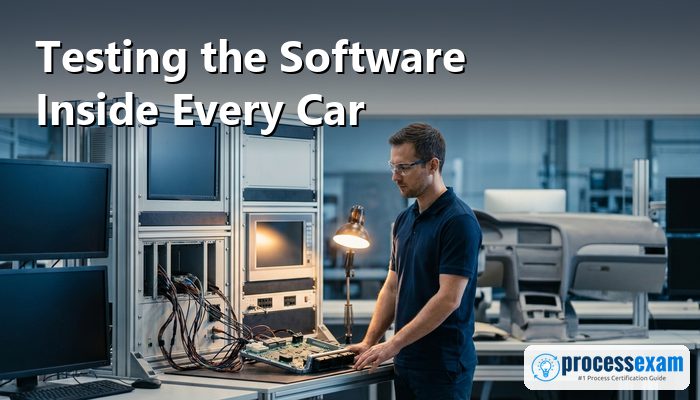
Testers who move into automotive from other fields usually find that their test techniques transfer, while their vocabulary does not. They hear that a unit test needs evidence of a certain rating, that a requirement must trace to a test, that the amount of testing depends on a safety level, and that half the tests run on a simulated vehicle that never leaves a lab. This article follows those surprises in the order the ISTQB syllabus teaches them. You will see what the certificate covers, how the paper is built, what each standard asks of a tester, how the virtual test environments differ, which test techniques the last chapter adds, and a six-week route to the exam. The exam figures and the chapter list were read from ISTQB's CT-AuT page in October 2026.

 You have to pass the CT-AuT exam to receive the certification from ISTQB. To increase the effectiveness of your study and make you familiar with the actual exam pattern, we have prepared this ISTQB Automotive Software Tester sample questions. Our


