
What Top OGEA-102 Holders Know (You Don't)
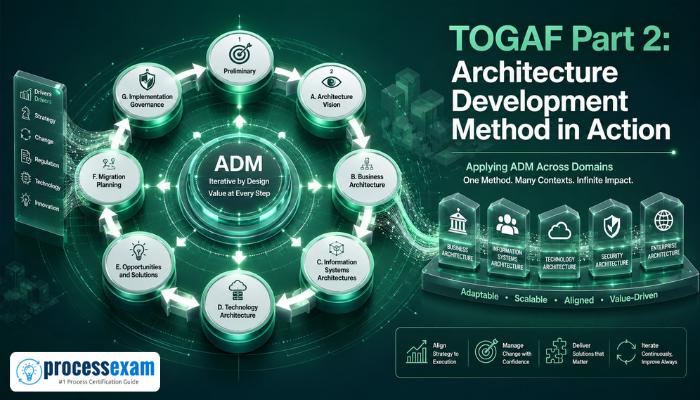
The Open Group TOGAF Enterprise Architecture Part 2 certification, identified by the exam code OGEA-102, validates a professional's comprehensive understanding and practical application of the TOGAF standard. This advanced credential signifies expertise in applying the Architecture Development Method (ADM) to real-world scenarios, making it crucial for experienced enterprise architects and those aspiring to lead strategic architectural initiatives. It is designed for individuals who need to demonstrate the practical ability to analyze and apply TOGAF principles. This article outlines a strategic roadmap for preparing for and excelling in the Open Group OGEA-102 exam, covering essential concepts, preparation methodologies, and the tangible career advantages it offers.
Validating Advanced Enterprise Architecture Skills
Achieving the Open Group OGEA-102 certification demonstrates a deep, practical capability in enterprise architecture, moving beyond theoretical knowledge to practical application. This credential is vital for professionals tasked with designing, planning, implementing, and governing an enterprise information architecture. Holders are recognized for their ability to navigate complex architectural challenges, articulate architectural vision, and drive transformative business outcomes through structured approaches. The OGEA-102 exam specifically tests the application of the TOGAF standard, ensuring that certified individuals can effectively contribute to an organization's strategic objectives by aligning business and IT landscapes. It highlights a practitioner's readiness to tackle detailed architectural work.
Successfully passing OGEA-102 solidifies your role as a strategic enabler within an organization. It proves an architect can not only recall concepts but also critically evaluate situations and recommend appropriate TOGAF-based solutions. This level of validation is increasingly sought after by organizations looking to build resilient and agile enterprise architectures that can adapt to rapid market changes and technological advancements. The certification confirms a professional’s capacity to apply foundational architectural principles to solve complex organizational problems, fostering a culture of strategic alignment and efficiency.
Defining the OGEA-102 Purpose
The OGEA-102 exam, known as The Open Group TOGAF Enterprise Architecture Part 2, is designed to confirm that candidates possess the necessary skills to apply and analyze the TOGAF standard in diverse architectural scenarios. Unlike the foundational Part 1, this exam focuses entirely on scenario-based questions that require candidates to exercise judgment, analytical thinking, and a practical understanding of TOGAF's application. It is tailored for those who will actively participate in or lead the development of enterprise architectures. The certification enhances an individual's credibility, positioning them as an expert capable of guiding strategic architectural initiatives and ensuring architectural integrity across complex projects.
Core Competencies Assessed by OGEA-102
Candidates for the OGEA-102 certification must demonstrate proficiency across several key areas, reflecting the practical demands of enterprise architecture. These competencies are crucial for anyone seeking to effectively apply the TOGAF framework within an organization.
-
Architecture Development Method (ADM) Application: Ability to apply the ADM in various enterprise contexts, including iteration and different levels of architecture.
-
Architecture Governance: Understanding and applying governance frameworks, processes, and tools to ensure architectural compliance and effectiveness.
-
Business Scenarios: Skill in developing business scenarios to drive architectural requirements and evaluate architectural solutions.
-
Stakeholder Management: Expertise in identifying, analyzing, and engaging stakeholders throughout the architecture development lifecycle.
-
Architecture Content Framework: Knowledge of how to use the TOGAF content framework, including architectural artifacts, deliverables, and building blocks.
-
Enterprise Continuum: Understanding the concepts of the Enterprise Continuum and Architecture Repository, and how they support architectural development.
-
Architectural Partitioning: Ability to partition an architecture effectively to manage complexity and enable parallel development efforts.
These areas collectively ensure that OGEA-102 certified professionals are well-equipped to manage the practical aspects of enterprise architecture, from initial planning through implementation and ongoing governance.
Building a Foundation for OGEA-102 Aspirants
Preparing for the Open Group OGEA-102 exam requires more than just memorizing facts; it demands a solid understanding of the TOGAF standard and its practical application. Candidates typically should have already achieved the TOGAF Enterprise Architecture Part 1 certification or possess an equivalent level of foundational knowledge, as Part 2 builds directly upon those principles. This advanced exam is designed for professionals who are actively involved in enterprise architecture roles, such as enterprise architects, solution architects, and senior IT consultants, who regularly apply architectural frameworks to solve complex business challenges. A strong background in IT strategy, business process analysis, and system integration will significantly aid in comprehension and application during preparation.
The OGEA-102 certification path typically follows the successful completion of the TOGAF Enterprise Architecture Part 1 exam. This ensures candidates have a robust understanding of the core concepts, terminology, and structure of the TOGAF framework before delving into the more complex application-based scenarios. Without a firm grasp of Part 1 content, navigating the analytical and decision-making aspects of Part 2 would prove significantly more challenging. Aspiring OGEA-102 holders should review the fundamental principles of TOGAF thoroughly, even if they have previously passed Part 1, to refresh their understanding and ensure continuity of knowledge. For detailed insights into the exam and its requirements, candidates are encouraged to consult the official TOGAF documentation.
Essential Prerequisites and Recommended Experience
While specific formal prerequisites for OGEA-102 can vary, practical experience in an enterprise architecture domain is highly recommended. Candidates who have actively participated in or led architecture development projects will find the scenario-based questions more relatable and easier to analyze. This hands-on exposure helps in understanding the nuances of applying TOGAF principles to real-world organizational contexts, which is precisely what the Part 2 exam evaluates. Familiarity with various industry standards and frameworks beyond TOGAF can also provide a broader perspective, although TOGAF remains the primary focus.
It is beneficial for candidates to have experience in:
-
Architectural design and modeling tools.
-
Stakeholder engagement and communication strategies.
-
Risk management and mitigation within architectural projects.
-
Understanding of various architectural domains (business, data, application, technology).
These experiences contribute significantly to a candidate's ability to interpret complex scenarios and formulate appropriate architectural responses, aligning with the strategic, structured, and future-oriented tone of the OGEA-102 certification.
Realizing Professional Growth with OGEA-102 Certification
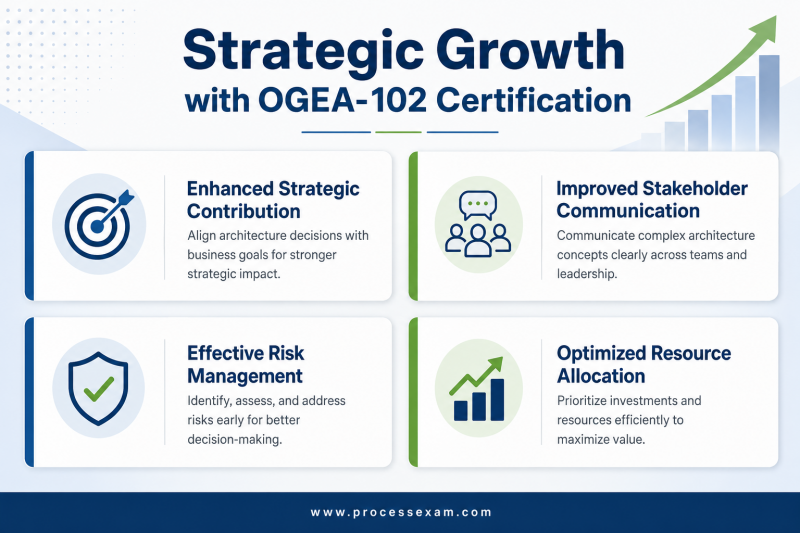
Obtaining the Open Group OGEA-102 certification serves as a powerful catalyst for professional growth, significantly enhancing an individual's career trajectory within enterprise architecture and related IT leadership roles. This credential signals to employers and peers a superior level of competence in applying the TOGAF standard, setting certified professionals apart in a competitive job market. It not only validates existing expertise but also opens doors to new opportunities, higher-level positions, and increased earning potential. The OGEA-102 certification empowers architects to take on more strategic responsibilities, guiding organizations through complex transformations and ensuring robust, well-aligned architectural landscapes.
The benefits extend beyond individual career advancement, impacting the organizations that employ OGEA-102 certified architects. These professionals contribute to more efficient project delivery, reduced architectural debt, and improved alignment between business strategy and IT implementation. By leveraging the structured approach of TOGAF, they help organizations make more informed decisions, mitigate risks, and foster innovation within their technology environments. Understanding the comprehensive OGEA-102 exam details can further illuminate the breadth of skills validated by this certification, reinforcing its value for both individuals and enterprises. For a deeper look at the Open Group OGEA-102 exam, visit the OGEA-102 exam details page.
Enhancing Strategic Contribution and Impact
OGEA-102 certified individuals are better positioned to influence strategic decisions within their organizations. Their validated ability to apply the TOGAF ADM means they can effectively translate business objectives into architectural requirements and solutions, ensuring that IT investments directly support organizational goals. This elevates their role from technical implementers to strategic advisors, capable of articulating the long-term architectural vision and its implications for the business. This strategic alignment is critical for avoiding costly missteps and ensuring that enterprise architecture delivers tangible value.
The enhanced strategic contribution manifests in several ways:
-
Improved Stakeholder Communication: Better articulation of architectural concepts to non-technical stakeholders, fostering greater understanding and buy-in.
-
Effective Risk Management: Proactive identification and mitigation of architectural risks, safeguarding projects and strategic initiatives.
-
Optimized Resource Allocation: Guiding decisions on technology investments and resource deployment to achieve maximum architectural efficiency.
OGEA-102 certification is not just about personal achievement; it's about elevating the entire enterprise architecture function within an organization, driving greater impact and strategic relevance.
Boosting Market Competitiveness and Career Trajectories
In a rapidly evolving technological landscape, professionals with advanced certifications like OGEA-102 possess a significant competitive edge. Employers actively seek individuals who can demonstrate a proven capability to apply industry-standard frameworks to complex problems, and OGEA-102 serves as clear evidence of this. The certification often leads to opportunities in high-demand roles, such as Lead Enterprise Architect, Head of Architecture, or Chief Architect, which command substantial salaries and influence.
The OGEA-102 certification also facilitates a smoother career progression:
-
It validates a specialized skill set that is in high demand across various industries.
-
It opens doors to international career opportunities, as TOGAF is a globally recognized standard.
-
It fosters a network of certified professionals, providing valuable peer support and knowledge exchange.
This credential is a strategic investment in a long-term career in enterprise architecture, ensuring professionals remain relevant and valuable in an increasingly complex and competitive field.
Designing an Effective Open Group OGEA-102 Study Program
A structured and comprehensive study program is paramount for success in the Open Group OGEA-102 exam. Given its application-focused nature, merely rereading the TOGAF standard will not suffice; candidates must engage with the material critically, focusing on how principles are applied in various scenarios. A well-designed study program should integrate conceptual understanding with extensive practice, allowing candidates to develop the analytical skills necessary to interpret and answer complex scenario-based questions. The strategic tone of the exam requires a structured approach to learning, emphasizing both depth and breadth of knowledge.
Effective preparation involves more than just consuming information; it requires active engagement with the material. This includes dissecting case studies, analyzing architectural problems, and formulating solutions based on TOGAF principles. Candidates should allocate sufficient time for each knowledge area, recognizing that some concepts may require more in-depth study than others. A consistent study schedule, coupled with regular self-assessment, is crucial for tracking progress and identifying areas that need further attention.
Crafting Your Learning Path
Developing a personalized learning path is critical for OGEA-102 preparation. This path should reflect your existing knowledge, experience, and learning style. Start by identifying your strengths and weaknesses in relation to the TOGAF standard, particularly its application aspects. Focus on areas where you feel less confident, dedicating more study time to those specific topics. Consider using a variety of study methods, such as reading the official TOGAF documentation, attending professional training courses, and participating in study groups.
A typical learning path might include:
-
Reviewing TOGAF Part 1: Re-establish foundational knowledge, ensuring a strong understanding of core ADM phases and terminology.
-
Deep Dive into TOGAF Part 2 Specifics: Focus on scenario-based application of ADM, governance, and architectural techniques.
-
Case Study Analysis: Work through real-world or simulated architectural scenarios to practice applying TOGAF principles.
-
Concept Mapping: Create visual aids to link various TOGAF concepts and their interdependencies, enhancing recall and comprehension.
-
Regular Revision: Consistently revisit topics to reinforce learning and ensure long-term retention.
This structured approach helps build a robust understanding of the material, which is essential for success in the application-focused OGEA-102 exam.
Leveraging Practice Materials and Resources
The importance of practice exams for OGEA-102 cannot be overstated. Since the exam is scenario-based, gaining familiarity with the question format and developing effective test-taking strategies are vital. Practice questions help candidates understand the depth of analysis required and the common pitfalls to avoid. They also provide an opportunity to refine time management skills, which are crucial for completing the exam within the allotted duration.
Utilizing comprehensive study resources that offer detailed explanations for both correct and incorrect answers can significantly enhance the learning process. These explanations clarify the underlying TOGAF principles and the rationale behind each decision, turning every practice question into a valuable learning experience.
Beyond practice questions, other resources include:
-
Official TOGAF Publications: The definitive source for all TOGAF content and best practices. Refer to the specific sections relevant to Part 2 application.
-
Certified Training Courses: Structured courses often provide expert guidance, practical exercises, and peer interaction, which can be invaluable for complex topics.
-
Online Communities and Forums: Engage with other aspiring and certified architects to discuss challenging concepts and share insights.
-
Architectural Case Studies: Analyze publicly available case studies or examples to see how enterprise architecture is applied in different organizational contexts.
By combining theoretical study with extensive practical application through these resources, candidates can build the confidence and competence needed to excel in the OGEA-102 exam. Exploring advanced enterprise architecture publications can also provide broader context and deepen understanding.
Mastering Advanced TOGAF Enterprise Architecture Concepts
To truly excel in the OGEA-102 exam, candidates must demonstrate a mastery of advanced TOGAF Enterprise Architecture concepts, moving beyond surface-level recall to deep analytical understanding. This involves not only knowing the components of the TOGAF standard but also appreciating their interrelationships and how they are applied synergistically to address complex business challenges. The focus shifts to the nuances of applying the Architecture Development Method (ADM) iteratively, adapting it to different organizational contexts, and leveraging supporting guidelines and techniques effectively. This section explores the depth of knowledge required for mastering these advanced concepts.
A key aspect of mastery lies in understanding the practical implications of each TOGAF phase and its deliverables. Candidates should be able to critically evaluate architectural options, articulate trade-offs, and recommend solutions that are both technically sound and strategically aligned with business objectives. This requires a holistic perspective, considering the business, data, application, and technology domains in an integrated manner.
Deepening Architecture Development Method Understanding
The ADM is the cornerstone of TOGAF, and for Part 2, a profound understanding of its application is essential. This includes knowing how to tailor the ADM for specific scenarios, such as:
-
Iteration and Levels: Understanding how to iterate through the ADM, both within and across phases, and how to apply it at different levels of architecture (e.g., strategic, segment, capability).
-
Scoping and Partitioning: Expertise in defining the scope of an architecture engagement and partitioning the architecture work to manage complexity effectively.
-
Adapting ADM: Skill in adapting the ADM for various architecture styles (e.g., Agile, SOA, Cloud), considering the implications on processes and deliverables.
Mastery here means being able to justify ADM tailoring decisions based on scenario-specific constraints, organizational context, and desired outcomes, rather than simply following a rigid process.
Applying ADM Across the Enterprise
Applying the ADM effectively across an entire enterprise requires a comprehensive understanding of how different architectural domains interact and how to manage the architectural landscape as a cohesive whole. This includes:
-
Architecture Governance: Implementing and operating an effective architecture governance framework to ensure compliance, control, and continuous improvement throughout the architecture lifecycle.
-
Stakeholder Management: Advanced techniques for identifying, analyzing, and engaging a diverse set of stakeholders, managing their expectations, and resolving conflicts to achieve architectural consensus.
-
Architecture Capability and Skills: Understanding the organizational implications of establishing and growing an enterprise architecture capability, including necessary skills, roles, and responsibilities.
-
Risk and Security Management: Integrating risk and security considerations throughout the ADM, ensuring that architectural solutions are robust and resilient against potential threats.
A certified OGEA-102 professional understands that enterprise architecture is an ongoing discipline that requires continuous adaptation and strategic oversight.
Sustaining Enterprise Architecture Proficiency
Earning the Open Group OGEA-102 certification is a significant milestone, but it also marks the beginning of a continuous journey in sustaining enterprise architecture proficiency. The field of enterprise architecture, much like technology itself, is constantly evolving, with new frameworks, methodologies, and challenges emerging regularly. Top OGEA-102 holders recognize that ongoing learning, practical application, and active engagement with the architectural community are essential for maintaining and enhancing their expertise. This commitment to continuous professional development ensures that their skills remain relevant and valuable throughout their careers.
Sustaining proficiency involves more than just keeping up with new trends; it means actively contributing to the architectural discourse, sharing knowledge, and leveraging new insights to refine existing practices. It's about adapting the TOGAF standard to emergent technologies and business paradigms, ensuring that enterprise architecture remains a dynamic and impactful discipline. The future-oriented mindset instilled by the OGEA-102 certification encourages architects to be proactive in their learning and application of architectural principles.
Continuous Learning and Application
To remain at the forefront of enterprise architecture, OGEA-102 certified professionals must commit to continuous learning. This can take many forms:
-
Advanced Training: Pursuing further certifications or specialized training in areas such as cloud architecture, cybersecurity architecture, or business architecture.
-
Industry Conferences and Workshops: Attending events to learn about emerging trends, network with peers, and share best practices.
-
Research and Publications: Staying informed through industry publications, research papers, and thought leadership articles related to enterprise architecture.
-
Internal Projects and Initiatives: Actively seeking out opportunities within their organizations to apply and extend their architectural skills on new and challenging projects.
Regularly engaging with new material and applying it in practical settings helps solidify understanding and promotes innovative architectural thinking.
Community Engagement and Mentorship
Active participation in the enterprise architecture community is invaluable for sustaining proficiency. This includes:
-
Joining Professional Associations: Becoming a member of organizations dedicated to enterprise architecture provides access to resources, events, and networking opportunities.
-
Contributing to Open Source Projects: Engaging with community-driven architectural initiatives can offer practical experience and exposure to diverse perspectives.
-
Mentoring Junior Architects: Sharing knowledge and experience with aspiring architects not only helps others but also reinforces one's own understanding of core concepts.
By staying connected and contributing, OGEA-102 holders can continuously refine their skills, gain new insights, and maintain their strategic relevance in the ever-evolving field of enterprise architecture.
Conclusion
The Open Group OGEA-102 certification is a testament to an enterprise architect's advanced capabilities in applying the TOGAF standard to real-world scenarios. Achieving this credential signifies a strategic understanding of architectural principles, a knack for solving complex business challenges through structured methods, and a commitment to driving organizational transformation. Beyond validating technical prowess, it elevates professionals to strategic roles, fostering significant career growth and enhancing their impact within any enterprise. The journey to OGEA-102 success is a roadmap built on thorough preparation, consistent practice, and a dedication to continuous learning, distinguishing top holders in a critical field.
Embarking on the OGEA-102 certification path is a strategic career move that promises substantial returns. By following a structured learning approach, leveraging the right resources, and engaging actively with the material, you can join the ranks of elite enterprise architects. Prepare with confidence and unlock your full potential in enterprise architecture. Discover expert preparation tools that can guide you through your OGEA-102 exam journey and accelerate your path to certification.
Frequently Asked Questions
-
What is the Open Group TOGAF Enterprise Architecture Part 2 certification?
The Open Group TOGAF Enterprise Architecture Part 2 certification (OGEA-102) validates an individual's practical ability to apply the TOGAF standard to real-world enterprise architecture challenges and scenarios.
-
Who should pursue the OGEA-102 certification?
This certification is ideal for enterprise architects, solution architects, IT consultants, and other professionals who are actively involved in applying the TOGAF standard to design, plan, and govern enterprise architectures.
-
Is there a prerequisite for the Open Group OGEA-102 exam?
While not strictly mandated for exam registration, candidates are strongly advised to have successfully completed the TOGAF Enterprise Architecture Part 1 certification (OG0-041 or OGEA-101) or possess equivalent foundational TOGAF knowledge, as Part 2 is application-focused.
-
How should one prepare for the OGEA-102 exam?
Preparation should focus on scenario-based learning, critically analyzing how TOGAF principles are applied. This involves studying official documentation, practicing with scenario questions, and potentially attending accredited training courses to build analytical and application skills.
-
What career benefits can I expect from OGEA-102 certification?
OGEA-102 certification enhances marketability, opens doors to advanced enterprise architecture roles, increases earning potential, and solidifies your position as a strategic leader capable of driving architectural initiatives and aligning IT with business objectives.
- Enterprise Architecture |
- Open Group TOGAF Enterprise Architecture Part 2 Test Questions |
- OGEA-102 Question Bank |
- TOGAF Enterprise Architecture Practitioner Simulator |
- TOGAF Enterprise Architecture Practitioner Mock Exam |
- Open Group TOGAF Enterprise Architecture Part 2 Book |
- TOGAF Enterprise Architecture Part 2 Certification Cost |
- Open Group TOGAF Enterprise Architecture Practitioner Question Bank |
- Open Group TOGAF Enterprise Architecture Practitioner Book |
- Open Group TOGAF Enterprise Architecture Practitioner Study Guide |
- TOGAF Enterprise Architecture Practitioner Certification |
- Open Group TOGAF Enterprise Architecture Part 2 Sample Questions |
- OGEA-102 Exam Questions Download |
- OGEA-102 Test Questions |
- TOGAF Enterprise Architecture Part 2 PDF |
- Open Group TOGAF Enterprise Architecture Practitioner Exam Questions |
- Open Group TOGAF Enterprise Architecture Practitioner Sample Questions |
- TOGAF Enterprise Architecture Practitioner |
- TOGAF Enterprise Architecture Practitioner PDF


