
What Nobody Tells You About Starting ISTQB CTAL-TAE
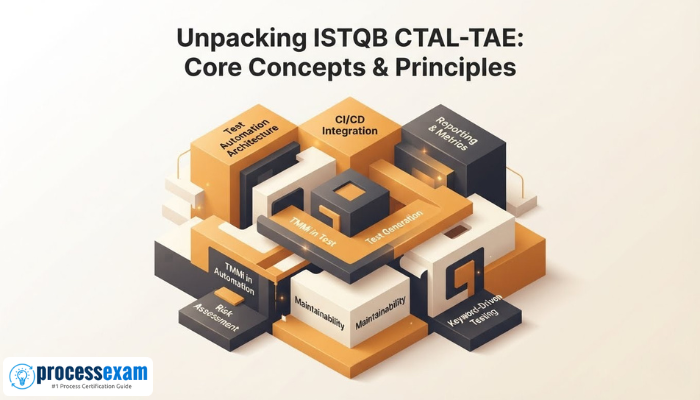
The ISTQB Certified Tester Advanced Level Test Automation Engineering (CTAL-TAE) certification is designed for test professionals who want to advance their skills in designing, developing, and maintaining test automation solutions. This advanced-level credential, represented by the exam code CTAL-TAE, validates a candidate's in-depth understanding of the principles, methods, and techniques required to implement robust and scalable test automation frameworks. If you're considering this specialization, this guide will clarify the path ahead, explore the syllabus, discuss preparation strategies, and reveal insights often overlooked by prospective candidates.
Understanding the ISTQB CTAL-TAE Credential
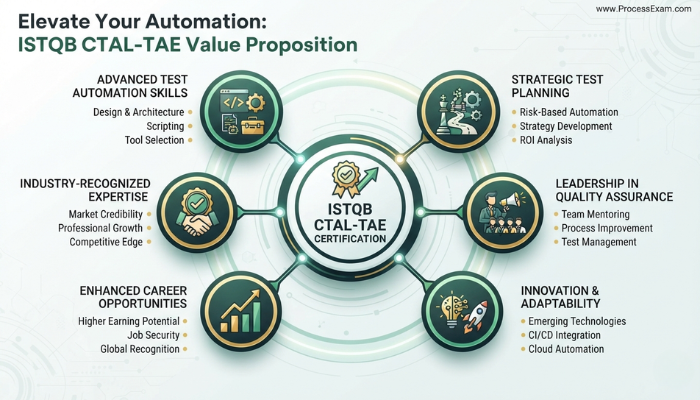
Embarking on the ISTQB CTAL-TAE journey signifies a commitment to mastering the complexities of test automation. This certification is globally recognized, positioning holders as experts in a critical area of modern software development. It moves beyond basic automation scripting, delving into architectural design, strategic implementation, and continuous improvement of automated testing processes. Professionals aiming to lead test automation initiatives, design resilient frameworks, or optimize existing automation efforts will find this certification invaluable.
The ISTQB (International Software Testing Qualifications Board) defines the standards for this advanced qualification. It's not merely about knowing tools but understanding the underlying principles that drive effective automation. The CTAL-TAE helps solidify a candidate's ability to make informed decisions about automation strategies, tool selection, and framework development, all crucial for delivering high-quality software efficiently.
Advancing Your Expertise in Test Automation
Becoming an ISTQB Certified Tester Advanced Level Test Automation Engineer means more than just earning a certificate; it involves a profound upgrade in your technical and strategic capabilities. The certification focuses on the practical application of test automation principles across the entire software development lifecycle, emphasizing efficiency and effectiveness. It equips professionals to tackle complex automation challenges, moving from merely automating tests to engineering comprehensive automation solutions.
Candidates explore topics ranging from initial setup and tool evaluation to the intricate details of framework design and deployment. This includes integrating test automation into Continuous Integration/Continuous Delivery (CI/CD) pipelines, a key aspect of modern DevOps practices. Holding this certification signals to employers a deep understanding of how to build and maintain high-quality, sustainable automation solutions that directly contribute to faster releases and improved product quality. For comprehensive study materials and practice tests, consider exploring resources at ProcessExam CTAL-TAE to aid your preparation.
Essential Details for the ISTQB CTAL-TAE Examination
Before diving deep into the syllabus, it's crucial to grasp the fundamental structure of the ISTQB Certified Tester Advanced Level Test Automation Engineering exam. Knowing these details helps in planning your study timeline and setting realistic expectations for the test day. The exam is designed to rigorously assess your understanding and application of advanced test automation concepts.
-
Exam Name: ISTQB Certified Tester Advanced Level Test Automation Engineering
-
Exam Code: CTAL-TAE
-
Exam Price: USD $249
-
Duration: 90 Minutes
-
Number of Questions: 40
-
Passing Score: 43 out of 66 points (scoring is based on a weighted system for questions)
Mastering Key Concepts in Test Automation Engineering
The ISTQB CTAL-TAE syllabus is comprehensive, covering all critical aspects a test automation engineer needs to know. It’s structured to build knowledge progressively, starting from fundamental objectives and moving towards advanced implementation and continuous improvement strategies. Each topic plays a vital role in forming a complete understanding of test automation as an engineering discipline.
Core Principles and Purpose
-
Introduction and Objectives for Test Automation: This section sets the stage, outlining the overarching goals and benefits of integrating automation into the testing process. It covers what automation aims to achieve and its strategic importance.
-
Purpose of Test Automation: Delves into the specific reasons for adopting automation, such as increasing test coverage, improving efficiency, and enabling faster feedback loops in development.
-
Test Automation in the Software Development Lifecycle: Explores how automation fits into different development methodologies, from Agile to Waterfall, and its impact at various stages.
-
Preparing for Test Automation: Focuses on the groundwork necessary before embarking on automation, including identifying suitable candidates for automation and setting clear objectives.
Infrastructure and Tooling Choices
-
Understand the Configuration of an Infrastructure to Enable Test Automation: Details the technical setup required, including environments, test data management, and integration points for automation tools.
-
Evaluation Process for Selecting the Right Tools and Strategies: Guides candidates through assessing available automation tools and frameworks, making informed decisions based on project needs, technical fit, and team expertise. This involves a critical assessment of various options to find the best match for specific contexts. Further information about ISTQB certifications can be found at ISQI ISTQB certification resources.
Architecture and Design Concepts
Building a robust test automation solution hinges on solid architectural design. This segment emphasizes how design principles translate into effective and maintainable automation frameworks. It's about creating a foundation that can scale and adapt to changing requirements.
-
Test Automation Architecture: Covers the various architectural patterns and components of a scalable and maintainable test automation framework, emphasizing modularity and reusability.
-
Design Concepts Leveraged in Test Automation: Explores how established software design principles, like separation of concerns, abstraction, and data-driven approaches, are applied within test automation.
Implementing Test Automation Solutions
Beyond design, the syllabus moves into the practical aspects of bringing test automation to life. This includes the actual development process, managing associated risks, and ensuring the long-term viability of the automation solution.
-
Implementing Test Automation: Discusses the practical steps and considerations for writing automated tests, integrating them with the framework, and executing them efficiently.
-
Test Automation Development: Focuses on best practices for coding, scripting, and configuring test automation components, ensuring high-quality and reliable test scripts.
-
Risks Associated with Test Automation Development: Identifies potential pitfalls and challenges, such as false positives, maintenance overhead, and managing changing application UIs, along with mitigation strategies.
-
Test Automation Solution Maintainability: Emphasizes the importance of designing automation solutions that are easy to update, debug, and extend over time, reducing technical debt.
Deployment, Integration, and Reporting
For automation to deliver its full value, it must be properly deployed, integrated into the development pipeline, and its results effectively communicated. This section covers the operational aspects of a fully realized test automation solution.
-
Implementation and Deployment Strategies for Test Automation: Details various methods for rolling out and integrating test automation across different project phases and environments.
-
Integration to CI/CD Pipelines: Explains how to seamlessly embed automated tests into continuous integration and continuous delivery workflows, enabling rapid feedback and deployment. Official training providers for ISTQB offer valuable insights into these integrations; you can find them viaISTQB training providers.
-
Test Automation Reporting and Metrics: Covers the types of reports and metrics essential for tracking the effectiveness of automation, identifying trends, and making data-driven decisions.
-
Collection, Analysis and Reporting of Test Automation Data: Focuses on the processes and tools for gathering, interpreting, and presenting automation execution results to stakeholders.
Verifying and Improving Automation
A mature test automation practice requires continuous evaluation and refinement. These final topics ensure that the automation solution itself is robust and that there are mechanisms for ongoing improvement.
-
Verifying the Test Automation Solution: Addresses how to test the automation framework and scripts themselves to ensure they are reliable, accurate, and perform as expected.
-
Verification of the Test Automation Infrastructure: Focuses on ensuring the underlying technical environment and tools supporting automation are stable and correctly configured.
-
Continuous Improvement: Explores strategies and practices for regularly reviewing, optimizing, and evolving the test automation process and solution to maximize its long-term value. This includes incorporating new technologies and adapting to organizational changes.
-
Continuous Improvement Opportunities for Test Automation: Highlights specific areas for enhancement, such as reducing execution time, increasing test coverage, improving reporting, and enhancing collaboration among team members.
Strategizing Your Path to ISTQB CTAL-TAE Success
Passing the ISTQB CTAL-TAE exam requires more than just memorizing the syllabus; it demands a strategic approach to learning and practical application. Given the advanced nature of the certification, a well-structured preparation plan is key to success. Many candidates find that combining different study methods provides the most comprehensive understanding.
Effective Study Materials and Techniques
The foundation of your preparation lies in quality study materials. Begin by thoroughly reviewing the official ISTQB CTAL-TAE syllabus document, using it as your primary checklist. Each point in the syllabus represents a potential exam question or concept to master.
-
Official Syllabus: Understand the depth and breadth of each topic. The syllabus acts as a blueprint for the exam content.
-
Recommended Textbooks: Many advanced testing books cover the principles of test automation engineering. Look for titles that align with the ISTQB glossary and framework concepts.
-
Online Training Courses: Specialized ISTQB CTAL-TAE training courses, often offered by accredited training providers, can provide structured learning, expert insights, and practical exercises. These courses are particularly useful for complex topics like framework design and integration.
-
Practice Tests: Engaging with high-quality practice tests is crucial. They help you gauge your understanding, identify weak areas, and become familiar with the exam question format and time constraints. Focus on understanding the explanations for both correct and incorrect answers.
-
ISTQB Glossary: Familiarize yourself with the official ISTQB glossary to ensure you understand terms exactly as defined by ISTQB, which is critical for answering questions accurately.
Practical Experience and Application
While theoretical knowledge is essential, practical experience solidifies your understanding. Apply the concepts learned in your daily work or through personal projects. Building a small test automation framework, integrating it with a CI/CD pipeline, and experimenting with different reporting mechanisms can be incredibly beneficial. This hands-on experience helps bridge the gap between theory and real-world challenges, making the exam concepts more tangible.
Participating in automation projects, even in a supporting role, can provide invaluable context. Discussing automation challenges and solutions with experienced colleagues also deepens your insight and exposes you to diverse perspectives. The goal is not just to pass the exam but to truly become a more capable test automation engineer.
Time Management and Consistency
Allocate dedicated study time consistently. Instead of cramming, aim for regular, focused study sessions. Break down the syllabus into manageable chunks and set realistic goals for each week. Create a study schedule and stick to it, ensuring you cover all topics thoroughly. Regular self-assessment through quizzes and practice questions can help track your progress and highlight areas needing more attention. Don't underestimate the complexity of the advanced-level exam; consistent effort over time yields the best results.
Unlocking Career Growth with Advanced Test Automation Skills
The ISTQB CTAL-TAE certification serves as a powerful catalyst for career advancement in the software testing landscape. In a world increasingly driven by speed and efficiency, professionals who can expertly design, implement, and maintain robust test automation solutions are in high demand. This credential signals to employers that you possess the advanced knowledge and strategic thinking required to elevate their testing practices.
Holders of the CTAL-TAE often find themselves qualified for higher-level roles with greater responsibilities and, typically, better compensation. The skills validated by this certification are directly applicable to leadership positions within quality assurance and development teams. It's a clear differentiator in a competitive job market, proving not just your technical prowess but also your strategic insight into the value of automation.
Key Job Roles and Opportunities
With an ISTQB CTAL-TAE certification, you can target a variety of influential roles:
-
Senior Test Automation Engineer: Leading the design and implementation of automation frameworks.
-
Test Automation Architect: Defining the overall strategy and technical blueprint for automation solutions across an organization.
-
DevOps Engineer (with Testing Focus): Integrating automation into CI/CD pipelines and improving release processes.
-
QA Lead/Manager: Guiding teams in adopting best practices for test automation and measuring its effectiveness.
-
Consultant in Test Automation: Advising multiple clients on optimizing their test automation strategies and implementations.
These roles require a blend of technical expertise, problem-solving abilities, and a deep understanding of the software development lifecycle. The CTAL-TAE provides a structured pathway to developing and validating these essential competencies, positioning you as a valuable asset to any modern technology company. It validates your ability to contribute significantly to the overall quality and delivery speed of software products.
Overcoming Common Hurdles in Test Automation Certification
Starting the ISTQB CTAL-TAE journey can present unique challenges, particularly for those new to advanced certifications or deep dives into automation architecture. Recognizing these hurdles early can help you prepare more effectively and mitigate potential frustrations. It’s not just about the technical content, but also about the approach to learning and problem-solving.
Navigating Content Complexity
One of the primary challenges is the sheer depth and breadth of the syllabus. The CTAL-TAE moves beyond tool-specific knowledge to focus on universal engineering principles. This requires a shift in mindset, from simply scripting tests to designing scalable, maintainable, and verifiable automation solutions. Candidates often find the sections on Test Automation Architecture and Design Concepts particularly demanding, as they require abstract thinking and the ability to apply design patterns to testing contexts.
To overcome this, focus on understanding the "why" behind each concept, not just the "what." Connect theoretical knowledge with practical scenarios. Engage in discussions with peers or mentors who have experience in architecting automation frameworks. Breaking down complex topics into smaller, digestible units and revisiting them multiple times can also be highly effective.
Avoiding Misconceptions and Ethical Traps
Another hurdle lies in ensuring ethical preparation. In the pursuit of certifications, some candidates might be tempted by so-called "exam dumps" or unethical shortcuts. It's crucial to understand that using such materials not only undermines the integrity of the certification but also severely compromises your actual learning and long-term career credibility. ISTQB certifications, including CTAL-TAE, are designed to validate genuine knowledge and skill. Relying on memorized answers from dumps will not equip you with the problem-solving abilities needed in real-world test automation engineering.
Legitimate practice tests and study guides are invaluable. They help you understand the question styles and areas of focus without giving away actual exam questions. Always prioritize ethical learning practices, which build true competency and uphold the value of your certification. For ethical and high-quality preparation, stick to official resources and reputable training providers.
Maintaining Focus and Motivation
The long-form study required for a 4000-word exam can be taxing on motivation. Balancing study with work and personal life demands discipline. It's common to feel overwhelmed or experience periods of low motivation.
Strategies to stay motivated include:
-
Setting small, achievable milestones to celebrate progress.
-
Joining study groups or online forums to share experiences and get support.
-
Reminding yourself of the career benefits and skill enhancement that the certification offers.
-
Taking short breaks and ensuring a healthy work-life balance to prevent burnout.
Remember, the journey to ISTQB CTAL-TAE is a marathon, not a sprint. Consistent effort and a positive mindset are your greatest assets in overcoming these common hurdles.
Verifying Your Automation Solution Effectiveness
A critical, often understated, aspect of test automation engineering is the continuous verification and validation of the automation solution itself. It's not enough to simply write tests; you must ensure that your automation framework and infrastructure are performing optimally, reliably, and providing accurate results. This verification process prevents "automation paradoxes" where the automation itself becomes a source of errors or false confidence.
The CTAL-TAE syllabus places significant emphasis on this, highlighting two key areas:
Verification of the Test Automation Infrastructure
This involves regularly checking the health and configuration of the environment where your automated tests run. It includes:
-
Environment Stability: Ensuring that test environments are consistent, isolated, and do not introduce flakiness into test results.
-
Tool Configuration: Verifying that all automation tools, libraries, and dependencies are correctly installed, configured, and up-to-date.
-
Test Data Management: Confirming that test data is properly managed, refreshed, and accessible to automated tests without causing conflicts or inconsistencies.
-
Performance Monitoring: Monitoring the performance of the automation infrastructure itself to identify bottlenecks or slowdowns in test execution.
Proactive monitoring and maintenance of the infrastructure are vital to ensure that automation efforts yield trustworthy and timely feedback. An unstable infrastructure can quickly erode confidence in the automation suite, negating its benefits.
Continuous Improvement Opportunities for Test Automation
The landscape of software development and testing is constantly evolving, and so too must your test automation solution. The CTAL-TAE emphasizes continuous improvement as a core tenet. This means actively seeking out opportunities to enhance the efficiency, coverage, and maintainability of your automation efforts.
Consider the following avenues for improvement:
-
Reducing Flakiness: Identifying and addressing non-deterministic tests that provide inconsistent results, thereby improving the reliability of the test suite.
-
Optimizing Execution Speed: Implementing parallel execution, smarter test selection, or refactoring slow tests to reduce feedback time.
-
Expanding Coverage: Strategically identifying critical areas of the application that are currently underserved by automation and extending test coverage.
-
Enhancing Reporting: Improving the clarity, detail, and actionable insights provided by test automation reports for better decision-making.
-
Adopting New Technologies: Evaluating and integrating new automation tools, frameworks, or techniques that can offer significant advantages.
-
Promoting Collaboration: Fostering better communication and collaboration between development, testing, and operations teams to align automation goals.
By treating test automation as a living system that requires continuous care and enhancement, you can ensure it remains a valuable asset for your organization. This proactive stance is what truly defines an advanced test automation engineer.
Sustaining Excellence in Automated Testing
Achieving the ISTQB CTAL-TAE certification marks a significant milestone, but the journey of a test automation engineer is one of continuous learning and adaptation. The principles and practices covered in the certification provide a robust foundation, yet the technology landscape evolves rapidly. Sustaining excellence means staying current, applying advanced knowledge, and consistently seeking opportunities for growth within your role and organization.
This involves:
-
Staying Updated with Tools and Trends: Regularly researching new test automation tools, frameworks, and methodologies. The certification provides the conceptual framework to evaluate these effectively.
-
Contributing to the Community: Engaging with the broader testing and automation community through conferences, webinars, and online forums. This fosters knowledge exchange and keeps you connected to industry best practices.
-
Mentoring Others: Sharing your expertise with junior team members or those new to automation. Mentorship not only aids others but also reinforces your own understanding and leadership skills.
-
Driving Innovation: Proactively seeking out ways to innovate within your organization's testing processes, leveraging your advanced automation knowledge to introduce efficiencies and solve complex problems.
The CTAL-TAE certification empowers you not just to perform test automation tasks, but to lead and shape the future of automated testing in your organization. It's about becoming a strategic asset, constantly pushing the boundaries of what automation can achieve to deliver higher quality software faster.
Embarking on the ISTQB CTAL-TAE certification path is a strategic investment in your professional future. It demands dedication, a structured study approach, and a commitment to understanding advanced test automation principles rather than just memorizing facts. The insights gained, from architectural design to continuous improvement, are invaluable in today's fast-paced software development world. This advanced qualification will not only validate your expertise but also equip you with the skills to drive innovation and lead successful automation initiatives.
Are you ready to elevate your test automation career and become a certified expert? Begin your comprehensive preparation for the ISTQB CTAL-TAE exam with high-quality study materials and practice tests. Explore the resources available at ProcessExam CTAL-TAE preparation to ensure you're fully equipped to tackle the challenges and achieve this coveted certification.
FAQs
1. What background is needed for ISTQB CTAL-TAE certification?
Candidates typically need an ISTQB Foundation Level certification and at least 3-5 years of practical experience in software testing, particularly with exposure to test automation concepts and tools. While not strictly enforced for exam registration, this background is highly recommended for success.
2. How long should I study for the ISTQB CTAL-TAE exam?
The study duration varies based on individual experience and learning style, but a dedicated effort of 80-120 hours is often recommended. This typically translates to 2-4 months of consistent study, allowing time for deep understanding of the advanced concepts.
3. Are there prerequisites to take the ISTQB CTAL-TAE exam?
Officially, the ISTQB Advanced Level certifications require candidates to hold the ISTQB Certified Tester Foundation Level certificate. Some exam boards may also recommend a certain level of practical experience, though this is not always a strict registration prerequisite.
4. What job roles benefit most from ISTQB CTAL-TAE?
Roles such as Test Automation Engineer, Senior QA Engineer, Test Architect, Automation Architect, and DevOps Engineer with a testing focus benefit significantly. The certification validates the advanced skills needed to design and implement robust automation solutions.
5. How does ISTQB CTAL-TAE differ from other automation certifications?
ISTQB CTAL-TAE focuses on vendor-neutral, universal principles of test automation engineering, covering strategy, architecture, and maintenance. Many other certifications are tool-specific or platform-specific, whereas CTAL-TAE provides a broader, foundational understanding applicable across various technologies and contexts.
- ISTQB Exam |
- Core Advanced |
- ISTQB Test Automation Engineering Exam Questions |
- ISTQB Test Automation Engineering Question Bank |
- ISTQB Test Automation Engineering Questions |
- ISTQB Test Automation Engineering Test Questions |
- ISTQB Test Automation Engineering Study Guide |
- ISTQB CTAL-TAE Quiz |
- ISTQB CTAL-TAE Exam |
- CTAL-TAE |
- CTAL-TAE Question Bank |
- CTAL-TAE Certification |
- CTAL-TAE Questions |
- CTAL-TAE Practice Test |
- CTAL-TAE Study Guide Material |
- CTAL-TAE Sample Exam |
- Test Automation Engineering |
- Test Automation Engineering Certification |
- ISTQB Certified Tester Advanced Level Test Automation Engineering |
- CTAL - Test Automation Engineering Simulator |
- CTAL - Test Automation Engineering Mock Exam |
- ISTQB CTAL - Test Automation Engineering Questions |
- ISTQB Test Automation Engineering Book |
- CTAL-TAE Study Guide PDF |
- Test Automation Engineering Certification Cost |
- Test Automation Engineering Certification Requirements |
- ISTQB CTAL - Test Automation Engineering Question Bank |
- ISTQB CTAL - Test Automation Engineering Book


