
What is the IIBA Agile Analysis Certification, and Do You Need It?

The IIBA Agile Analysis Certification (AAC) is a specialized credential offered by the International Institute of Business Analysis (IIBA), designed to validate a business analyst's proficiency in applying agile principles and practices. This certification specifically focuses on the agile mindset and techniques essential for successful business analysis in agile environments, making it a crucial benchmark for professionals working in or transitioning to agile teams. This article delves into what the IIBA AAC entails, its relevance in the current market, and helps you determine if this certification aligns with your professional aspirations and career path. We will explore the benefits, target audience, and strategic approaches for preparation, ensuring a comprehensive understanding of the IIBA AAC.
Unlocking Agile Potential: The IIBA Agile Analysis Certification
The IIBA Agile Analysis Certification (AAC) establishes a global standard for business analysis professionals operating within agile frameworks. This credential signifies a deep understanding of how business analysis activities integrate with agile development, encompassing everything from user story definition to continuous value delivery. Professionals holding this certification are equipped to facilitate communication, manage backlogs, and contribute effectively to agile project success, demonstrating their ability to adapt traditional business analysis skills to dynamic, iterative environments. The AAC is recognized by employers as a testament to a practitioner's hands-on experience and theoretical knowledge in agile business analysis.
Defining the Agile Business Analysis Role
Agile business analysis is not merely a set of techniques; it's a shift in mindset. It emphasizes collaboration, iterative development, and continuous feedback to deliver value rapidly. The certified agile business analyst acts as a crucial bridge between stakeholders and development teams, ensuring that requirements are understood, prioritized, and continuously refined throughout the agile lifecycle. They champion business value, facilitate effective communication, and contribute to building high-performing, self-organizing teams. This role demands flexibility and a proactive approach to evolving business needs.
Core Principles Validated by IIBA AAC
The IIBA AAC validates a candidate's grasp of several core agile principles. These include iterative development, continuous integration, stakeholder collaboration, and adaptation to change. Understanding these principles enables business analysts to support agile teams in delivering solutions that meet evolving customer needs and business objectives. The certification reinforces the importance of quick feedback loops and relentless improvement, which are fundamental to agile success.
Aligning Business Analysis with Agile Methodologies
Integrating business analysis with agile methodologies is vital for organizations seeking to enhance efficiency and responsiveness in product development. The IIBA Agile Analysis Certification plays a significant role in this alignment by providing a structured framework for business analysts to apply their expertise within agile settings. It equips professionals with the necessary tools and techniques to contribute effectively to iterative development cycles, ensuring that business value remains at the forefront of every sprint. This alignment helps bridge the gap between business objectives and technical execution, fostering a more cohesive and productive development environment.
Embracing an Agile Mindset for Business Analysts
An agile mindset is critical for business analysts to thrive in today's fast-paced project environments. This involves moving away from rigid, upfront requirements documentation towards a more collaborative, adaptive, and iterative approach. The IIBA AAC helps cultivate this mindset by focusing on principles like embracing change, continuous learning, and delivering value incrementally. Professionals learn to prioritize flexibility and stakeholder engagement over strict adherence to plans, enabling them to respond swiftly to new information and changing market demands.
Facilitating Value Delivery in Agile Teams
Business analysts with an agile analysis certification are instrumental in facilitating value delivery. They work closely with product owners, scrum masters, and development teams to decompose complex requirements into manageable user stories, prioritize the backlog, and ensure clarity of scope. Their ability to articulate business needs and translate them into actionable tasks directly impacts the team's capacity to deliver high-quality, high-value features with each iteration. This proactive engagement is central to the success of any agile initiative.
Benefits of Obtaining the IIBA Agile Analysis Certification
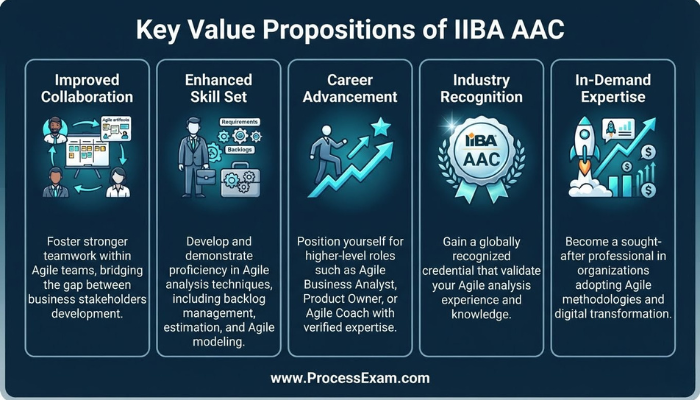
Pursuing the IIBA Agile Analysis Certification offers a range of professional advantages for business analysis practitioners. This credential can significantly enhance your career trajectory, deepen your understanding of agile practices, and provide a competitive edge in the job market. By demonstrating specialized knowledge, certified professionals often find themselves in roles with greater responsibility and influence within agile teams.
Advancing Your Career in Agile Environments
One of the primary benefits of the IIBA AAC is its potential to accelerate career growth. As more organizations adopt agile methodologies, the demand for business analysts with proven agile expertise continues to rise. This certification signals to employers that you possess the specialized skills required to navigate and contribute effectively to agile projects, opening doors to advanced positions such as Agile Business Analyst, Product Owner, or Scrum Master. It can distinguish you from peers and validate your commitment to continuous professional development.
Enhancing Your Skill Set
The certification process itself is a valuable learning journey, deepening your understanding of agile principles, techniques, and tools. You'll gain proficiency in areas such as user story mapping, backlog refinement, iterative planning, and stakeholder collaboration within an agile context. These enhanced skills are directly applicable, allowing you to contribute more effectively and strategically to your current and future projects. Visit the official IIBA resources to explore the detailed knowledge areas covered.
Gaining Industry Recognition and Credibility
The IIBA is a globally recognized authority in business analysis. Achieving the AAC credential from such a prestigious organization provides significant industry recognition and boosts your professional credibility. It demonstrates a commitment to professional excellence and adherence to best practices in agile business analysis, making you a more sought-after candidate for roles that require specialized agile expertise.
Who Should Pursue the IIBA Agile Analysis Certification?
The IIBA Agile Analysis Certification (AAC) is specifically tailored for a diverse group of professionals looking to formalize and advance their expertise in agile environments. This credential is not limited to traditional business analysts but extends its value to anyone involved in the discovery, definition, and delivery of solutions within an agile framework. Understanding if this certification aligns with your role and career aspirations is a crucial first step.
Target Audience for the AAC Credential
The IIBA AAC is ideal for:
-
Business Analysts: Those who want to enhance their skills in agile environments and work effectively with agile teams.
-
Project Managers: Professionals overseeing agile projects who need a deeper understanding of agile analysis practices.
-
Product Owners and Product Managers: Individuals responsible for defining and prioritizing product backlogs in agile settings.
-
Scrum Masters: Those looking to better support their teams in understanding and delivering business value through agile analysis.
-
Developers and Testers: Team members who wish to improve their collaboration with business analysts and understand requirements more effectively in an agile context.
-
Consultants: Professionals who advise organizations on adopting and optimizing agile methodologies.
This certification provides a common language and set of best practices, fostering better collaboration across different roles within an agile team.
Assessing Your Experience Level
While the IIBA does not typically mandate specific years of experience for its Agile Analysis Certification, it is generally recommended for individuals who already have some foundational knowledge or experience in business analysis or agile projects. The AAC builds upon existing analytical skills, reorienting them toward an agile paradigm. Candidates should be comfortable with basic business analysis concepts and have an understanding of what agile methodologies entail. Self-assessment of your practical exposure to agile projects can help you gauge your readiness.
Crafting Your IIBA AAC Study Strategy
Effective preparation is key to successfully passing the IIBA Agile Analysis Certification exam. Developing a structured study strategy will help you cover all necessary knowledge areas and build the confidence required for the examination. This involves identifying reliable resources, understanding the exam format, and committing to a consistent study plan.
Essential Study Resources for IIBA AAC Preparation
To prepare for the IIBA AAC exam, leverage a combination of official and supplementary materials.
-
IIBA Agile Extension to the BABOK® Guide: This is the fundamental reference and essential reading for the exam. It outlines the core principles, techniques, and practices of agile business analysis.
-
Official IIBA Website: Explore IIBA.org for exam blueprints, sample questions, and any updates to the certification requirements.
-
IIBA Agile Analysis Certification Study Guide: Many reputable training providers offer comprehensive study guides that condense the core content and provide structured learning paths.
-
Online Training Courses: Consider enrolling in an IIBA Agile Analysis Certification training course to gain structured learning, expert insights, and practical application exercises.
-
Practice Questions and Mock Exams: Utilize IIBA Agile Analysis Certification practice questions and a IIBA Agile Analysis Certification mock exam to familiarize yourself with the exam format and identify areas for improvement. Platforms like ProcessExam offer valuable practice resources.
Combining these resources ensures a well-rounded and thorough preparation.
Developing a Focused Study Plan
A well-structured study plan is crucial for managing your time and ensuring comprehensive coverage of all exam topics.
Defining Your Learning Path
Begin by reviewing the official IIBA Agile Extension to the BABOK® Guide and identifying the key knowledge areas. Break down your study into manageable modules, allocating specific time slots for each area. Focus on understanding concepts rather than rote memorization.
Incorporating Practical Application
Theoretical knowledge should be complemented by practical application. Reflect on your past project experiences and consider how agile analysis techniques could have been applied or improved. Engaging in discussions with agile practitioners can also deepen your understanding.
Regular Review and Self-Assessment
Schedule regular review sessions to reinforce learned material. Use IIBA Agile Analysis Certification sample questions to test your knowledge and identify any gaps. A consistent approach to self-assessment will highlight areas requiring further attention, allowing you to refine your study efforts.
Navigating the IIBA AAC Exam Experience
Preparing for the IIBA AAC exam involves more than just studying the content; it also means understanding the exam environment and developing effective test-taking strategies. While specific details about the exam format (like duration or question count) are not provided in the inputs, candidates should generally expect a scenario-based, multiple-choice assessment designed to test practical application of agile analysis principles.
Understanding the Exam Structure
Typically, certification exams from professional bodies like IIBA assess both theoretical knowledge and practical application. The IIBA AAC exam is designed to evaluate your ability to apply agile analysis techniques in real-world scenarios. This often involves reading case studies or descriptions of agile project situations and selecting the best course of action or interpretation based on IIBA's agile analysis guidelines.
Strategic Test-Taking Techniques
Employing strategic test-taking techniques can significantly improve your performance. This includes time management, carefully reading each question and all answer choices, and eliminating obviously incorrect options. Practicing with IIBA Agile Analysis Certification practice questions under timed conditions can help you build speed and accuracy. Always be mindful of the agile context when evaluating potential answers.
Ethical Preparation and Avoiding Dumps
Maintaining integrity throughout your preparation process is paramount. Relying on "exam dumps" or unethical shortcuts not only compromises your learning but also risks the value of the certification. The true benefit of the IIBA Agile Analysis Certification lies in the knowledge and skills you gain, which are essential for effective professional practice. Focus on understanding the concepts thoroughly through legitimate study materials and practice tests. Ethical preparation ensures you develop genuine competency, which is invaluable in your career.
Maximizing Your Investment in IIBA AAC
Obtaining the IIBA Agile Analysis Certification is an investment in your professional future, and maximizing its return requires more than just passing the exam. It involves actively applying your newly validated skills, continuously engaging with the agile community, and leveraging the credential for ongoing career development. The AAC credential can open doors and enhance your professional impact significantly.
Applying Agile Analysis Skills Post-Certification
The true value of the IIBA AAC is realized when you actively apply the agile analysis principles and techniques learned during your preparation. Seek opportunities in your current role or new positions to implement iterative development practices, facilitate backlog refinement, and improve stakeholder collaboration within agile teams. Your practical application will reinforce your knowledge and demonstrate tangible benefits to your organization. This hands-on experience is crucial for solidifying your expertise and achieving higher levels of professional effectiveness.
Engaging with the IIBA Community
Beyond the certification itself, engaging with the broader IIBA community offers continuous learning and networking opportunities. Participating in local chapters, online forums, and professional events allows you to stay updated on the latest trends in agile business analysis, share insights, and connect with other certified professionals. This engagement can lead to mentorship opportunities, collaborative projects, and further career growth. Staying connected ensures that your skills remain sharp and relevant in an evolving professional landscape. For more insights, connect with the IIBA community on LinkedIn.
Continuous Professional Development
The agile landscape is constantly evolving, making continuous professional development essential for maintaining the relevance and impact of your IIBA AAC. Look for advanced training, specialized workshops, and thought leadership in agile methodologies. Consider pursuing further certifications or micro-credentials that complement your agile analysis expertise. This commitment to lifelong learning ensures that your investment in the IIBA AAC continues to yield significant returns throughout your career. To learn more about the organization itself, visit the Wikipedia page for the International Institute of Business Analysis.
Conclusion
The IIBA Agile Analysis Certification (AAC) serves as a robust credential for business analysis professionals navigating the complexities of agile environments. It validates a critical skill set, opens avenues for career advancement, and enhances credibility within the industry. By understanding its purpose, benefits, and the strategic preparation required, you can make an informed decision about pursuing this valuable certification.
If you are committed to excelling in agile project delivery and wish to formalize your expertise, the IIBA AAC offers a clear path to achieving that goal. Embark on your preparation journey with confidence, utilizing reliable resources and a diligent study approach. To further support your preparation for the IIBA AAC exam, explore comprehensive study materials and practice questions available on ProcessExam, helping you build the confidence needed for success.
FAQs
1. What skills does the IIBA Agile Analysis Certification validate?
The IIBA Agile Analysis Certification validates a professional's ability to apply business analysis principles within an agile framework, including stakeholder collaboration, backlog management, user story definition, and continuous value delivery. It confirms proficiency in agile analysis techniques and mindset.
2. Is prior agile experience required for the IIBA AAC?
While the IIBA does not typically impose strict prerequisites for agile experience, having some foundational knowledge or practical exposure to agile projects and business analysis is highly recommended. The certification builds upon existing skills, reorienting them to an agile context.
3. How does the IIBA AAC differ from other agile certifications?
The IIBA AAC is specifically focused on the business analysis discipline within agile environments, distinguishing it from project management-centric or development-focused agile certifications. It emphasizes the analytical and collaborative aspects of delivering value in an iterative manner, as defined by the International Institute of Business Analysis.
4. What career opportunities can the IIBA Agile Analysis Certification unlock?
The IIBA Agile Analysis Certification can unlock various career opportunities, including roles such as Agile Business Analyst, Product Owner, Scrum Master, or an enhanced Business Analyst position within agile teams. It demonstrates specialized expertise valued by organizations adopting agile methodologies.
5. What is the best way to prepare for the IIBA AAC exam?
The best way to prepare for the IIBA AAC exam involves a combination of studying the IIBA Agile Extension to the BABOK® Guide, enrolling in an IIBA Agile Analysis Certification training course, utilizing practice questions, and taking mock exams. Consistent study and practical application of concepts are key to success.
- IIBA Exam |
- IIBA Agile Analysis Exam Questions |
- IIBA Agile Analysis Question Bank |
- IIBA Agile Analysis Questions |
- IIBA Agile Analysis Test Questions |
- IIBA Agile Analysis Study Guide |
- IIBA AAC Quiz |
- IIBA AAC Exam |
- AAC |
- AAC Question Bank |
- AAC Certification |
- AAC Questions |
- AAC Practice Test |
- AAC Study Guide Material |
- AAC Sample Exam |
- Agile Analysis |
- Agile Analysis Certification |
- IIBA Agile Analysis Certification |
- IIBA Agile Analysis Book |
- AAC Exam |
- AAC Study Guide PDF |
- Agile Analysis Certification Cost |
- Agile Analysis Certification Requirements |
- IIBA Agile Analysis Sample Questions |
- AAC Exam Questions Download |
- AAC Test Questions |
- Agile Analysis PDF |
- Specialized Business Analysis


