
Mastering Finance QA with the ISTQB CT-FT Exam
The ISTQB Certified Tester - Finance Testing (CT-FT) certification validates a tester's specialized knowledge in financial software testing, ensuring proficiency in critical domains like banking applications, regulatory compliance, and risk management. This professional credential is designed for individuals involved in testing financial applications who need to demonstrate a deep understanding of the unique challenges and requirements within the finance sector. Professionals seeking to enhance their expertise and career prospects in this specialized field will find this article a comprehensive guide, clarifying the exam's purpose, the skills it validates, and effective preparation strategies to achieve certification.
Establishing Competence in Financial Software Testing
The financial industry operates under stringent regulations and demands an exceptionally high level of accuracy and security from its software systems. Testing these applications requires more than general software testing skills; it necessitates specific domain knowledge to identify risks, ensure compliance, and validate complex financial calculations. The ISTQB CT-FT certification addresses this critical need by providing a globally recognized benchmark for competence in finance testing. It aims to equip testers with the specialized techniques and understanding required to manage the unique intricacies of financial software, from retail banking platforms to investment systems and payment gateways.
Importance of Specialized Testing in Finance
Financial systems handle sensitive data and critical transactions, making their integrity paramount. Errors can lead to significant financial losses, legal repercussions, and severe damage to reputation. Specialized finance testing ensures that software meets not only functional requirements but also adheres to regulatory standards such as Basel III, MiFID II, and GDPR, which often have specific testing implications. Testers with this certification understand how to integrate these compliance needs into the testing lifecycle, significantly reducing operational risks.
Who Pursues ISTQB Finance Testing Certification?
The ISTQB CT-FT certification is ideally suited for a diverse group of testing professionals who interact with financial software at various stages. This includes experienced testers, test analysts, test engineers, test consultants, test managers, user acceptance testers, and software developers working in the financial sector. Project managers, quality managers, and business analysts who need to understand the principles of financial testing to better manage projects and requirements also benefit significantly from this specialized credential. The certification provides a structured learning path that formalizes existing expertise and introduces new, industry-specific best practices.
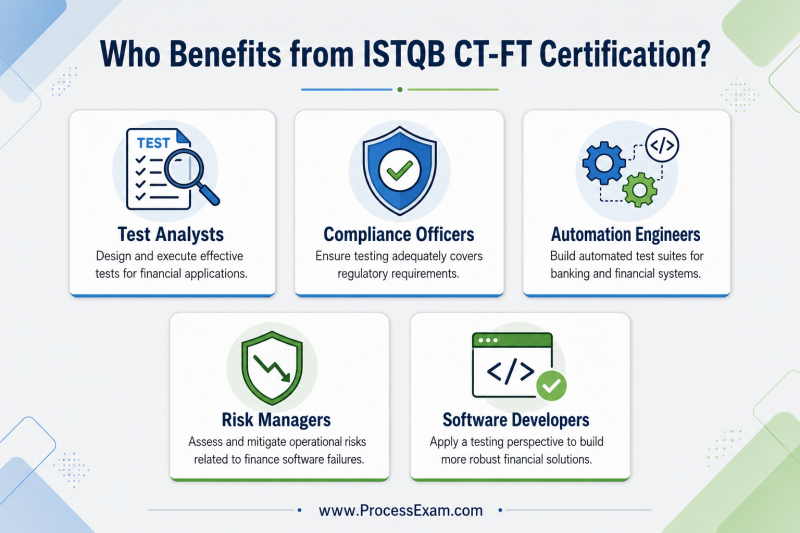
Roles Benefiting from CT-FT Expertise
- Test Analysts: Those responsible for designing and executing tests for financial applications.
- Compliance Officers: Individuals who need to ensure testing adequately covers regulatory requirements.
- Automation Engineers: Professionals building automated test suites for banking and financial systems.
- Risk Managers: Those assessing and mitigating operational risks related to software failures in finance.
- Software Developers: Developers who need a testing perspective to build more robust financial solutions from the outset.
Unpacking Core Principles of Financial Software Quality
Achieving high quality in financial software involves a rigorous application of testing principles tailored to the domain’s specific demands. The ISTQB CT-FT focuses on foundational concepts that govern the reliability, security, and performance of financial applications. This includes understanding typical financial product lifecycles, transaction processing, data integrity, and the various financial instruments that applications manage. A key aspect is learning how to approach testing from a business perspective, ensuring that tests validate actual financial operations and user expectations rather than just technical functionality.
Ensuring Data Integrity and Transaction Accuracy
A critical component of financial software quality is the absolute integrity of data and the accuracy of every transaction. Testers must understand common data inconsistencies, rounding errors, and concurrency issues that can plague financial systems. The certification provides insights into designing tests that verify data transformations, ledger updates, and reporting accuracy across multiple systems and time zones. This involves robust test data management and the ability to simulate various financial scenarios to expose subtle defects.
Navigating Regulatory Compliance in Testing
Regulatory compliance is not merely an add-on to financial software testing; it is an intrinsic part of its design and validation. The ISTQB CT-FT emphasizes the importance of embedding compliance checks throughout the testing process, from requirement analysis to final deployment. This involves familiarity with key financial regulations globally and locally, understanding their impact on software functionality, and devising specific test cases to verify adherence. Testers learn to integrate regulatory frameworks like Dodd-Frank, EMIR, and PSD2 into their testing strategies. For comprehensive understanding of how these regulations influence testing, consulting the comprehensive CT-FT syllabus is invaluable.
Approaching Regulatory Scrutiny
Financial institutions face intense scrutiny from regulatory bodies. Therefore, testing documentation must be meticulous, providing clear audit trails of test coverage, defect resolution, and compliance verification. The CT-FT curriculum prepares testers to:
- Identify specific regulatory requirements relevant to a financial application.
- Translate regulatory stipulations into actionable test scenarios and cases.
- Develop test plans that explicitly address compliance aspects.
- Report on compliance testing outcomes in an auditable and transparent manner.
Practical Aspects of Banking Application Testing
Banking applications are diverse, ranging from core banking systems to mobile banking apps and trading platforms. Each type presents unique testing challenges related to scale, security, performance, and user experience. The ISTQB CT-FT delves into the specific strategies and techniques applicable to these varied applications. It covers topics such as testing payment processing systems, loan and mortgage platforms, treasury systems, and fraud detection mechanisms. Testers learn to approach these systems with a comprehensive mindset, considering both functional and non-functional requirements.
Common Challenges in Banking Software Testing
Testing banking applications often involves:
- High Transaction Volumes: Ensuring systems can handle millions of transactions without performance degradation or data loss.
- Complex Integration Points: Verifying seamless data flow and functionality across numerous internal and external systems.
- Robust Security Demands: Protecting sensitive customer data and financial assets from cyber threats, requiring extensive security testing.
- User Experience Consistency: Delivering intuitive and reliable interfaces across multiple channels (web, mobile, ATM).
- Legacy System Interoperability: Testing interactions with older, often mainframe-based, systems that are critical to operations.
Developing a Robust ISTQB CT-FT Preparation Strategy
Preparing for the ISTQB CT-FT certification requires a structured and diligent approach. Candidates should begin by thoroughly reviewing the official syllabus, which outlines all the knowledge areas and learning objectives. Due to the specialized nature of finance testing, theoretical knowledge should be supplemented with practical experience where possible. Utilizing study guides, online courses, and peer study groups can significantly enhance understanding and retention of complex financial concepts and testing methodologies.
Essential Preparation Resources
To effectively prepare for the exam, candidates should consider:
- Official Syllabus Review: This is the foundation of your study, ensuring all topics are covered.
- Accredited Training Courses: Specialized courses often provide structured content, exercises, and expert guidance tailored to the exam.
- Industry Publications: Reading articles and whitepapers on financial regulations and software testing trends provides valuable context.
- Practice Questions and Mock Exams: Regularly attempting sample questions for ISTQB CT-FT helps familiarize candidates with the exam format and question style, building confidence.
- Collaborative Study: Discussing concepts with peers can clarify complex topics and offer alternative perspectives.
Enhancing Skills for the ISTQB CT-FT Exam
Beyond rote memorization, the ISTQB CT-FT exam assesses a candidate's ability to apply finance testing principles in real-world scenarios. Therefore, enhancing practical skills alongside theoretical knowledge is crucial. This involves not only understanding what to test but also how to test it effectively within the financial context. Developing a keen eye for detail, understanding risk-based testing in finance, and being able to articulate testing strategies clearly are vital competencies. Further insights into understanding finance testing can be found by visiting the ISTQB Certified Tester - Finance Testing details page.
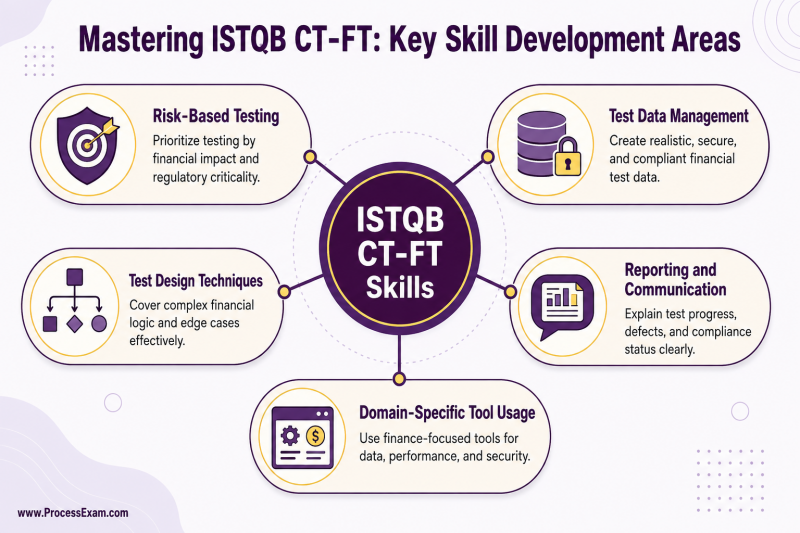
Key Skill Development Areas
- Risk-Based Testing: Prioritizing test efforts based on the potential financial impact and regulatory criticality of system components.
- Test Data Management: Creating realistic, secure, and compliant test data sets for various financial scenarios, including positive and negative cases.
- Test Design Techniques: Applying advanced techniques to cover complex financial logic and edge cases effectively.
- Reporting and Communication: Clearly communicating test progress, defects, and compliance status to stakeholders who may not be testing experts.
- Domain-Specific Tool Usage: Familiarity with tools commonly used in financial environments for data analysis, performance testing, and security scanning.
Career Advancement with ISTQB Finance Testing
The ISTQB CT-FT certification serves as a powerful accelerator for career progression within the financial technology sector. It signals to employers that an individual possesses not just general testing skills, but a validated expertise in the highly specialized and regulated world of finance. This can open doors to more senior roles, specialized projects, and positions with greater responsibility and higher earning potential. Professionals can leverage this certification to transition into roles such as Financial Test Lead, Banking Application QA Specialist, or Regulatory Compliance Tester.
Long-Term Benefits for Professionals
Obtaining the ISTQB CT-FT certification provides several long-term advantages:
- Enhanced Credibility: Demonstrates a commitment to professional development and a deep understanding of financial testing best practices.
- Increased Employability: Makes candidates more attractive to financial institutions and fintech companies seeking specialized talent.
- Access to Specialized Roles: Qualifies individuals for high-demand positions focused on critical financial systems and regulatory compliance.
- Higher Earning Potential: Specialized skills often command better salaries and benefits within the competitive financial industry.
- Professional Network Expansion: Connects individuals with a global community of certified finance testing professionals, fostering knowledge exchange and collaboration.
Overcoming Challenges in Financial Domain Testing
Testing in the financial domain is inherently complex, presenting unique challenges that require specialized approaches. Beyond the technical intricacies, testers must contend with evolving regulatory landscapes, stringent security requirements, and the immense pressure associated with financial transactions. Overcoming these hurdles demands a proactive mindset, continuous learning, and a robust understanding of both testing methodologies and financial operations. Effectively managing the scope of testing, particularly in large-scale banking systems, is also a constant challenge that the certification prepares professionals to tackle.
Strategies for Mitigating Common Difficulties
Addressing the inherent challenges in finance testing involves:
- Continuous Regulatory Monitoring: Staying updated with changes in financial laws and integrating new requirements into test plans promptly.
- Advanced Security Testing: Employing penetration testing, vulnerability assessments, and robust data encryption verification to protect sensitive information.
- Performance Scalability: Designing tests that simulate peak loads and high transaction volumes to ensure system resilience and responsiveness.
- Cross-Functional Collaboration: Working closely with business analysts, developers, and compliance officers to ensure a holistic understanding of requirements and risks.
- Specialized Tooling: Utilizing domain-specific tools for data generation, mock service creation, and complex financial calculation validation.
Deciphering the True Value of ISTQB CT-FT Certification
The ISTQB CT-FT certification offers substantial value beyond a simple credential; it represents a profound investment in a tester's professional development and the quality of financial software. By focusing on the unique demands of the finance sector, it equips professionals with an understanding of regulatory nuances, security imperatives, and the critical importance of data accuracy. This specialized knowledge directly translates into more effective testing strategies, reduced operational risks for financial institutions, and ultimately, greater confidence in the systems that underpin the global economy. For individuals, it solidifies their role as indispensable experts in a rapidly evolving and highly sensitive industry.
In conclusion, the ISTQB CT-FT exam is more than just a test; it's a validation of a tester's readiness to tackle the demanding world of financial software. From ensuring regulatory compliance to safeguarding sensitive data and maintaining transactional integrity, the skills certified by CT-FT are critical in today’s financial landscape. This certification not only enhances individual career prospects but also contributes significantly to the overall quality and reliability of financial services worldwide.
If you are a testing professional looking to specialize and advance in the finance domain, the ISTQB CT-FT certification offers a clear path to demonstrating your expertise. Begin your preparation today by exploring detailed ISTQB CT-FT exam syllabus information and ethical study resources. Invest in your future and contribute to building more secure and reliable financial systems.
Frequently Asked Questions about ISTQB CT-FT
1. What is the ISTQB CT-FT certification's main goal?
The primary goal of the ISTQB CT-FT certification is to validate a tester's specialized knowledge in financial software testing, ensuring proficiency in critical areas such as banking applications, regulatory compliance, and risk management specific to the finance sector.
2. Who should consider taking the ISTQB CT-FT exam?
The ISTQB CT-FT exam is suitable for experienced testers, test analysts, test engineers, test consultants, and test managers working within the financial domain. It also benefits project managers, quality managers, and business analysts needing a deep understanding of finance testing principles.
3. What specific areas of financial testing does the CT-FT cover?
The CT-FT covers areas such as financial product lifecycles, transaction processing, data integrity, security testing in finance, performance testing, regulatory compliance (e.g., Basel III, MiFID II, GDPR), and testing strategies for various banking applications like payment systems and lending platforms.
4. How does the ISTQB CT-FT benefit a tester's career?
The ISTQB CT-FT certification enhances credibility, increases employability within financial institutions, opens doors to specialized roles like Financial Test Lead or Compliance Tester, and can lead to higher earning potential due to validated expertise in a high-demand field.
5. What kind of preparation is recommended for the ISTQB CT-FT exam?
Recommended preparation includes a thorough review of the official syllabus, participating in accredited training courses, studying industry publications on financial regulations, utilizing practice questions and mock exams, and engaging in collaborative study with peers to clarify complex topics.
- ISTQB Finance Testing Exam Questions |
- ISTQB Finance Testing Question Bank |
- ISTQB Finance Testing Questions |
- ISTQB Finance Testing Test Questions |
- ISTQB Finance Testing Study Guide |
- ISTQB CT-FT Quiz |
- ISTQB CT-FT Exam |
- CT-FT |
- CT-FT Question Bank |
- CT-FT Certification |
- CT-FT Questions |
- CT-FT Body of Knowledge (BOK) |
- CT-FT Practice Test |
- CT-FT Study Guide Material |
- CT-FT Sample Exam |
- Finance Testing |
- Finance Testing Certification |
- ISTQB Certified Tester - Finance Testing |
- CT - Finance Testing Simulator |
- CT - Finance Testing Mock Exam |
- ISTQB CT - Finance Testing Questions |
- ISTQB Finance Testing Book |
- ISTQB CT-FT BOK PDF |
- CT-FT Exam |
- CT-FT Study Guide PDF |
- Finance Testing Certification Cost |
- Finance Testing Certification Requirements |
- ISTQB CT - Finance Testing Question Bank |
- ISTQB CT - Finance Testing Book |
- ISTQB CT - Finance Testing Study Guide |
- CT - Finance Testing Certification |
- CT - Finance Testing Certification Cost |
- CT - Finance Testing Certification Requirements |
- ISTQB Finance Testing Sample Questions


