
ASQ CFSQA: Elevate Your Food Safety Auditing Skills
The ASQ Certified Food Safety and Quality Auditor (CFSQA) certification validates a professional’s competence in auditing food safety and quality management systems against established standards. This credential is designed for individuals actively involved in auditing processes within the food industry, ensuring they possess the critical skills to identify risks, evaluate compliance, and drive continuous improvement. This comprehensive article delves into common pitfalls faced by food auditors and illuminates how the rigorous ASQ CFSQA program equips candidates with the expertise to overcome these challenges, covering the exam structure, syllabus, benefits, and effective preparation strategies for aspiring certified professionals.
Mastering Food Safety Audits with CFSQA Credentialing
Effective food auditing is paramount for public health and industry integrity. Many auditors, despite good intentions, often fall short due to a lack of standardized training, insufficient understanding of regulatory nuances, or an inability to apply auditing principles consistently. The ASQ CFSQA certification addresses these gaps directly, offering a globally recognized benchmark for proficiency. It ensures auditors not only understand food safety frameworks like HACCP but can also expertly manage and execute audits, transforming potential failures into robust quality assurances.
Understanding the CFSQA Professional Imperative
Food safety is a dynamic field, constantly evolving with new scientific discoveries, technologies, and regulatory requirements. An auditor's role extends beyond mere checklist verification; it demands a deep analytical capability and a proactive approach to risk identification. Without a structured educational foundation like that provided by the ASQ CFSQA, auditors may struggle to interpret complex data, assess the effectiveness of preventive controls, or adequately communicate findings to management, leading to systemic vulnerabilities. The certification ensures a uniform, high level of competency across the profession.
The Value of a Certified Food Safety Auditor
For food organizations, relying on certified professionals significantly mitigates risk. An ASQ CFSQA auditor brings a consistent, systematic approach to evaluations, helping businesses safeguard their brand reputation, comply with stringent regulations, and protect consumers. This certification signifies a commitment to excellence and positions the auditor as a trusted expert capable of navigating the complex landscape of food safety and quality assurance. Explore the pathways to achieving this distinction and enhancing your audit capabilities. You can learn more about the exam details on ASQ's official page.
Examining the ASQ CFSQA Certification Process
The ASQ Certified Food Safety and Quality Auditor exam is designed to thoroughly test a candidate's knowledge and practical application skills across a broad spectrum of food safety and auditing disciplines. Understanding its structure is crucial for effective preparation, ensuring candidates focus their efforts on high-impact areas. The exam’s format rigorously evaluates both theoretical comprehension and the ability to apply principles in real-world auditing scenarios.
The ASQ CFSQA examination details are as follows:
-
Exam Name: ASQ Certified Food Safety and Quality Auditor
-
Exam Code: CFSQA
-
Exam Price: ASQ MEMBERS - $450, NON-MEMBERS - $550, RETAKES - $350
-
Duration: Total appointment time - 270 Minutes, Exam Time - 258 Minutes
-
Number of Questions: 145
-
Passing Score: 550/750
This structure underscores the comprehensive nature of the certification, requiring candidates to demonstrate mastery over a wide array of topics, from fundamental food safety concepts to advanced auditing techniques. The multi-choice format combined with a challenging passing score demands a deep and nuanced understanding of the subject matter, going beyond surface-level recall.
Navigating the ASQ CFSQA Syllabus Content
The ASQ CFSQA exam syllabus covers seven main domains, each designed to build a holistic understanding of food safety auditing. A strategic review of these topics is essential for any candidate aiming to succeed, providing a clear roadmap for study and skill development. Each section contributes to the overall passing score, highlighting the importance of balanced preparation across all areas.
The exam content areas include:
-
Food Safety and HACCP System (27 Questions): This foundational domain covers core concepts such as HACCP Terminology, various aspects of Food Safety Terminology, understanding Prerequisite Programs, and the implementation of Preventive Controls.
-
Food Safety and HACCP Management (9 Questions): Focuses on the administrative and planning aspects, including Preliminary Tasks, defining System Scope, and acknowledging Management Responsibility in maintaining food safety.
-
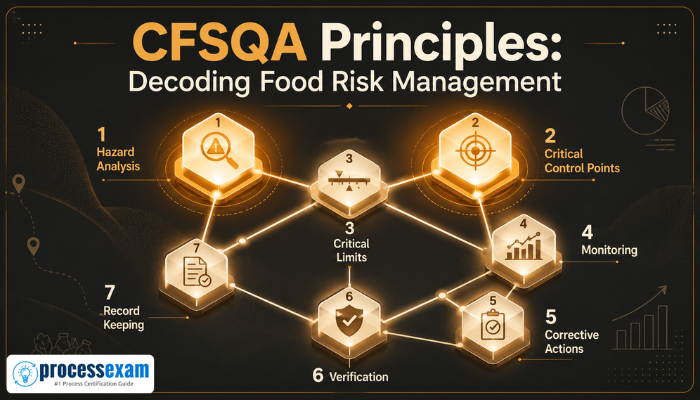
HACCP Principles (22 Questions): A critical section detailing the seven principles of HACCP, from Principle 1 - Hazard Analysis and Principle 2 - Critical Control Points (CCPs), to Principle 3 - Critical Limits, Principle 4 - Monitoring, Principle 5 - Corrective Action, Principle 6 - Verification, and Principle 7 - Recordkeeping and Documentation.
-
Implementation and Maintenance of Food Safety and HACCP System (21 Questions): Addresses the practical application, ongoing oversight, and continuous improvement of systems, covering Implementation and Assessment, Validation and Reassessment, and Verification and Maintenance strategies.
-
Auditing Fundamentals (23 Questions): This core auditing section introduces Basic Terms and Concepts, the Purpose of Audits, different Types of Audits, establishing clear Audit Criteria, identifying Audit Participants, and navigating Ethical, Legal, and Professional Issues.
-
Auditing Process and Auditor Competencies (23 Questions): Delves into the practical steps and required skills, encompassing Audit Preparation and Planning, efficient Audit Performance, comprehensive Audit Reporting, effective Audit Follow-up and Closure, essential Auditor Competencies, understanding International Regulations and Inspections, and knowledge of various Auditing Schemes.
-
Quality Tools and Techniques (10 Questions): Equips auditors with analytical skills through topics like Basic Quality Tools, Descriptive Statistics, various Sampling Methods, application of Statistical Process Control, assessing Process Capability, and distinguishing between Qualitative / Quantitative Analysis and Attributes / Variables Data.
Each domain is weighted differently, reflecting its importance in the daily tasks of a food safety and quality auditor. A balanced study approach, giving due attention to each section, is vital for comprehensive coverage. For additional details on certification requirements, you can check the full candidate handbook provided by ASQ on their website.
Developing Effective ASQ CFSQA Exam Preparation Strategies
Achieving the ASQ CFSQA certification requires more than just memorization; it demands a strategic approach to learning, practice, and skill application. A well-structured study plan is indispensable for covering the extensive syllabus and building the confidence needed to excel on exam day. Candidates should leverage a variety of resources and techniques to ensure thorough preparation.
Crafting a Personalized Study Schedule
The first step in effective preparation is to create a realistic and detailed study schedule. This plan should allocate specific time slots for each syllabus domain, prioritizing areas where a candidate feels less confident. Regular, shorter study sessions are often more effective than infrequent, long ones, allowing for better retention and preventing burnout. Incorporating breaks and review periods is also crucial.
Utilizing Quality ASQ CFSQA Study Guide Materials
Access to high-quality study materials is non-negotiable for success. This includes official ASQ reference materials, textbooks recommended for food safety and quality auditing, and comprehensive ASQ Certified Food Safety and Quality Auditor training courses. These resources provide the foundational knowledge and detailed explanations necessary to understand complex concepts thoroughly. For example, the CFSQA Certification Insert provides a detailed breakdown of the exam.
Engaging with ASQ CFSQA Exam Practice Questions
One of the most effective ways to prepare is through consistent practice with ASQ CFSQA exam practice questions. These simulated questions help candidates become familiar with the exam format, question types, and time constraints. Regularly testing oneself can reveal knowledge gaps and highlight areas requiring further study, refining both understanding and test-taking skills. This practice builds stamina and reduces anxiety on the actual exam day.
Participating in Training and Review Courses
For many, a structured ASQ Certified Food Safety and Quality Auditor training course offers invaluable benefits. These courses often provide expert-led instruction, interactive discussions, and peer learning opportunities that can deepen understanding. Review courses, particularly those focusing on problem-solving and application, can solidify knowledge and prepare candidates for the critical thinking required during the exam.
Overcoming Auditor Failures with CFSQA Competencies
Many food auditors encounter failures not from a lack of diligence, but from specific competency gaps that the ASQ CFSQA certification is designed to fill. By explicitly addressing these areas, the certification transforms auditors into more effective, confident, and reliable professionals, capable of preventing critical oversights. The program is tailored to build resilience against common auditing pitfalls.
Addressing Inadequate Hazard Analysis
A common failure point for auditors is an insufficient understanding of hazard analysis, leading to overlooked risks or misidentified critical control points. The CFSQA syllabus dedicates significant focus to Principle 1 - Hazard Analysis and Principle 2 - Critical Control Points (CCPs), ensuring certified auditors can conduct thorough, risk-based assessments that accurately pinpoint potential dangers in the food chain. This deep dive prevents superficial evaluations that can miss subtle but significant threats.
Preventing Monitoring and Corrective Action Deficiencies
Another area where auditors often fail is in evaluating the effectiveness of monitoring and corrective action systems. Auditors without comprehensive training may accept inadequate monitoring frequencies or ineffective corrective measures. The CFSQA program reinforces Principle 4 - Monitoring and Principle 5 - Corrective Action, equipping auditors to critically assess these processes and ensure they genuinely prevent deviations and restore control. This expertise translates into stronger compliance and less product risk.
Enhancing Documentation and Recordkeeping Proficiency
Poor documentation and recordkeeping practices can render an audit useless, making it impossible to trace issues or prove compliance. Auditors must not only review records but also assess the integrity and completeness of recordkeeping systems. The CFSQA certification emphasizes Principle 7 - Recordkeeping and Documentation, ensuring professionals understand the nuances of robust documentation, thereby preventing audit findings from being undermined by weak evidentiary trails.
Refining Auditor Judgment and Ethical Conduct
Ethical, legal, and professional issues are central to auditing integrity, yet some auditors may lack the training to navigate complex situations requiring nuanced judgment. The CFSQA program includes dedicated sections on Auditing Fundamentals and Auditor Competencies, fostering a strong ethical framework and enhancing the professional judgment required for sensitive audit situations. This focus helps auditors maintain impartiality and uphold professional standards, preventing biases or compromises that could invalidate their work.
Realizing the Benefits of ASQ Certified Food Safety and Quality Auditor Certification
Obtaining the ASQ Certified Food Safety and Quality Auditor certification offers substantial benefits, not only for individual career advancement but also for the broader food industry. It is a powerful credential that signals expertise, dedication, and a commitment to maintaining the highest standards in food safety and quality. The credential translates into tangible professional and organizational value.
-
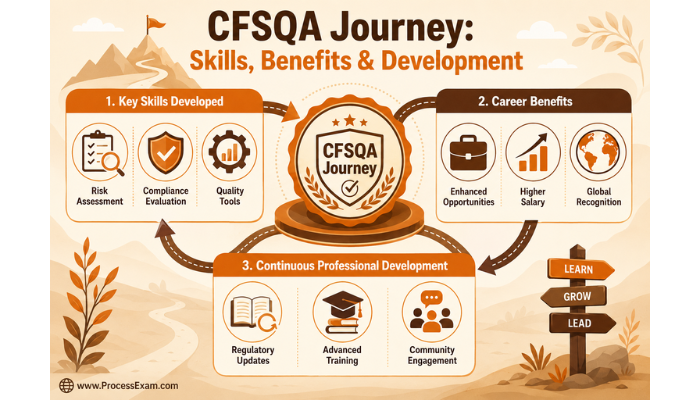
Enhanced Career Opportunities: Certified auditors are highly sought after by food manufacturers, regulatory bodies, and third-party auditing firms. The CFSQA certification opens doors to leadership roles and advanced positions, providing a significant competitive edge in the job market.
-
Increased Earning Potential: Professionals holding specialized certifications like CFSQA often command higher salaries compared to their uncertified counterparts. The ASQ Certified Food Safety and Quality Auditor salary expectations are typically above the industry average, reflecting the value placed on certified expertise.
-
Global Recognition and Credibility: ASQ is a globally respected organization, and its certifications are recognized worldwide. This global recognition boosts an auditor's credibility, allowing them to work across international borders and with diverse food safety standards.
-
Demonstrated Expertise: The certification is a verifiable testament to an auditor's comprehensive knowledge of food safety principles, HACCP systems, and auditing techniques. It assures employers and clients of a high level of competency and reliability.
-
Professional Development and Networking: The journey to certification involves significant professional development, enhancing skills and knowledge. Furthermore, becoming part of the ASQ certified community provides valuable networking opportunities with peers and industry leaders.
-
Contribution to Public Health: Ultimately, CFSQA auditors play a critical role in safeguarding public health by ensuring the food supply is safe and compliant. The certification empowers professionals to make a meaningful impact, contributing directly to consumer protection and food safety integrity.
Sustaining Competence: ASQ CFSQA Professional Development
Achieving the ASQ CFSQA certification is a significant milestone, but maintaining that expertise requires continuous professional development. The dynamic nature of the food industry, with evolving regulations, scientific advancements, and technological innovations, necessitates ongoing learning. ASQ promotes a culture of lifelong learning for its certified professionals.
Staying Updated with Food Safety Regulations
Food safety regulations are frequently updated at local, national, and international levels. CFSQA auditors must commit to staying informed about these changes to ensure their audits reflect the latest legal and compliance requirements. This involves regularly consulting regulatory websites, participating in industry webinars, and subscribing to relevant publications.
Participating in Advanced Training and Workshops
Beyond initial certification, auditors can enhance their skills through advanced training courses and specialized workshops focusing on specific areas like allergen management, food defense, or new auditing schemes. These programs offer deeper insights and practical tools that refine an auditor's ability to tackle complex challenges. Continuous learning is essential for sustained professional growth.
Engaging with Professional Communities and Forums
Active participation in professional organizations and online forums provides opportunities to exchange knowledge, discuss emerging issues, and learn from the experiences of other auditors. This community engagement is a vital aspect of ASQ Certified Food Safety and Quality Auditor professional development, fostering a collaborative environment for shared learning and problem-solving.
Selecting Best Study Resources for ASQ Certified Food Safety and Quality Auditor
The path to ASQ CFSQA certification is significantly smoothed by choosing the right study resources. A strategic selection can optimize learning efficiency, reinforce critical concepts, and provide realistic practice opportunities. Candidates should prioritize materials that align with the official ASQ syllabus and offer comprehensive coverage.
Official ASQ Publications and Handbooks
The ASQ offers various publications and handbooks specifically designed for certification exam preparation. These resources are invaluable as they directly reflect the content and rigor expected on the exam. They often include detailed explanations, examples, and practice questions that align perfectly with the ASQ CFSQA exam syllabus content.
Accredited Online Courses and Webinars
Numerous online platforms and educational institutions offer accredited ASQ Certified Food Safety and Quality Auditor training courses and webinars. These can be particularly beneficial for candidates who prefer structured learning, flexible schedules, or interactive content. Many courses provide video lectures, quizzes, and even direct instructor support, making them excellent companions to self-study.
ProcessExam for Practice and Readiness
When preparing for the CFSQA exam, utilizing platforms that offer practice questions can be highly beneficial. A dedicated resource like certification preparation materials can provide access to mock exams that simulate the actual test environment. This allows candidates to gauge their readiness, identify weak areas, and build confidence before sitting for the official examination. Regularly taking practice tests is a proven method for improving performance.
Peer Study Groups and Mentorship
Collaborating with a peer study group can provide alternative perspectives and clarify difficult topics through discussion. Additionally, seeking mentorship from an experienced ASQ-certified professional can offer practical insights, study tips, and real-world context, enriching the preparation experience significantly. These interactions can be highly motivating and provide accountability.
Conclusion
The ASQ Certified Food Safety and Quality Auditor (CFSQA) certification is more than just a credential; it is a critical safeguard against the common failures that plague the food auditing profession. By providing a structured, comprehensive curriculum covering everything from HACCP principles to advanced auditing techniques and quality tools, the CFSQA program equips auditors with the precise competencies needed to excel. It ensures a consistent, ethical, and highly effective approach to maintaining food safety and quality across the globe, protecting consumers and industry reputations alike.
Aspiring food safety professionals looking to elevate their careers and make a profound impact on public health should seriously consider pursuing the ASQ CFSQA certification. It's an investment in robust auditing skills, career advancement, and a safer food supply. Start your preparation journey today by exploring the official ASQ resources and leveraging high-quality study materials to ensure you are among the successful, highly competent auditors the industry urgently needs.
Frequently Asked Questions
1. What is the ASQ CFSQA certification and its primary purpose?
The ASQ Certified Food Safety and Quality Auditor (CFSQA) certification validates a professional's expertise in auditing food safety and quality management systems against recognized standards. Its primary purpose is to ensure auditors possess the necessary skills to effectively identify risks, evaluate compliance, and drive continuous improvement within the food industry.
2. What are the eligibility requirements for the ASQ CFSQA certification?
While specific requirements can vary, candidates typically need a certain number of years of experience in a food safety or quality role. This experience usually involves direct work in food processing, packaging, storage, distribution, or auditing within the food industry. Detailed eligibility requirements are outlined in the official ASQ CFSQA exam blueprint.
3. How much does the ASQ CFSQA certification cost and what are the payment options?
The ASQ CFSQA certification cost varies based on ASQ membership status. Currently, it is $450 for ASQ members and $550 for non-members, with retake fees at $350. Payment options typically include credit card payments made during the ASQ CFSQA exam registration process on the official ASQ website.
4. What kind of preparation materials are recommended for the ASQ CFSQA exam?
Recommended preparation materials include official ASQ study guides and handbooks, reputable ASQ Certified Food Safety and Quality Auditor training courses, and practice questions to simulate the exam environment. Candidates should also consult industry-recognized textbooks on food safety, HACCP, and quality auditing principles to cover the ASQ CFSQA exam syllabus content comprehensively.
5. What are the career benefits of holding the ASQ CFSQA certification?
Holding the ASQ CFSQA certification significantly enhances career opportunities, leading to advanced roles and increased earning potential in food manufacturing, regulatory bodies, and third-party auditing. It provides global recognition, demonstrates verifiable expertise, and supports continuous professional development, making certificants highly valued in the food safety sector.
- Auditing |
- ASQ Food Safety and Quality Auditor Test Questions |
- CFSQA Question Bank |
- CFSQA Body of Knowledge (BOK) |
- ASQ Food Safety and Quality Auditor Book |
- ASQ CFSQA BOK PDF |
- Food Safety and Quality Auditor Certification Cost |
- Food Safety and Quality Auditor Certification Requirements |
- ASQ Food Safety and Quality Auditor Sample Questions |
- CFSQA Exam Questions Download |
- CFSQA Test Questions |
- Food Safety and Quality Auditor PDF |
- CFSQA Handbook


