ICBB Question Bank

  • Explore 4 resources related to HRCI HR Senior Professional in Human Resources - International Book on ProcessExam. These resources help certification candidates understand key aspects of exam preparation, including exam structure, study strategies, and expectations for scenario-based or applied assessments. Reviewing these materials can help improve readiness and confidence before attempting the certification exam.

  • Explore 3 resources related to CT - Usability Testing Certification Cost on ProcessExam. These resources help certification candidates understand key aspects of exam preparation, including exam structure, study strategies, and expectations for scenario-based or applied assessments. Reviewing these materials can help improve readiness and confidence before attempting the certification exam.

  • Explore 8 resources related to ICBB Question Bank on ProcessExam. These resources help certification candidates understand key aspects of exam preparation, including exam structure, study strategies, and expectations for scenario-based or applied assessments. Reviewing these materials can help improve readiness and confidence before attempting the certification exam.

AI and IASSC ICBB: What Black Belts Need to Know

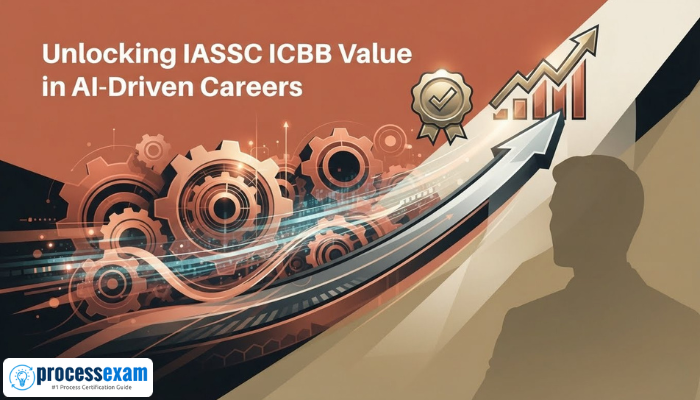
A dynamic digital illustration depicts abstract gears and data streams feeding into an upward career trajectory, symbolizing

The IASSC Certified Lean Six Sigma Black Belt (IASSC ICBB) credential signifies mastery of advanced Lean Six Sigma principles and methodologies, validating an individual's ability to lead complex improvement projects. Professionals holding this esteemed certification are crucial in driving operational excellence, reducing waste, and improving process performance within organizations. However, the landscape of process improvement is rapidly transforming, largely due to the pervasive and disruptive influence of Artificial Intelligence (AI). This article delves into the critical implications of AI for IASSC ICBB holders, outlining how this technological shift impacts existing skills, demands new competencies, and reshapes the future of process excellence.

Exam cleared with good score

Yes, i solved these many questions before giving the actual IASSC Certified Lean Six Sigma Black Belt certificate exam. It made me realize that i should do more with my career. I made my mind and solved the simulated questions and updated ones as well. ICBB exam is cleared with good score.

ICBB Certification: Inside the IASSC Black Belt Exam

You have run Green Belt projects for years, closed charters, and shown savings to a steering committee. Can a knowledge exam prove any of that? Not the projects themselves. What the IASSC Certified Lean Six Sigma Black Belt (ICBB) proves is that you command the full Black Belt toolset, from non-parametric tests to fractional factorials, without notes and against the clock. That is a different claim, and for many practitioners it is the missing one.

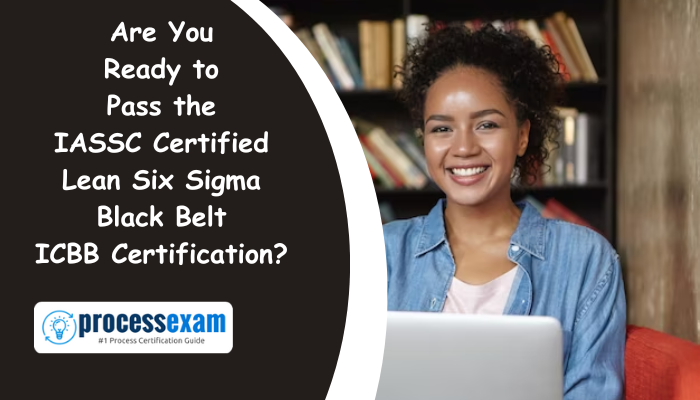
Smiling ICBB candidate at a laptop in a library, ready for the IASSC Lean Six Sigma Black Belt exam

This article is about the ICBB exam itself: what the letters mean, what the Body of Knowledge asks for in each DMAIC phase, what "knowledge-based, no project" really means for someone who already has project scars, and how to prepare for a long, closed-book paper. It is written for the experienced Green Belt who is weighing whether the step up is worth the study time.

What does ICBB mean, and what does the certificate say about you?

ICBB stands for IASSC Certified Lean Six Sigma Black Belt. IASSC is the International Association for Six Sigma Certification, which has been part of the PeopleCert portfolio since 2020. The ICBB is its top belt: above the Yellow Belt (ICYB) and the Green Belt (ICGB), and built on the same five-phase structure of Define, Measure, Analyze, Improve and Control.

Are Tips Enough to Pass the Lean Six Sigma Black Belt Foundation Certification Exam?

APMG International Lean Six Sigma Black Belt Exam, Lean Six Sigma, Lean Six Sigma Black Belt, Lean Six Sigma Black Belt

The Lean Six Sigma Black Belt Foundation certification generally takes between 1 to 3 months to study for and complete, depending on the organization you get your certificate through.

Lean Six Sigma Black Belts are mainly involved in analyzing, structuring, and measuring performance issues. Their roles are very separate from the other lean six sigma positions. Black Belt professionals are expected to lead continuous improvement projects and have comprehensive training in enhancing results through Lean concepts and advanced statistical analysis techniques. Lean Six Sigma Black Belts can comprehend team dynamics and assign roles and responsibilities, and they can appreciate and assign roles and responsibilities to team members in a project.

Lean Six Sigma Black Belts are the ones who lead struggles to decrease variation in processes to improve results. They are the ones who teach and advise business leaders and personnel on how to reduce variation, make better choices, and improve outcomes.

IASSC Certified Lean Six Sigma Black Belt (ICBB)

ICBB dumps PDF, Lean Six Sigma Black Belt dumps, IASSC ICBB Braindumps

You can easily pass IASSC Lean Six Sigma Black Belt (ICBB) Certification with the help of our online practice exam. We are here to help you every step of the way to pass your IASSC Certified Lean Six Sigma Black Belt exam. Our team of experienced and certified professionals with more than 12 years of experience in the field of Lean Six Sigma has designed practice exam to prepare for IASSC ICBB certification. They have carefully maintained exam structure, syllabus, time limit and scoring system same as the actual IASSC Certified Lean Six Sigma Black Belt (ICBB) exam. Our IASSC ICBB question bank contains most frequently asked and real-time case study based questions prepared by collecting inputs from recently certified candidates.

To get familiar with our online IASSC Lean Six Sigma Black Belt certification practice exam environment, we invite you to try our sample practice exam to build the trust between us.

Try Online Exam »

ASQ or IASSC: Which Six Sigma Certification Is Most Recognized?

Which Six Sigma certification is most recognized, ASQ or IASSC? Both are recognized, but they answer different needs: ASQ certifies experience and completed projects, IASSC certifies exam performance alone. If an employer wants proof that you have run improvement work, ASQ carries further. If you need an independent credential quickly, IASSC gets you there.
Banner comparing ASQ and IASSC as Six Sigma certification bodies

That one-line answer hides a lot of detail, and the detail is where candidates lose money. The two bodies price their exams differently, time them differently, allow different materials in the room, ask for different evidence before you apply, and treat renewal in completely different ways. This guide sets the two side by side across all three belt levels, using the figures we hold for each exam, so you can decide which route matches your job, your evidence and your budget rather than which brand sounds louder.

What does "most recognized" actually mean for a Six Sigma certification?

Six Sigma has no single authorizing body. Unlike project management, where one organization owns the standard that most employers quote, Six Sigma grew out of manufacturing practice and spread through consultancies, universities, in-house programmes and independent certifiers. That is why two candidates can both hold a "Black Belt" and have passed very different assessments.

Because of that, recognition is not one thing. It is at least three.

Six Sigma Teamwork: Roles and Communication on a Project Team

A common myth says a Six Sigma project belongs to the Black Belt, and everyone else simply hands over data when asked. In practice a project moves at the speed of its slowest conversation: the sponsor who releases budget, the process owner who opens the line for measurement, the Green Belt who gathers samples, and the operator who knows why the numbers look odd. This guide shows how those roles work and talk to each other on one project.

Blue figures assembling puzzle pieces that spell the word teamwork

Who sits on a Six Sigma project team, and what does each person own?

Job titles differ between companies, but most programmes use the same cast. The table below puts each role beside the thing it owns and the thing it needs from the others, because a project stalls at the second column far more often than at the first.

Six Sigma and Innovation: How Companies Manage the Tension

For years the argument ran one way: Six Sigma shrinks variation, innovation needs variation, so one must smother the other. Most of the current discussion has moved on to a more useful question: which work in a company deserves tight control, which deserves room to wander, and how do you keep one scoreboard from judging both? The answer is a division of labour with rules for handing ideas across, and it is something a Black Belt can set up in practice.

Design team working with prototypes and sticky notes beside a laptop showing a stable chart

Why did Six Sigma and innovation start out as rivals?

The quarrel comes from what each side treats as the enemy. Six Sigma treats variation as the enemy: if every invoice, part or call behaves the same way, defects fall and the process becomes predictable. Innovation treats sameness as the enemy: a company that only repeats what it already does has nothing new to sell. Put those two instincts in one meeting and each hears the other as a threat.

The words are also part of the problem. Six Sigma has a firm definition: a data-driven method for finding the causes of defects and removing them. Innovation has none. It can mean a new product, a new business model, a new way of delivering an old service, or a small tweak that saves a minute. When one side has a rulebook and the other has a mood, the rulebook usually wins the budget meeting, and the people who came to invent something go home feeling audited.

What has shifted in the debate

Three things have changed how people talk about it.

Syndicate content