American Society for Quality

Explore 24 resources related to American Society for Quality on ProcessExam. These resources help certification candidates understand key aspects of exam preparation, including exam structure, study strategies, and expectations for scenario-based or applied assessments. Reviewing these materials can help improve readiness and confidence before attempting the certification exam.

Six Sigma Terminology - G to J

Gantt Chart

A Gantt chart is a type of bar chart, devised by Henry Gantt in the 1910s, that explains a project schedule. Gantt charts illustrate the start and finish dates of the terminal elements and summary elements of a project

Globalization

Social, economical, environmental and technological perspectives to the many cultures that exist in the world.

Green Belt

An employee of an organization who has been trained on the improvement methodology of Six Sigma and will lead a process improvement or quality improvement team as *part* of their full-time job. Their degree of knowledge and skills associated with Six Sigma is less than that of a Black Belt or Master Black Belt. Extensive product knowledge in their company is a must in their task of process improvement.

Hawthorn Effect

Improved process data that results from process operators who know their process performance is being measured and exercise more care in the execution of the process than would normally be done.

Six Sigma Terminology - D to F

Defining terminology and solving doubts on them is a vital part you do as a six sigma expert. Terminologies are descriptive in nature and should be understood before moving ahead in studies.

Data

Data are factual information used as a basis for reasoning, discussion, or calculation; often this term refers to quantitative information. It is plural in form. The singular is “datum.”

Defect

Any undesired result is a defect.

A failure to meet one of the acceptance criteria of your customers. A defective unit may have one or more defects. ‘A defect is an inability to conform to requirements’ (Crosby, ‘Quality Is Free’), whether or not those requirements have been articulated or specified.

Defective

The word defective describes an entire unit that fails to meet acceptance criteria, regardless of the number of defects within the unit. A unit may be defective because of one or more defects.

Six Sigma Terminology - A to C

Before starting six sigma journey, you should take the time to review terms of six sigma for the better understanding of its tools and techniques.

six sigma terms

Accountability

Conditional personal or professional liability “after” the fact, determined by action or responsibility. Accountability to action assumes the willingness to be held accountable for sufficient expertise and capability. (see responsibility)

Accuracy

  1. Accuracy refers to a clustering of data about an obvious target. It is the difference between a physical quantity’s average measurements and that of a known standard, accepted ‘truth,’ vs. ‘benchmark.’ Envision a target with many arrows circling the bullseye. However, none of them are near each other.

  2. Precision refers to the tightness of the cluster of data. Envision a target with a cluster of arrows all touching one another but located slightly up and to the right of the bullseye.

Benefits of Implementing Six Sigma Methodology in an Organization

Six Sigma is a business management technique initially developed by Motorola, the USA in 1981. As of 2010, it enjoys widespread application in lots of sectors of business, though its utility just isn't without controversy.

Six Sigma seeks to enhance the standard of course of outputs by figuring out and eradicating the causes of defects (errors) and minimizing variability in manufacturing and enterprise processes. It makes use of a set of high-quality administration strategies, together with statistical strategies, and creates a particular infrastructure of individuals throughout the organization ("Black Belts," "Inexperienced Belts," and many others.) who're consultants in these strategies. Every Six Sigma project carried out inside an organization follows an outlined sequence of steps and has quantified targets. These objectives could be monetary (value discount or revenue improve) or no matter is essential to the client of that course of (cycle time, security, supply, and so on.)

Six Sigma, CSSBB, CSSGB, CSSYB, ASQ, American Society for Quality

Six Sigma - Finance Sector

Six Sigma throughout the finance company helps to scale back prices which are primarily based on strategic choices. These choices are sometimes produced from statistical knowledge collected from particular sources all through this quality enhancement process.

A finance team analyzes information to be able to recommend sure adjustments and enhancements throughout the group. These projects are run by Six Sigma professionals, and these individuals are a part of a team, that's compiled of various levels of certified professionals. Taught to make use of particular instruments, these people are in a position to make use of information taken from all points of the finance business and determine methods to vary a corporation’s each day practices for the higher.

FINANCE SECTOR IS USING SIX SIGMA

Top 10 Reasons To Get Six Sigma Certified

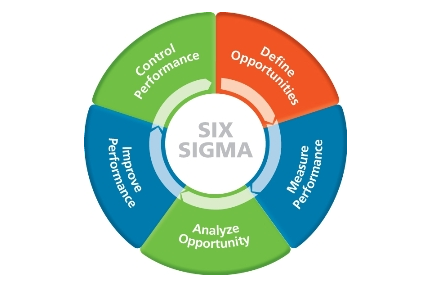
Six Sigma system is using two sub-methodologies; DMAIC which stands for Define, Measure, Analyze, Improve and Control and is used for existing processes, and DMADV which is used for brand new processes and stands for Define, Measure, Analyze, Design, and Verify. Implementing Six Sigma inside an enterprise affords a variety of benefits. Nonetheless, there are unavoidable causes to do six sigma certification for enhancing profession prospects.

Six Sigma, CSSBB, CSSGB, CSSYB, ASQ, American Society for Quality

And what higher quality credential to acquire than the Six Sigma Certification! Famed the world over, the ideas of Six Sigma find application in countless organizations unfold throughout a variety of sectors and professional domains.

Combining the Six Sigma and the Psychology of Change

Ask successful Six Sigma executive leaders or skilled Black Belts, and they'll normally report that change administration is probably the most difficult facet of deploying Six Sigma. For many practitioners, change administration is the black artwork of Six Sigma deployment: What's change administration? And how will you convert the volumes of change administration concept into sensible, simply utilized methods for accelerating the tradition change course of so crucial to sustained Six Sigma success?

Six Sigma, CSSBB, CSSGB, CSSYB, ASQ, American Society for Quality

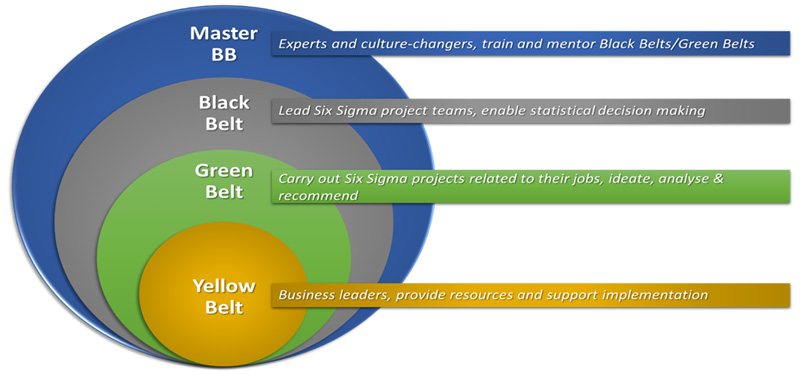
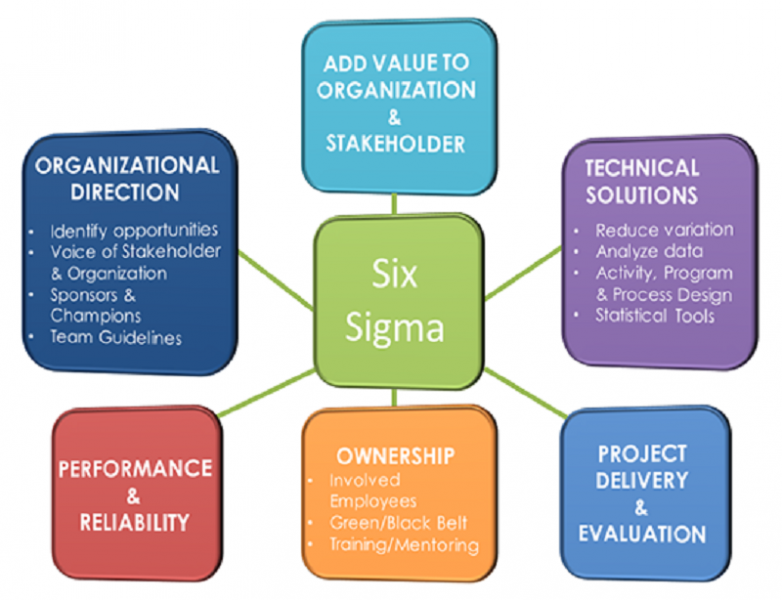
A piece of the Six Sigma change administration puzzle is figuring out methods to create broader possession for Six Sigma, without diluting the rigor of the methodology. The start line for fixing the possession drawback recognizes that Six Sigma is a comparatively low engagement technique to start with. It depends on an elite core of extremely educated Black Belts, and to a lesser extent Inexperienced Belts.

The Pros and Cons of Six Sigma Implementations

Six Sigma is a business strategy developed by Motorola within the 1980s. The technique focuses on eliminating inefficiency by using a narrowly outlined systematic method. When companies noticed how effectively it labored for Motorola, they started adopting it for their very own firms and its recognition unfold worldwide. Although the tactic does present some strengths for individuals who observe it, in some instances, weaknesses within the system are additionally found.

Six Sigma Business Strategy, Six Sigma Process, Six Sigma, Black Belt, Green Belt

The following aspects of the Six Sigma technique will not be accentuated in earlier high-quality enhancements initiatives:

  1. Six Sigma technique places a transparent concentrate on achieving measurable and quantifiable monetary returns to the bottom-line of an organization. No Six Sigma undertaking is accredited until the bottom-line impression has been clearly recognized and outlined.

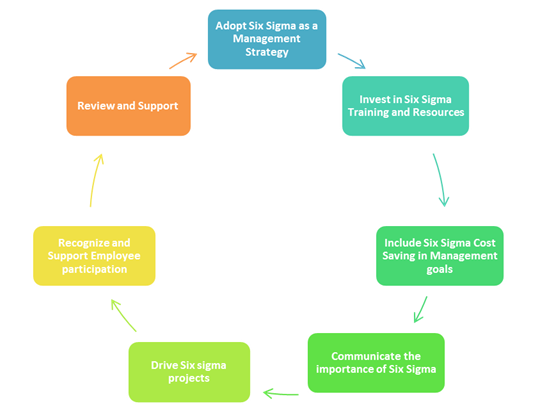
  2. Six Sigma technique places an unprecedented significance on robust and passionate management and the assist required for its profitable deployment.

Six Sigma Tools - Others

Six Sigma projects require a variety of key decisions based on data and Six Sigma techniques. Team members have at their disposal a set of tools to aid in decision-making. Depending on the decision to be made, they can use one of the several established frameworks for making decisions objectively.

decision making tools for six sigma

Six Sigma Tools - Benchmarking Method

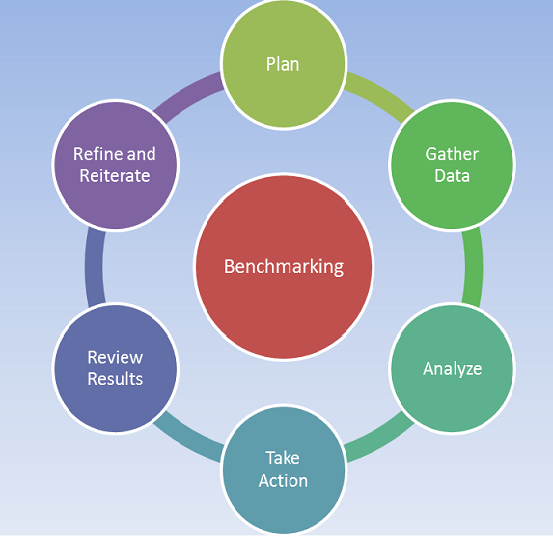
Benchmarking is a method of discovering what's the best performance being achieved – whether in a specific company, by a competitor or by an entirely different trade. This info can then be used to determine gaps in a corporation’s processes with a purpose to obtain an aggressive benefit.

Thus it is vital for Six Sigma practitioners to:

  • Understand totally the aim and use of benchmarking.
  • Understand the distinction between benchmarking and competitor analysis.
  • Acquire perception to make sure that benchmarking is in alignment with the corporate’s administration targets.

Benchmarking as a Tool

Benchmarking elements

Syndicate content