American Society for Quality

6 Unexpected Ways Six Sigma Can Benefit Your Company

ASQ, American Society for Quality, Certified Six Sigma Black Belt (CSSBB), Certified Six Sigma Green Belt (CSSGB), Certified Six Sigma Yellow Belt (CSSYB), CSSBB, CSSGB, CSSYB, Six Sigma, Six Sigma Black Belt, Six Sigma Green Belt, Six Sigma Yellow Belt, Six Sigma methodology, Six Sigma Certification, Six Sigma Exam, Six Sigma project, Six Sigma Yellow, Six Sigma Green, Six Sigma Black

Over the last few years, Six Sigma has almost become a household word.

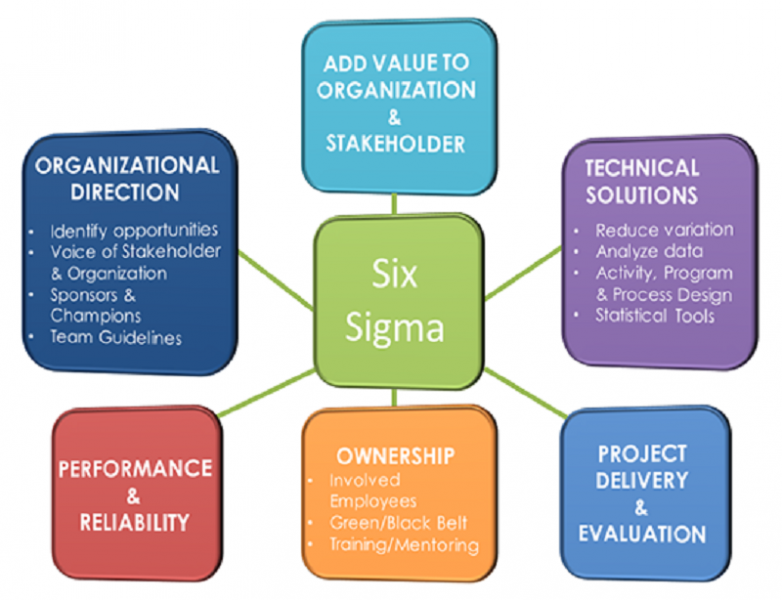
The term “Six Sigma” is an evaluationof quality. However; Six Sigma is a business initiative, not a quality drive. It is a way of doing business that enhances quality and productivity. It also increases competitiveness and decreases cost.

How Can an ASQ Certified Quality Improvement Associate Certification Boost Your Career?

As a Certified Quality Improvement Associate (CQIA) you will have the first awareness of quality tools and their uses and be included in quality improvement projects, but will not necessarily come from a traditional quality area. Those new to quality, process leader practitioners, and those who support the practice of business excellence would benefit from formal recognition of proficiency on the fundamentals of quality and process improvement.

ASQ Certified Quality Improvement Associate Certification, ASQ Quality Improvement Associate Certification, ASQ Quality Improvement Associate Exam, ASQ Certified Quality Improvement Associate Exam, ASQ Certified Quality Improvement Associate, ASQ, Certified Quality Improvement Associate, CQIA, Quality Improvement Associate, ASQ Quality Improvement Associate, ASQ CQIA, CQIA Certification, CQIA Exam, ASQ CQIA Certification, ASQ CQIA Exam, CQIA Practice Exam, CQIA Mock Test, CQIA syllabus, CQIA Sample Questions, The Certified Quality Improvement Associate Handbook- Third Edition, CQIA Question Bank, Quality Control, CQIA Body of Knowledge, Body of Knowledge, BOK

What Are the Gist Competencies of a CQIA?

  • Explain the key events in the development of quality.

The Best 5 Quality Certifications That Can Affect Your Business

The benefits and advantages that quality certifications can advance your career as well as your business. However, we cannot underestimate the benefits of becoming a quality professional or hiring one for your company. Selecting the correct certification for you or your business is essential.

ASQ Certified Manager of Quality and Organizational Excellence, ASQ Certified Quality Improvement Associate, ASQ CMQ/OE, ASQ CQA, ASQ CQIA, ASQ Quality Auditor, ASQ Quality Improvement Associate, CMQ/OE, CMQ/OE Mock Test, CMQ/OE Practice Test, CQA, CQA Mock Test, CQA Practice Test, CQIA, CQIA Mock Test, CQIA Practice Test, Manager of Quality/Organizational Excellence, Quality Auditor, Quality certifications, Quality Improvement Associate, CQI, CQI Mock Test, CQI Certification, Quality Inspector, Certified Quality Inspector, Certified Quality Inspector Exam, ASQ Certified Quality Inspector, ASQ CQI, ASQ CQI Exam

1. Manager of Quality/Organizational Excellence

The Certified Manager of Quality and Organizational Excellence (CMQ/OE), before regarded as a Quality Manager performs the following:

The Universal Language of 'Quality' - Six Sigma Certification

A business process is simply defined as the method that a company, agency or non-profit organization uses to deliver goods or services to its clients and customers. Every person who works within an organization has some involvement in the business process, from the customer service rep to the assembly technician all the way up the executive.

ASQ and IASSC, Six Sigma Certifications, Six Sigma Tools and Techniques

How does Six Sigma work? Six Sigma uses a specific group of tools for statistical and mathematical analysis. The tools are applied to analyze the functions of a business process and see how effective that process is. Six Sigma certifications will enable you to be able to do this for any business that uses the Six Sigma System.

Six Sigma reports are a universal language that connects every person in the organization and builds an understanding of what’s good and what needs to be corrected. It can be applied to any type of business process accurately and without bias. 

The Most Recognized Six Sigma Certification: ASQ or IASSC

The nature of today’s job market is that for certain types of jobs many employers require some level of Six Sigma certification as a minimum for consideration. Although having a certification is no guarantee that the holder is actually competent or is the right fit for achieving an organization’s goals, it is a starting point for many companies. Even if you already have a job, in some organizations Six Sigma certifications are a plus for consideration of higher level positions.

ASQ and IASSC text showing on image banner.

There a many ways to earn your six sigma certification but there are only a few affordable ways to earn a credible certification. We are going to discuss two methods of getting certified by the most common certification entities in the industry. These methods also happen to be the most affordable too!

Six Sigma Certifications - Which Belt Would You Like to Wear

In this highly competitive job market, discovering a strategy to get your résumé to stand out is important. Getting a Six Sigma certification through an Institute is one way that persons are enhancing their resumes and raising their earning potential.

Six Sigma, CSSBB, CSSGB, CSSYB, ASQ, American Society for Quality

Institutions are providing Six Sigma certification at the Yellow belt, Green belt, and Black belt level. Additionally, they provide Lean Six Sigma certification for these within the manufacturing industry. The Black Belt level, which is designed for project leaders, is simply $299.95 and includes free training materials.

Six Sigma Terminology - U to Z

UCL

Upper Control Limit (note, different from USL): representing a 3 x Sigma upwards deviation from the mean value of a variable (see also LCL). For normally distributed output, 99.7% should fall between UCL and LCL.

When used on control charts, the “3sigma” level can be calculated from sample-to-sample values or batch-to-batch averages using a “magic number,” and is used to flag-up unexpected deviations.

Unexplained Variation (S)

Regression statistical output that shows the unexplained variation in the data. Se = sqrt((sum(yi-y_bar)^2)/(n-1))

Unit

A unit is any item that is produced or processed which is liable for measurement or evaluation against predetermined criteria or standards.

Univariate

A random variable with a numerical value that is defined on a given sample space.

Six Sigma Terminology - O to Q

Operational Cost Target

This value represents the maximum expenditure for material, labor, outsourcing, overhead, and all other costs associated with that project. This figure can then be divided between the various operations comprising the manufacturing process to control costs at each step.

Operational Cost

Sometimes referred to as Revenue or Running Costs, these are the costs resulting from day-to-day running of an operation, e.g. staff costs, hardware maintenance, and electricity. 

Operations Process

Known for leveraging economies of scale and narrowly defined tasks, it is one of a family of four work processes characterized as an on-going endeavor undertaken to create a repetitive product or result which is performed by people, planned, executed and controlled. (Artisan Process, Project Process, Operations Process, Automated Process)

Six Sigma Terminology - K to N

Kaizen

Kaizen a Japanese term that means continuous improvement, taken from the words ‘Kai‘ that means continuous and ‘zen‘ that means improvement. Some translate ‘kai‘ to mean change and ‘zen‘ to mean good, or for the better.

Six Sigma Terminology - G to J

Gantt Chart

A Gantt chart is a type of bar chart, devised by Henry Gantt in the 1910s, that explains a project schedule. Gantt charts illustrate the start and finish dates of the terminal elements and summary elements of a project

Globalization

Social, economical, environmental and technological perspectives to the many cultures that exist in the world.

Green Belt

An employee of an organization who has been trained on the improvement methodology of Six Sigma and will lead a process improvement or quality improvement team as *part* of their full-time job. Their degree of knowledge and skills associated with Six Sigma is less than that of a Black Belt or Master Black Belt. Extensive product knowledge in their company is a must in their task of process improvement.

Hawthorn Effect

Improved process data that results from process operators who know their process performance is being measured and exercise more care in the execution of the process than would normally be done.

Syndicate content