
Your 9-Step CPBA Roadmap: Pega Success, Guaranteed
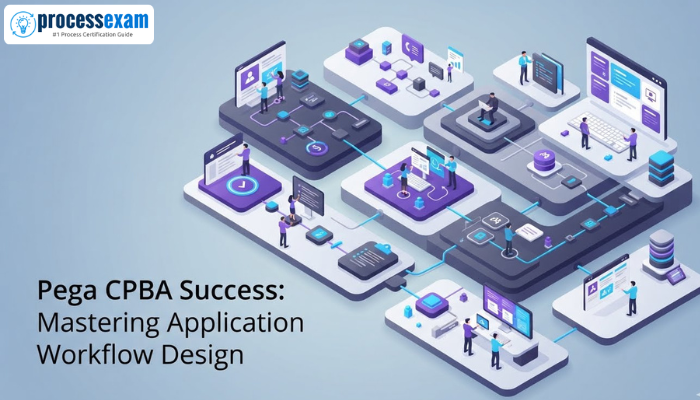
The Certified Pega Business Architect (CPBA) certification from Pega stands as a critical validation for professionals adept at translating business requirements into Pega solutions. This esteemed credential signifies an individual's expertise in designing and optimizing business processes using the Pega platform, crucial for organizations aiming to streamline operations and enhance customer experiences. Targeting business architects, system analysts, and project managers, the CPBA exam (code CPBA) confirms a candidate's ability to drive successful Pega implementations from a functional perspective. This comprehensive roadmap will guide aspiring CPBA professionals through a strategic 9-step preparation journey, ensuring readiness for Pega success.
Validating the Pega Business Architect Role
The role of a Pega Business Architect is pivotal in bridging the gap between business needs and technical solutions. Obtaining the CPBA certification solidifies your standing as an expert capable of analyzing, designing, and delivering effective Pega applications. This professional validation demonstrates your proficiency in core Pega functionalities, empowering you to contribute significantly to digital transformation initiatives within any enterprise utilizing the platform.
Pursuing the CPBA credential brings a multitude of advantages, both personally and professionally. Certified individuals often command a competitive Pega Certified Business Architect salary, reflecting the high demand for specialized Pega skills. Furthermore, the benefits of Pega CPBA certification extend to enhanced career mobility, increased project responsibilities, and a deeper understanding of industry best practices in business process management and customer relationship management.
Essential CPBA Exam Insights and Structure
Understanding the precise details of the Certified Pega Business Architect exam is the cornerstone of effective preparation. The CPBA exam is designed to rigorously test a candidate's practical knowledge and application of Pega principles. Familiarity with its format, duration, and scoring criteria is vital for strategic planning and reducing exam day anxiety, ensuring you can focus entirely on demonstrating your expertise.
Here’s a breakdown of the key characteristics of the Pega CPBA exam format:
-
Exam Name: Certified Pega Business Architect
-
Exam Code: CPBA
-
Exam Price: USD $190
-
Duration: 90 Minutes
-
Number of Questions: 50
-
Passing Score: 65%
Candidates can find comprehensive information regarding registration and scheduling on the official CPBA exam page, which provides the most current details. Planning your exam date well in advance allows for a structured study schedule and adequate time for review.
Core Competencies Verified by the CPBA Syllabus
The Pega CPBA exam syllabus is meticulously structured to cover the critical areas that a business architect interacts with on the Pega platform. A thorough understanding of these Pega CPBA exam topics is not merely about memorization but about comprehending their practical application in real-world business scenarios. This section delves into the major domains, offering a clear outline of what to expect.
Key Focus Areas and Their Weightage
The syllabus is divided into several sections, each carrying a specific weightage that indicates its importance in the overall examination. This allows candidates to prioritize their study efforts, allocating more time to higher-weighted topics while ensuring a foundational grasp of all areas.
-
Case Management (30%): This is the largest section, emphasizing the design, implementation, and management of business processes. It covers everything from creating case types to defining stages, steps, and process flows.
-
Application Development (25%): This domain focuses on the practical aspects of building applications within Pega, including understanding the Pega Express methodology, application layers, and foundational development concepts.
-
Data and Integration (15%): Candidates must demonstrate knowledge of how data is managed within Pega, including data models, data pages, and the basics of integrating Pega applications with external systems.
-
User Experience (10%): This section assesses the ability to design intuitive and efficient user interfaces, focusing on portals, UI elements, and ensuring a positive end-user experience.
-
Pega GenAI (10%): A newer addition, this component tests understanding of Pega's generative AI capabilities and how they can be leveraged to enhance business processes and user interactions.
-
Security (5%): Covers the fundamentals of securing a Pega application, including access groups, roles, and basic authorization concepts to protect sensitive data and operations.
-
Insights (5%): This smaller but crucial section deals with reporting and analytics within Pega, enabling business architects to extract valuable insights from application data to drive informed decisions.
Each of these domains requires a blend of conceptual understanding and practical application, emphasizing the business architect's role in translating strategic goals into tangible Pega solutions.
Establishing Your Pega CPBA Preparation Groundwork
Embarking on the Pega Certified Business Architect certification path requires careful planning and a solid foundation. Before diving deep into the syllabus, it's crucial to ensure you meet the necessary Pega CPBA prerequisites and structure your learning environment effectively. This initial phase sets the stage for a successful and efficient study period.
Recommended Prerequisites and Background
While Pega doesn't always enforce strict prerequisites for taking the exam, having certain experience or foundational knowledge significantly enhances your chances of success. Typically, candidates benefit from:
-
Business Analysis Experience: A background in business analysis, requirements gathering, and process design is highly advantageous, as the CPBA role is essentially a specialized business analyst for the Pega platform.
-
Familiarity with Pega Platform: Prior exposure to the Pega platform, even through introductory courses or basic hands-on exercises, can provide context for the theoretical concepts covered in the exam.
-
Understanding of Agile Methodologies: Pega projects often follow Agile development, so familiarity with concepts like Scrum or Kanban can be beneficial.
Pega offers various learning resources, including a dedicated Pega Certified Business Architect training course that aligns directly with the exam objectives. Engaging with official training ensures you cover all relevant topics comprehensively.
Curating Your Study Ecosystem
A well-organized study environment is key to absorbing complex material. This involves more than just finding a quiet space; it's about gathering the right tools and resources. Consider:
-
Official Pega Resources: Leverage the Pega Academy, which offers courses, modules, and documentation specifically tailored for the CPBA exam.
-
Community Engagement: Actively participate in the Pega Community forums to ask questions, learn from others' experiences, and stay updated on best practices. This can provide valuable insights beyond official documentation.
-
Hands-on Practice: If possible, gain access to a Pega environment for hands-on practice. Theoretical knowledge is best cemented through practical application, allowing you to build and configure sample applications.
By establishing this groundwork, you create a robust framework for your entire CPBA preparation, enabling focused and productive study sessions. Many candidates find value in supplementing official training with comprehensive study materials available from reputable sources.
Mastering Key Domains: A Strategic CPBA Study Approach
Once your groundwork is established, the next crucial step in your Pega CPBA study guide is to systematically tackle each syllabus domain. A strategic approach involves not just understanding the concepts but also grasping how to apply them to solve business problems. This requires a combination of in-depth study and critical thinking about potential scenarios.
Deconstructing Case Management
As the largest portion of the exam, Case Management demands significant attention. Focus on the lifecycle of a case, from creation to resolution, including:
-
Designing Case Types: Understand how to define case types, stages, steps, and processes that align with business workflows.
-
Process Flows: Learn about various flow shapes, connectors, and decision points, and how to configure them for optimal business process execution.
-
Service Level Agreements (SLAs): Grasp the importance of setting service targets and deadlines to ensure timely processing and meet business objectives.
-
User Actions: Comprehend how to configure dynamic user interfaces and actions that guide users through a case.
Practice exercises involving designing complete case lifecycles will solidify your understanding of these interconnected components, critical for addressing Certified Pega Business Architect exam questions effectively.
Navigating Application Development and User Experience
These domains are intertwined, focusing on building functional and user-friendly Pega applications. For Application Development, prioritize:
-
Pega Express: Understand the methodology for rapid application development and how business architects contribute to it.
-
Application Layers: Learn about enterprise, divisional, and framework layers, and their role in application reusability and maintainability.
-
Data Model Concepts: Reinforce your knowledge of data classes, properties, and relationships.
For User Experience, concentrate on:
-
UI Best Practices: Explore principles for designing intuitive and efficient user interfaces.
-
Form Design: Understand how to create dynamic forms using various UI controls and layouts.
-
Portal Customization: Learn to configure user and manager portals to suit different stakeholder needs.
Actively engaging with the Pega Community discussions can offer practical insights into common challenges and creative solutions for these areas.
Reinforcing Knowledge with Practice and Mock Exams
Theoretical knowledge alone is insufficient for exam success. The ability to apply concepts under timed conditions and identify areas for improvement is paramount. This phase of your CPBA roadmap is dedicated to rigorous self-assessment and simulated exam experiences, which are crucial for success.
Utilizing Practice Tests Effectively
Engaging in Pega CPBA practice tests is one of the most effective ways to gauge your readiness and familiarize yourself with the question styles. These tests serve multiple purposes:
-
Identifying Knowledge Gaps: Practice tests highlight areas where your understanding is weak, allowing you to revisit specific syllabus topics.
-
Time Management: Simulating exam conditions helps you learn to allocate time efficiently across questions, preventing you from spending too long on any single item.
-
Understanding Question Nuances: You'll become accustomed to the typical phrasing and trick questions that might appear on the actual exam, improving your critical reading skills.
It's important to review every question, whether answered correctly or incorrectly, to understand the rationale behind the correct answer. This deep analysis transforms practice into genuine learning.
Leveraging Pega CPBA Mock Exams for Realistic Simulation
Beyond individual practice questions, taking full-length Pega CPBA mock exams is invaluable. These simulations replicate the actual exam environment, including the duration and number of questions. This experience helps build stamina and reduces anxiety on the actual exam day. Consistent performance on mock exams builds confidence and indicates a high level of preparedness.
While mock exams are excellent for assessment, remember to approach them with an ethical mindset. Focus on understanding the material rather than rote memorization of questions. For a realistic simulation of the actual exam and to test your knowledge with structured CPBA practice tests, consider platforms designed for comprehensive certification preparation.
Advancing Your Career Trajectory with CPBA
The CPBA certification is more than just a credential; it's a launchpad for significant career growth and enhanced professional standing. Understanding the Pega CPBA career opportunities and the return on investment helps contextualize the effort required for certification, reinforcing that is Pega CPBA worth it.
Expanding Your Professional Horizons
With a Certified Pega Business Architect certification, doors open to a broader range of roles and responsibilities. Employers actively seek individuals who can demonstrate proven expertise in Pega, particularly in business analysis and solution design. Potential roles include:
-
Senior Pega Business Architect: Leading design discussions, mentoring junior team members, and driving complex business process transformations.
-
Pega Lead System Architect (LSA) Pathway: The CPBA is often a foundational step towards advanced Pega certifications like the LSA, which focuses on architectural design and leadership.
-
Pega Consultant: Advising multiple clients on Pega implementation strategies, business process optimization, and digital transformation initiatives.
-
Product Owner/Manager: Guiding the development of Pega applications from a business perspective, ensuring alignment with organizational goals.
The certification provides a clear Pega Certified Business Architect certification path, outlining a progression of skills and knowledge that can lead to highly specialized and impactful positions within the Pega ecosystem.
Realizing the Return on Investment
Investing time and resources into obtaining your CPBA certification yields substantial returns. Beyond the potential for a higher salary, the certification offers:
-
Increased Employability: In a competitive job market, certified professionals stand out, demonstrating a commitment to their craft and a validated skill set.
-
Enhanced Credibility: The credential signals to peers and clients that you possess a recognized level of expertise, fostering trust and confidence in your abilities.
-
Access to Advanced Projects: Certified individuals are often selected for more challenging and high-profile projects, which further accelerates skill development and career growth.
-
Professional Network: Becoming part of the Pega certified community offers opportunities to connect with other experts, share knowledge, and collaborate on innovative solutions.
The CPBA is not merely a piece of paper; it’s a strategic asset that validates your capability to deliver real business value using Pega technology, making it a highly worthwhile pursuit for any dedicated professional.
Developing a Winning CPBA Exam Day Strategy
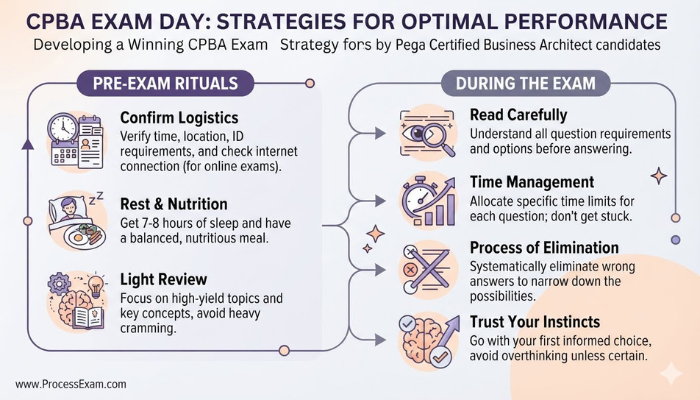
The hard work of preparation culminates on exam day. Having a well-thought-out strategy for managing the examination environment can significantly impact your performance. A calm, focused, and systematic approach ensures that your knowledge is effectively translated into correct answers, rather than being hindered by stress or poor planning.
Pre-Exam Rituals and Logistics
Before you even step into the exam center (or log in for a remote exam), consider these preparations:
-
Confirm Logistics: Double-check the exam location, time, and required identification. For online exams, ensure your testing environment meets all technical requirements.
-
Rest and Nutrition: Prioritize a good night's sleep and a balanced meal before the exam. A well-rested and nourished mind performs optimally.
-
Light Review: Avoid intense cramming on exam day. A light review of key concepts or challenging areas can be helpful, but ensure it doesn't lead to burnout or anxiety.
Arriving early or setting up your remote environment well in advance allows you to settle in without rush, creating a calm mental space for the test ahead.
Optimizing Your Performance During the Exam
Once the exam begins, efficient management of time and questions is crucial:
-
Read Carefully: Pay close attention to every word in the question and all answer choices. Misreading a single term can lead to an incorrect answer.
-
Time Management: With 50 questions in 90 minutes, you have roughly 1.8 minutes per question. If a question feels overly complex, make an educated guess, mark it for review, and move on. Don't get stuck.
-
Process of Elimination: For multiple-choice questions, eliminate obviously incorrect answers first to increase your chances of selecting the right one from the remaining options.
-
Trust Your Instincts: Often, your first instinct is correct. Only change an answer if you have a compelling reason or have identified a clear error in your initial thought process.
Maintaining a positive mindset and focusing on one question at a time will help you navigate the exam effectively, leveraging all the knowledge you've diligently acquired during your preparation journey.
Continuous Growth Beyond CPBA Certification
Achieving the Certified Pega Business Architect certification is a significant milestone, but it marks the beginning, not the end, of your journey in the dynamic Pega ecosystem. The world of Pega is constantly evolving with new features, updates, and methodologies. Sustained engagement and learning are vital to maintain your edge and continuously enhance your value as a Pega professional.
Embracing Lifelong Learning in Pega
To remain proficient and relevant, consider these avenues for continuous professional development:
-
Stay Updated with Pega Releases: Regularly review Pega's official documentation and release notes for new versions and features. Understanding these updates ensures your skills remain current.
-
Explore Advanced Certifications: The CPBA is an excellent foundation. Consider pursuing more specialized Pega certifications, such as the Senior System Architect (CSSA) or Lead System Architect (CLSA), to deepen your technical expertise or broaden your architectural knowledge.
-
Engage with the Pega Community: Continue to be an active participant in forums, special interest groups, and local Pega user groups. Networking and sharing insights with peers can unlock new perspectives and learning opportunities.
-
Hands-on Project Work: Seek out challenging Pega projects that allow you to apply new features or tackle complex business problems. Practical experience is invaluable for reinforcing theoretical knowledge and developing new skills.
By actively pursuing ongoing learning, you not only maintain your certification's relevance but also solidify your position as a valuable and knowledgeable asset in the Pega community.
Contributing to the Pega Ecosystem
Your expertise as a Certified Pega Business Architect can also contribute to the growth of the wider Pega ecosystem. Consider sharing your knowledge by:
-
Mentoring Others: Guide aspiring Pega professionals or junior business architects, helping them navigate their learning journey and overcome challenges.
-
Sharing Best Practices: Document your experiences and share best practices within your organization or through community contributions, influencing how Pega solutions are designed and implemented.
-
Speaking at Events: Present your insights at Pega-related conferences or meetups, establishing yourself as a thought leader and expert in specific domains.
Such contributions not only enhance your personal brand but also foster a collaborative environment, driving innovation and excellence across the Pega platform. This commitment to growth and community engagement ensures your Pega success is not just guaranteed but perpetually expanding.
Conclusion
The Certified Pega Business Architect (CPBA) certification is a powerful credential that distinguishes professionals in the dynamic world of business process management and digital transformation. By diligently following this 9-step roadmap—from understanding the exam's intricacies and mastering its syllabus to rigorous practice and continuous professional growth—you lay a solid foundation for guaranteed success. This certification not only validates your expertise in translating complex business requirements into elegant Pega solutions but also unlocks a wealth of career opportunities and increased earning potential.
Embark on your CPBA journey today with confidence and a strategic mindset. Leverage high-quality resources and practice diligently to ensure you are fully prepared for the challenges and rewards that await. For comprehensive study materials, practice tests, and expert guidance to help you pass your exam, explore the diverse Pega certification resources available to support your aspirations.
FAQs
1. What does the Pega CPBA certification validate?
The Pega CPBA certification validates a professional's ability to analyze, design, and translate business requirements into effective Pega applications. It confirms expertise in leveraging the Pega platform to optimize business processes and enhance user experiences.
2. How long is the CPBA exam and what is the passing score?
The CPBA exam has a duration of 90 minutes and consists of 50 questions. Candidates must achieve a passing score of 65% to earn the certification.
3. Are there any prerequisites for taking the Pega CPBA exam?
While Pega does not always enforce strict prerequisites, it is highly recommended that candidates have a background in business analysis, some familiarity with the Pega platform, and an understanding of Agile methodologies to best prepare for the exam's scope.
4. What are the career benefits of becoming a Certified Pega Business Architect?
Becoming a CPBA offers numerous career benefits, including enhanced employability, a competitive salary potential, access to senior and lead roles like Senior Pega Business Architect or Consultant, and a clear pathway to advanced Pega certifications, significantly boosting professional growth.
5. How can I best prepare for the Pega CPBA certification exam?
Effective preparation involves engaging with official Pega Academy training, actively participating in the Pega Community, gaining hands-on experience with the platform, and regularly utilizing high-quality practice tests and mock exams to identify knowledge gaps and refine time management skills.
- Pega Exam |
- Pega Business Architect Exam Questions |
- Pega Business Architect Question Bank |
- Pega Business Architect Questions |
- Pega Business Architect Test Questions |
- Pega Business Architect Study Guide |
- Business Architect |
- Business Architect Certification |
- Pega Business Architect Book |
- Business Architect Certification Cost |
- Business Architect Certification Requirements |
- Pega Business Architect Sample Questions |
- Business Architect PDF |
- Pega CPBA Quiz |
- Pega CPBA Exam |
- CPBA |
- CPBA Question Bank |
- CPBA Certification |
- CPBA Questions |
- CPBA Practice Test |
- CPBA Study Guide Material |
- CPBA Sample Exam |
- Certified Pega Business Architect |
- CPBA Exam |
- CPBA Study Guide PDF |
- CPBA Exam Questions Download |
- CPBA Test Questions |
- PEGACPBA25V1 Mock Exam |
- PEGACPBA25V1 Simulator |
- PEGACPBA25V1 Certification |
- PEGACPBA25V1 Certification Cost |
- PEGACPBA25V1 Certification Requirements |
- PEGACPBA25V1 |
- PEGACPBA25V1 PDF |
- PEGACPBA25V1 Questions |
- PEGACPBA25V1 Book |
- PEGACPBA25V1 Question Bank |
- PEGACPBA25V1 Study Guide |
- PEGACPBA25V1 Exam Questions


