
Six Sigma in HR: What HR Does and Which HR Processes It Can Fix
A calendar invite lands in an HR manager's inbox: "Black Belt kickoff, Tuesday, HR representative required." She has never built a control chart and is not sure why the meeting involves her. The answer is that HR has two jobs in Six Sigma. It supplies the people side of the programme, from choosing belts to explaining the change to staff, and it owns processes of its own, such as hiring, onboarding and payroll, that can be measured and improved in the same way as a production line.

Only one line of method is needed before starting. Six Sigma works through five steps, abbreviated DMAIC: define the problem, measure it, analyse the cause, improve the process, then control the gain. The rest of this article is about how that plays out in an HR department.
Is Six Sigma useful for HR, or is it a factory method?
It began on manufacturing lines, at Motorola in the 1980s, and its vocabulary still sounds like a factory: defects, yield, throughput. But the logic does not care what is being made. Wherever work repeats and the outcome can be counted, the same questions apply. HR runs exactly that kind of work in volume: payslips every month, offers every week, contracts, leave requests, benefit queries, mandatory-training reminders.
Three tests decide whether a given HR process is worth a Six Sigma project.
- Volume. The process runs often enough to give data within weeks, which usually means dozens of cases a month rather than a handful a year.
- A defect someone would recognise. The person on the receiving end, a hiring manager, a new joiner or an employee waiting for a reimbursement, would agree the result was wrong or late.
- An owner. One named person can change the process and is willing to be measured on it.
Where all three hold, the answer to "is Six Sigma useful for HR" is yes. Where they do not, for example succession planning for ten senior roles, a simpler review is a better tool.
Two different meanings of "Six Sigma in HR"
Searches for the topic mix two questions that deserve separate answers. The table keeps them apart, and the sections below follow it.
| Meaning | The question | What HR produces |
|---|---|---|
| HR supports the programme | Who becomes a belt, who is released to do it, how are they developed and recognised? | Selection criteria, a belt career path, a training plan, a change message |
| HR is the subject of a project | Which HR process makes people wait or makes errors, and by how much? | A baseline, a root cause, a changed process, a control chart |
What does HR own when a company launches a Six Sigma programme?
A programme succeeds or stalls on people decisions long before any statistics are run, and those decisions sit with HR. Four of them matter most.
Choosing and releasing the right people
Belt candidates are best picked for curiosity about why work goes wrong, credibility with colleagues and enough standing to ask awkward questions, not for a spare afternoon. HR can write that profile, screen nominations against it and, more usefully, negotiate the hours. A Green Belt who is told to fit a project "around the day job" delivers little. HR can insist that line managers agree a protected block of time before anyone is nominated.
Making belts a visible career path
Belts that appear nowhere in job descriptions, grading or promotion criteria are treated as a hobby. HR can write the belt levels into the competency framework so that a Yellow Belt is an expected skill for team leaders, a Green Belt a step towards process-owner roles and a Black Belt a recognised specialist track.
Planning training and certification
HR normally holds the learning budget and the vendor relationships. It decides how many people at each level the organisation needs, whether certification is required or only training, and how long certificates stay valid before a refresher is due. Starting with a Yellow Belt for many people and a Green or Black Belt for few keeps the cost in proportion.
Rewarding without distorting
The temptation is to pay bonuses on "savings delivered". That invites projects chosen because the saving is easy to claim, and savings inflated until finance stops believing them. A safer scheme recognises completed, finance-verified projects and the use of the method, and keeps the bonus modest.
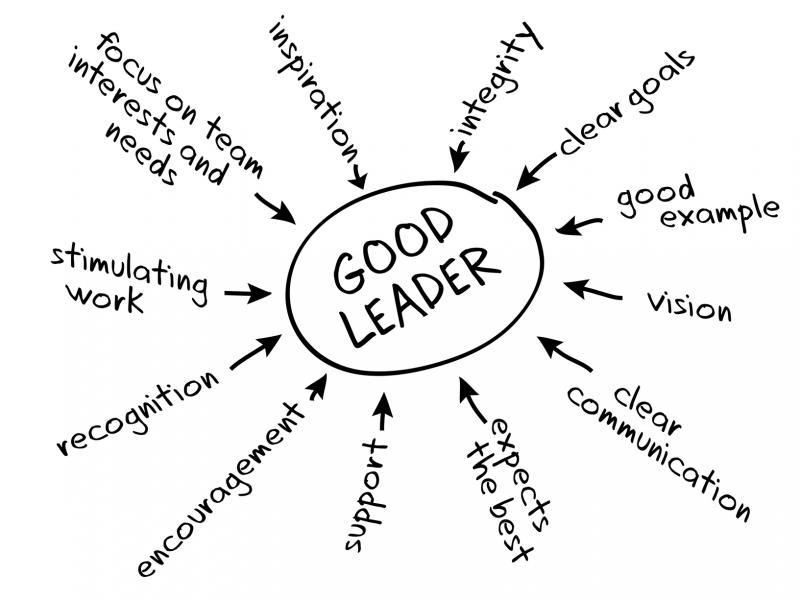
None of this works if senior leaders only announce the programme. The leadership qualities in the diagram above, clear goals, visible support, recognition and plain communication, are as much an HR responsibility as a sponsor's, because HR is the function that writes the expectations, runs the leadership development and sees which managers actually follow through.
Which HR processes can be counted as defects?
The first step in any HR project is to turn a complaint ("hiring is too slow", "payroll is always wrong") into a defect definition that two people would count the same way. The table lists processes that repeat often enough to measure, with a defect definition and a measure for each. The definitions are examples; every organisation should agree its own with the people receiving the service.
| HR process | A defect is | Typical measure |
|---|---|---|
| Recruitment | A hire that takes longer than the hiring manager's agreed limit | Days from approved requisition to accepted offer, and share inside the limit |
| Onboarding | A new starter missing a laptop, system access or signed contract on day one | Defects per hire, and hires with zero defects |
| Payroll | Any wrong amount, tax code or bank detail on a payslip | Errors per million opportunities (DPMO) |
| Employee queries | A benefits or leave question not resolved within the promised time | Share resolved in time, and average handling time |
| Mandatory training | A person overdue on a compliance course | Share overdue at month end |
| Early attrition | A hire who leaves within the first twelve months | Share of a hiring cohort leaving, charted by month |

The word "customer" needs care. In HR it is rarely one person. For recruitment the customer is the hiring manager and also the candidate; for payroll it is the employee and also the finance team. A good project names both and asks each what a good result looks like, which is the Six Sigma step called the voice of the customer. It is also where HR's traditional strength, listening to people, becomes a technical advantage.
How would a DMAIC project cut time-to-hire?
The example below is illustrative: the company, the numbers and the results are invented to show the method, not taken from a real programme or a published benchmark. Imagine a company of 900 people hiring about 240 staff a year, where hiring managers complain that vacancies stay open too long.
Define
The project charter states the problem in one sentence: "Hiring takes too long for hiring managers." That is turned into a measurable defect, "more than 35 days from approved requisition to accepted offer", and a goal, "at least 80 per cent of hires inside 35 days within six months". Recruiters, three hiring managers and a finance partner are named as stakeholders. Scope stops at the accepted offer, so notice periods and start dates are left out.
Measure
The team pulls the dates for the last 40 hires from the applicant system and splits the total into stages. In this example the median is 49 days, the shortest 27 and the longest 94, and only 6 of the 40 hires (15 per cent) came inside 35 days. The average stage durations are:
| Stage | Average days before | Average days after the pilot |
|---|---|---|
| Requisition approval | 9 | 3 |
| Shortlisting | 12 | 10 |
| Interview scheduling and rounds | 19 | 9 |
| Offer sign-off | 7 | 3 |
| Offer acceptance | 5 | 5 |
| Total | 52 | 30 |
Before any fix is designed, the team checks the data itself. A date field that recruiters fill in by hand a week late would distort the whole picture, so a sample of records is checked against email timestamps.
Analyse
A process map shows that the recruiter is working on the vacancy for under a third of the time. The rest is waiting: requisitions queue for approval from budget holders, interview panels are booked one round at a time, and offers need three signatures. A "five whys" on the interview stage finds that rounds are scheduled one after another because each interviewer's diary is checked only after the previous round ends. The team tests the idea with data instead of assuming it: hires with fewer than three days between rounds were filled 11 days faster in the sample.
Improve
Four changes are piloted on the next 40 hires.
- Headcount that is already in the approved budget no longer needs a fresh requisition approval.
- Structured screening criteria replace free-form shortlisting.
- Panels block interview slots weekly, and rounds are held on one day where the role allows it.
- Offers need two signatures instead of three, with a named deputy when one signatory is away.
In this example the pilot brings the average from 52 to 30 days, a cut of about 42 per cent, and 33 of the 40 hires (82.5 per cent) land inside 35 days.
Control
The gain only counts if it holds. The team adds a weekly chart of days to hire, writes the new steps into the recruiter guide, names the talent acquisition lead as process owner and agrees a trigger: if the average drifts above 35 days for three weeks running, the owner reviews the stages again. A balancing measure is added at the same time, the first-year leaver rate of the new hires, so that speed is not bought with poor choices.
How are payroll errors, onboarding defects and early attrition measured?
Different HR processes need different tools. Three short examples follow, again with invented numbers used only to show the arithmetic.
Payroll: errors per million opportunities
Suppose payroll pays 1,500 people a month and each payslip has six places where something can be wrong: hours, rate, allowances, deductions, tax code and bank details. That is 9,000 opportunities a month. If the audit finds 54 errors, the rate is 54 divided by 9,000, multiplied by 1,000,000, or 6,000 defects per million opportunities. On the conventional sigma table, which allows a 1.5 sigma drift, 6,210 is a 4 sigma process, so this payroll sits at roughly 4 sigma. After the cause is fixed, perhaps changes to timesheets arriving after the cut-off, 9 errors a month would be 1,000 per million, between 4.5 and 5 sigma. Six sigma itself is 3.4 per million, a level most payroll teams will not reach and do not need to.
Be honest about what is counted. Defining a payslip as having twelve opportunities instead of six halves the headline rate without a single error fewer, so the definition must be fixed before the baseline and never changed to flatter a result.
Onboarding: find the vital few with a Pareto chart
Say 60 people joined in a quarter and 38 of them hit a day-one problem. Counting the main problem for each gives access not ready (17), laptop late (11), contract unsigned (6) and payroll set-up missing (4). The first two account for 28 of the 38, about 74 per cent. A Pareto chart makes the point visible: fixing the access request and the laptop order, not all four problems, removes most of the pain. The usual follow-up is a "five whys" on each: access requests are raised only when the contract is signed, so a three-day delay is built in.
Attrition: separate noise from a real change with a control chart
Early attrition is a share, so a p-chart fits. Suppose the company hires about 40 people a month and 15 per cent of a cohort typically leave within a year. The three-sigma upper limit is 0.15 plus three times the square root of 0.15 times 0.85 divided by 40, which is about 32 per cent; the lower limit falls below zero, so it is zero. A month where 12 of 40 leave (30 per cent) looks alarming but sits inside the limits, so it is ordinary variation and not a reason to launch an inquiry. A month at 35 per cent would be a signal worth investigating.
Chart the rate by manager, role and source of hire as well as overall. An average can hide one team with a very different pattern, and finding it is usually worth more than the overall figure. Exit-interview reasons are self-reported and often polite, so treat them as clues to test, not proof.
How should HR handle the fear that a Six Sigma project means job cuts?
Any change that finds waste raises one question in every employee's mind: "Will I still have a job?" Projects that free up time or remove steps will seem to confirm the worry unless HR deals with it before the first workshop. This is the oldest lesson in organisational change, and it is where HR's role as the voice of change matters most.
- Decide what happens to freed capacity before announcing the project. Redeployment, absorbing growth, reducing overtime or agency spend, and reducing headcount are very different promises. If the answer is not decided, say so plainly instead of improvising a reassurance.
- Use the people staff already trust. Messages from first-line supervisors are usually better received than a corporate email. HR's job is to equip them with a short, consistent briefing and the answers to likely questions, not to speak for everyone.
- Keep the message short and honest about what is not yet known. Detailed plans change as data comes in. A manager who repeated last month's detail now finds it wrong, and trust suffers. Commit to dates for the next update instead of promising outcomes.
- Involve the people who do the work. A process map drawn by the team that runs the process is accepted far more readily than one drawn by outsiders, and it is more accurate.
- Do not talk about people as defects. The defect is in the process, a late approval or a missing field. The language used in the room sets the tone for the whole project.
Mergers and reorganisations raise the same fears at larger scale, and the lessons carry over: one consistent message, delivered several ways, by people employees believe, with training for managers on both the new process and the reasons behind it.
Where does Six Sigma struggle inside HR?
It is not the right tool for every HR problem, and a credible HR leader knows the limits.
- Low volumes. A process that runs ten times a year gives too little data for charts or sigma levels. Use a structured review or a simple checklist.
- Subjective outputs. A performance rating or a culture score is a judgement, not a count. It can be tracked, but the arithmetic of defects does not suit it.
- Gaming. Pressure on one number moves the problem. A shorter time-to-hire achieved by rushing interviews will show up later as early leavers, which is why a balancing measure belongs in every project.
- Data quality. Human resources information systems are often filled by hand, with free-text fields and missing dates. Cleaning the data may be the first project, before any improvement is possible.
- Privacy and fairness. Analysing people data brings legal duties. Use the minimum data needed, restrict who sees individual records, and check that a faster screening rule does not disadvantage a group of candidates.
- Savings that never reach a budget line. A time saving counts only if someone plans to use the time. Ask finance to confirm where the saving lands before it is reported.
What does a Yellow Belt give an HR professional, and what is on the LSSA-YB paper?
A Yellow Belt is the entry level of the belt system. It prepares someone to take part in a project team: to read a process map, collect clean data, sit through a root-cause session without feeling lost and understand the terms a Green or Black Belt will use. For an HR professional it is a practical first step, because it is enough to run a small improvement in an HR process or to take the people side of a programme with credibility. The topic list for the LSSA paper is on the LSSA-YB syllabus page, and LSSA's own exam shop page describes the rules, including that the paper is in English and a simple calculator is allowed.
| Exam detail | LSSA-YB |
|---|---|
| Exam name | LSSA Lean Six Sigma - Yellow Belt |
| Exam code | LSSA-YB |
| Vendor | LSSA |
| Number of questions | 50 |
| Exam duration | 60 minutes |
| Passing score | 32 / 50 |
| Exam fee | €260 (LSSA web shop) |
The payroll and control-chart calculations in this article are the kind of arithmetic a Yellow Belt is expected to follow, so candidates who want to see that vocabulary in question form can work through the LSSA-YB practice exam and compare their answers with the reasoning shown above.
Frequently Asked Questions
Is Six Sigma useful for HR?
Yes, where an HR process repeats often, has a defect someone would recognise and has an owner. Payroll, onboarding, recruitment and employee queries all qualify. Rare, judgement-based work such as succession planning for a few senior roles does not give enough data for the method to help.
What is the role of HR in a Six Sigma programme?
HR supplies the people side: choosing and releasing belt candidates, writing belts into career paths, planning training and certification, recognising results without distorting them, and communicating the change to staff. It is usually also the owner of several processes, such as hiring and payroll, that become projects themselves.
How is Six Sigma used in HR processes?
A team defines an HR defect, such as a hire taking longer than 35 days or a payslip error, measures a baseline, finds the cause with data, changes the process and adds a control chart. The same define, measure, analyse, improve, control sequence applies as in manufacturing.
Which Six Sigma belt suits an HR professional?
A Yellow Belt is the usual start, because it covers the vocabulary and basic tools needed to join a project team or improve a small HR process. A Green Belt suits HR staff who will lead projects, and a Black Belt suits those who will run them across the business.
How many questions are on the LSSA Yellow Belt exam?
The LSSA-YB paper has 50 questions in 60 minutes, and a candidate needs 32 correct to pass. LSSA's exam shop lists the exam as being in English, with a simple calculator allowed. Check LSSA's own page for the current fee and ordering terms before booking a sitting.
- Lean Six Sigma Yellow Belt PDF |
- Lean Six Sigma Yellow Belt Certification Requirements |
- Lean Six Sigma Yellow Belt Certification Cost |
- Management |
- LSSA-YB Question Bank |
- LSSA-YB Exam Questions Download |
- LSSA-YB Test Questions |
- LSSA Lean Six Sigma Yellow Belt Test Questions |
- Lean Six Sigma Yellow Belt Simulator |
- Lean Six Sigma Yellow Belt Mock Exam |
- LSSA Lean Six Sigma Yellow Belt Book |
- LSSA Lean Six Sigma Yellow Belt Sample Questions


