
The One ASQ CCQM Secret No One Tells Beginners

The ASQ Certified Construction Quality Manager (CCQM) certification stands as a pivotal credential for professionals dedicated to ensuring excellence and reliability in construction projects. For those embarking on this journey, understanding the true depth of the certification goes beyond memorizing facts. This guide will clarify the purpose of the ASQ CCQM, detail its structure and content, and most importantly, reveal a crucial insight—a "secret" often overlooked by beginners—that can significantly shape your preparation and long-term career success. We'll explore the exam's relevance, outline what it validates, and provide a supportive framework for aspiring quality managers.
Enhancing Project Outcomes with Quality Expertise
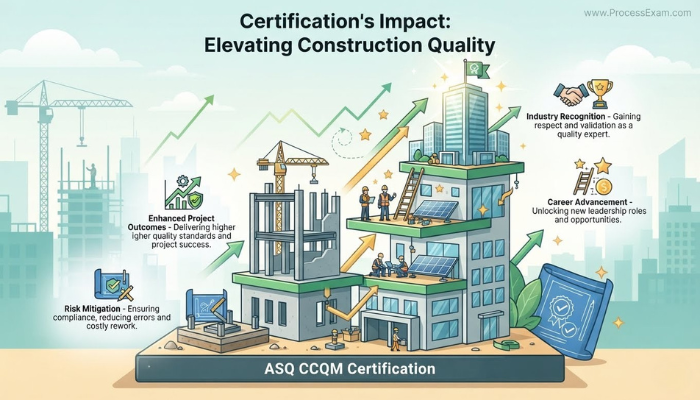
Achieving the ASQ Certified Construction Quality Manager certification demonstrates a commitment to upholding the highest quality standards throughout the complex lifecycle of construction projects. This credential signifies a professional’s ability to implement and manage quality systems, reduce defects, and ultimately deliver superior results that meet or exceed client expectations. The demand for skilled quality managers is growing as the industry faces increasing complexity, stringent regulations, and a heightened focus on sustainability and longevity. A certified professional can drive efficiency, mitigate risks, and foster a culture of continuous improvement within any construction organization.
Cultivating a Culture of Excellence
Construction quality management isn't merely about inspection; it's about embedding quality principles at every stage. From initial concept to final handover, the certified quality manager plays a proactive role in preventing issues rather than simply reacting to them. This involves establishing clear quality objectives, developing robust control plans, and empowering project teams with the knowledge and tools to execute tasks flawlessly. Professionals holding this certification are equipped to lead these initiatives, translating theoretical quality concepts into tangible, high-performance construction outcomes. Such expertise is invaluable for minimizing costly rework and enhancing stakeholder satisfaction across the board.
Advancing Your Career in Construction Quality
For individuals aiming to elevate their professional standing, the ASQ Certified Construction Quality Manager certification offers a clear pathway for career advancement. It validates a specialized skill set that is highly sought after by employers, opening doors to leadership roles such as Senior Quality Manager, Quality Assurance Director, or Construction Project Manager with a specialized quality focus. The certification can also lead to increased earning potential, reflecting the critical value these professionals bring to project success and organizational reputation. Engaging with the global quality community, such as through platforms like ASQ's networking groups, can further enhance career prospects and provide ongoing professional development opportunities.
Demystifying the ASQ CCQM Credential
The ASQ Certified Construction Quality Manager (CCQM) exam assesses a candidate’s comprehensive understanding and application of quality management principles specifically within the construction industry. This certification is designed for professionals who are involved in quality activities, process improvement, and problem-solving in construction environments. The exam covers a broad spectrum of topics essential for effectively managing quality across various construction phases, ensuring that certified individuals possess the diverse knowledge required for this critical role.
Unpacking the ASQ CCQM Exam Structure
Preparing for any certification exam begins with a clear understanding of its format and requirements. The ASQ CCQM is a rigorous assessment designed to thoroughly test a candidate's readiness. Familiarity with these details is the first step toward building an effective study strategy and can significantly reduce test-day anxiety.
-
Exam Name: ASQ Certified Construction Quality Manager
-
Exam Code: CCQM
-
Exam Price:
-
ASQ MEMBERS: $450
-
NON-MEMBERS: $550
-
RETAKES: $350
-
Duration:
-
Total Appointment Time: 270 Minutes
-
Exam Time: 258 Minutes
-
Number of Questions: 165 multiple-choice questions
-
Passing Score: 550 out of 750 points
This structure indicates that the exam is substantial, requiring not only broad knowledge but also the ability to apply concepts under time pressure. Candidates must ensure they are well-acquainted with each aspect of the exam to optimize their chances of success.
Eligibility Pathways to Certification
While the exam details outline the test itself, understanding the eligibility requirements is equally crucial before you begin preparing for the ASQ CCQM. ASQ certifications typically require a combination of education and professional experience in relevant fields. For the CCQM, candidates usually need a certain number of years of experience in a construction quality role, which may be reduced if they hold a degree in an engineering, science, or technology-related discipline. Prospective candidates should always consult the official ASQ website for the most current and specific eligibility criteria to ensure they qualify before investing time and resources into preparation.
Mastering the ASQ CCQM Exam Content
The ASQ CCQM exam syllabus is meticulously designed to cover all critical aspects of construction quality management, ensuring that certified individuals are well-rounded and competent across various project stages. Each domain of the syllabus contributes to a holistic understanding of quality, from the foundational phases to long-term operations. A structured approach to studying these areas is vital for comprehensive preparation.
Journey Through Project Phases: Pre-Contract to Closeout
The syllabus logically follows the progression of a construction project, starting even before ground is broken and extending through the project's completion. This sequential coverage ensures that quality considerations are integrated at every step, reflecting real-world construction practices.
-
Pre-contract Phase: Covers quality considerations, risk assessment, and contractual requirements before a project officially begins.
-
Planning Phase: Focuses on developing the quality management plan, defining standards, and setting objectives for the project.
-
Design Phase: Addresses quality in design reviews, specifications, and ensures constructability and compliance.
-
Procurement: Encompasses supplier qualification, material acceptance criteria, and quality control for procured items and services.
-
Construction: Deals with on-site quality control, inspections, testing, defect management, and adherence to plans.
-
Project Turnover and Closeout: Includes final inspections, commissioning, documentation, and transitioning the project to the owner.
This segment of the syllabus emphasizes the cyclical nature of quality, demonstrating that effective management requires continuous oversight and application across all project stages, not just during specific checkpoints.
Essential Quality Manager Capabilities
Beyond specific project phases, the ASQ CCQM syllabus dedicates a crucial section to the overarching skills and knowledge that define an effective quality manager. These are the transversal competencies that enable a professional to navigate challenges, lead teams, and drive sustainable quality improvements.
-
Operations and Maintenance: Addresses quality considerations once the facility is operational, including ongoing performance monitoring and upkeep.
-
Quality Manager Skills: This broad domain covers leadership, communication, problem-solving methodologies, statistical process control, auditing, and ethical practices essential for the role.
Understanding these skills is paramount, as they represent the application layer of all other theoretical knowledge. A construction quality manager must not only know "what" to do but also "how" to lead and implement quality initiatives effectively within diverse project environments. This combination of technical knowledge and soft skills is what truly sets apart an exemplary quality professional.
Strategic Preparation for ASQ CCQM Success
Effective preparation for the ASQ Certified Construction Quality Manager exam requires more than just reading through textbooks. It demands a strategic approach that combines deep content understanding, practical application, and disciplined study habits. For many beginners, identifying the most efficient and impactful study methods can be a challenge, but a well-structured plan can make all the difference.
Building a Robust Study Plan
A personalized study plan is the cornerstone of successful exam preparation. Start by reviewing the official ASQ CCQM syllabus and mapping out your current knowledge gaps. Allocate study time proportionally to the weight of each syllabus section and your comfort level with the topics. Integrate various learning resources, such as textbooks, online courses, and study groups, to reinforce your understanding. Consistency is key, so schedule regular study sessions and stick to them. Avoid cramming and aim for a steady pace that allows for thorough comprehension and retention of complex concepts.
Leveraging Practice Questions Effectively
Engaging with ASQ CCQM practice questions is an indispensable part of preparation. These questions not only familiarize you with the exam format and question types but also help identify areas where your understanding is weak. Don't just answer the questions; deeply analyze why a particular answer is correct and why others are incorrect. This critical thinking process reinforces learning and sharpens your problem-solving skills, which are vital for the actual exam. Many candidates find immense value in using high-quality practice exams that mirror the difficulty and structure of the real test. Explore comprehensive ASQ CCQM practice questions and study materials to enhance your readiness.
The Role of Training Courses and Study Groups
For many, enrolling in an ASQ Certified Construction Quality Manager training course provides a structured learning environment and access to expert instructors who can clarify complex topics and share practical insights. These courses often include valuable study materials and mock exams. Additionally, forming a study group with peers can be highly beneficial. Collaborative learning allows for discussions, different perspectives on problems, and mutual encouragement, which can sustain motivation throughout your preparation journey. This combination of guided instruction and peer support creates a powerful learning ecosystem.
Navigating the ASQ CCQM Certification Journey
Embarking on the ASQ Certified Construction Quality Manager certification journey involves several administrative steps beyond just studying. Understanding these requirements, including application procedures and associated costs, is crucial for a smooth process. Planning for these logistical aspects allows candidates to focus on the technical preparation without unnecessary distractions.
Understanding Certification Requirements and Costs
Successfully obtaining the ASQ CCQM certification requires fulfilling specific eligibility criteria set by ASQ, which typically involve a blend of educational background and practical work experience in quality management within the construction sector. It is imperative to review the most current requirements on the official ASQ website to ensure you meet all prerequisites before applying. Additionally, the examination incurs a fee, which varies depending on whether you are an ASQ member or a non-member, with a separate rate for retakes. Being aware of these costs allows for proper budgeting and financial planning for your certification pursuit.
Streamlining Your Application Process
Once you've confirmed your eligibility and accounted for the exam cost, the next step is to complete the application process accurately and efficiently. This typically involves submitting an online application through the ASQ portal, providing details of your education and work experience, and possibly attaching supporting documents. Pay close attention to deadlines and ensure all information is correct to avoid delays. A well-prepared application ensures that your journey towards becoming an ASQ Certified Construction Quality Manager proceeds without administrative hurdles, letting you dedicate your energy to mastering the exam content.
Sustaining Professional Excellence with ASQ CCQM
Achieving the ASQ Certified Construction Quality Manager certification is a significant milestone, but it also marks the beginning of a commitment to ongoing professional development. The construction industry is dynamic, with evolving technologies, standards, and best practices. Therefore, maintaining and continuously enhancing your quality management skills is essential to remain effective and relevant.
The Importance of Continuous Learning and Development
The ASQ CCQM credential is a testament to your current expertise, but continuous learning ensures that your knowledge stays current with industry advancements. Engaging in professional development activities, such as workshops, seminars, and reading industry publications, is crucial. This proactive approach not only helps you better serve your projects and organization but also positions you as a leader in the field of construction quality. Continuous improvement, a core principle of quality management, applies equally to one's professional growth. An excellent resource for staying updated and connecting with industry peers is the official ASQ website, offering a wealth of information and opportunities.
Strategies for ASQ CCQM Recertification
ASQ certifications, including the CCQM, typically have a recertification cycle to ensure that certified professionals maintain their competency over time. Recertification usually involves accumulating a specific number of continuing education units (CEUs) through various professional activities, such as attending conferences, delivering presentations, participating in work-related projects, or pursuing further education. Keeping meticulous records of your professional development activities is vital for a smooth recertification process. This mechanism ensures that the ASQ Certified Construction Quality Manager remains a highly credible and up-to-date credential throughout your career.
Unveiling the Secret: Holistic Quality Application
For many beginners, the ASQ CCQM exam might seem like a series of discrete topics to be memorized. However, the true "secret" no one tells beginners is that success, both on the exam and in a construction quality manager's career, hinges not on isolated knowledge but on the holistic integration and proactive application of quality principles across all project phases. It’s about seeing the entire construction project as an interconnected system where quality is built-in, not inspected out. This means understanding how actions in the pre-contract phase directly impact quality during construction, or how design decisions influence maintenance.
Beyond Theory: Applying Principles in Real-World Scenarios
The exam tests your ability to apply quality management tools and methodologies in practical construction contexts. This isn't just about recalling definitions; it's about evaluating scenarios and making informed decisions that optimize quality, efficiency, and safety. A genuine construction quality manager isn't a mere auditor but a strategic partner, capable of foreseeing potential issues and embedding preventative measures. Therefore, while studying, always think about the "why" and "how" behind each concept, visualizing its real-world impact on a construction site. This proactive, systems-thinking approach is what truly elevates a good quality manager to an exceptional one.
Cultivating a Proactive Quality Mindset
Embracing this holistic view also involves developing a proactive mindset. Instead of waiting for problems to arise and then reacting, a certified construction quality manager anticipates risks, identifies potential failure points early, and implements controls to prevent defects before they occur. This means understanding human factors, communication dynamics, and the interplay of various project stakeholders. Watching real-world case studies or interviews with experienced quality professionals, such as those often found on platforms like the ASQ YouTube channel, can offer invaluable insights into this proactive application. The "secret" is to shift from a reactive, inspection-based mentality to a preventative, process-driven one, where quality is everyone's responsibility, championed by the quality manager.
Conclusion: Your Path to Construction Quality Leadership
The ASQ Certified Construction Quality Manager (CCQM) certification is more than just a credential; it's a testament to a deep, integrated understanding of quality management in the dynamic world of construction. By embracing the "secret" of holistic application and proactive thinking, beginners can transform their preparation from a mere memorization exercise into a true journey of professional growth. This approach not only prepares you for exam success but also lays the foundation for an impactful career where you can genuinely drive excellence, mitigate risks, and build lasting quality into every project.
As you embark on this challenging yet rewarding path, remember that thorough preparation is your most valuable asset. Leveraging high-quality study materials and practice exams will solidify your understanding and boost your confidence. Take the first step towards becoming a distinguished leader in construction quality by exploring comprehensive resources designed to guide your success. To confidently prepare for your examination and ensure you have all the tools necessary, be sure to explore ASQ CCQM exam resources that align with your learning style and objectives.
FAQs
1. What is the ASQ Certified Construction Quality Manager (CCQM) certification?
The ASQ Certified Construction Quality Manager (CCQM) is a professional certification offered by the American Society for Quality (ASQ) that validates an individual's expertise in applying quality management principles and practices specifically within the construction industry, across all project phases.
2. Who should consider pursuing the ASQ CCQM certification?
The ASQ CCQM certification is ideal for professionals involved in quality activities, process improvement, and problem-solving within construction environments. This includes quality engineers, quality assurance/control managers, project managers with a quality focus, and consultants looking to specialize.
3. What are the main benefits of becoming an ASQ Certified Construction Quality Manager?
Benefits include enhanced career opportunities and earning potential, recognition as a subject matter expert in construction quality, improved ability to lead quality initiatives, and a deeper understanding of best practices for reducing defects and ensuring project success.
4. How should a beginner approach preparing for the ASQ CCQM exam?
Beginners should start by reviewing the official syllabus, creating a structured study plan, utilizing ASQ-recommended study materials, engaging with practice questions to identify knowledge gaps, and considering training courses or study groups for a comprehensive understanding.
5. Is continuous learning important after achieving the ASQ CCQM certification?
Yes, continuous learning is crucial. The construction industry is constantly evolving, and ongoing professional development ensures that an ASQ Certified Construction Quality Manager remains current with new technologies, standards, and best practices, maintaining the value and relevance of their certification through recertification.
- Management |
- ASQ Construction Quality Manager Test Questions |
- CCQM Question Bank |
- CCQM Body of Knowledge (BOK) |
- Construction Quality Manager Simulator |
- Construction Quality Manager Mock Exam |
- ASQ Construction Quality Manager Book |
- ASQ CCQM BOK PDF |
- Construction Quality Manager Certification Cost |
- Construction Quality Manager Certification Requirements |
- ASQ Construction Quality Manager Sample Questions |
- CCQM Exam Questions Download |
- CCQM Test Questions |
- Construction Quality Manager PDF |
- CCQM Handbook


