
Mastering ISTQB CTAL-ATT: Essential Prep for Agile Testers
The ISTQB Advanced Level Agile Technical Tester (CTAL-ATT) certification validates a tester's advanced skills in agile software development environments, focusing on technical aspects. This credential is for experienced testing professionals looking to deepen their expertise in test automation, static and dynamic analysis, and the deployment and delivery of agile projects. Many candidates, however, approach the ISTQB CTAL-ATT exam with misconceptions, leading to common pitfalls that hinder their success. This article evaluates the critical areas where most candidates struggle, offers honest insights into effective preparation, and outlines a clear path to readiness. Here, we delve into the exam's structure, critical syllabus topics, and strategies to ensure a thorough understanding of the technical intricacies required for agile testing excellence.
Examining the ISTQB CTAL-ATT Framework
Achieving the ISTQB Advanced Level Agile Technical Tester certification signifies a deep understanding of quality assurance within an agile context, particularly concerning technical testing practices. This involves not only theoretical knowledge but also the practical application of advanced testing techniques across the software development lifecycle. Understanding the specific components and expectations of the exam is the first step toward effective preparation, setting the foundation for a strategic study plan.
Core Examination Details for CTAL-ATT
The ISTQB CTAL-ATT exam is designed to rigorously assess a candidate's technical agile testing competencies. It measures the ability to apply advanced concepts in real-world scenarios, which often surprises those accustomed to more foundational certifications.
-
Exam Code: CTAL-ATT
-
Exam Name: ISTQB Advanced Level Agile Technical Tester
-
Exam Price: USD $249
-
Duration: 90 Minutes
-
Number of Questions: 40
-
Passing Score: 42 out of 64 marks
These details highlight a challenging exam that requires precise knowledge, not just broad familiarity. The scoring mechanism, particularly, emphasizes the need for accuracy across multiple areas of the syllabus.
Navigating the ISTQB CTAL-ATT Syllabus
The syllabus for the ISTQB Advanced Level Agile Technical Tester is structured to cover the multifaceted technical aspects of agile testing. Candidates must not only memorize concepts but deeply understand their implications and applications. A thorough review of the official ISTQB CTAL-ATT syllabus is indispensable for outlining a study path, detailing the weighted importance of each domain through recommended study times. The official ISTQB CTAL-ATT certification page offers extensive information.
The syllabus is segmented into several key areas, each demanding specific attention:
-
Requirements Engineering (180 minutes): This section focuses on understanding, analyzing, and transforming requirements in an agile context, critical for preventing defects early.
-
Testing in Agile (540 minutes): The largest section, covering a broad spectrum of agile testing principles, practices, and roles within various agile frameworks.
-
Test Automation (135 minutes): Emphasizes the strategies, tools, and best practices for automating tests in agile projects, including the integration of automation into CI/CD pipelines.
-
Deployment and Delivery (105 minutes): Explores the technical aspects of continuous integration, continuous delivery, and DevOps, ensuring quality through the entire release process.
This structure underscores the comprehensive nature of the exam, where a blend of theoretical understanding and practical implementation is paramount. Many candidates make the mistake of underestimating the depth required for each area, especially "Testing in Agile" due to its extensive coverage. For a detailed breakdown, refer to the ISTQB CTAL-ATT detailed syllabus document.
Common Missteps in CTAL-ATT Preparation
Most aspirants for the ISTQB CTAL-ATT certification encounter difficulties not because of a lack of effort, but due to fundamental flaws in their preparation strategy. These errors often stem from overlooking the nuanced requirements of an advanced-level, technically focused agile exam. Identifying and rectifying these common missteps is crucial for any candidate aiming for success.
Underestimating Technical Depth
A prevalent mistake is treating the CTAL-ATT as just another agile testing certification, failing to grasp its rigorous technical emphasis. Unlike foundational or general agile tester certifications, the CTAL-ATT dives deep into the 'how' and 'why' of technical practices.
Candidates often:
-
Focus solely on process: While agile processes are foundational, the CTAL-ATT specifically tests technical aspects like code quality, performance testing in agile, security testing, and advanced test automation frameworks.
-
Overlook coding and scripting concepts: A solid grasp of programming fundamentals, even if not actively coding, is essential for understanding automation architectures, code analysis tools, and technical debt management.
-
Neglect system architecture: The ability to analyze system designs and deployment pipelines from a technical testing perspective is frequently underestimated.
This oversight leads to superficial preparation that cannot stand up to the exam's practical and detailed questions.
Inadequate Practical Application Experience
The CTAL-ATT is not merely a theoretical exam; it demands an understanding born from practical experience. Many candidates, despite having agile project experience, lack hands-on involvement in the technical testing activities validated by this certification.
Common pitfalls include:
-
Limited automation exposure: Without direct experience in designing, implementing, or maintaining test automation, candidates struggle with scenario-based questions related to automation frameworks, tooling, and troubleshooting.
-
Lack of CI/CD pipeline familiarity: Understanding how testing integrates into continuous integration and delivery pipelines requires more than theoretical knowledge; it necessitates practical insights into build processes, deployment strategies, and environmental management.
-
Absence of static/dynamic analysis practice: Many testers have limited experience with tools and techniques for analyzing code quality, security vulnerabilities, or runtime behavior, which are key components of the syllabus.
Simulated practical scenarios and case studies are vital for bridging this gap between theory and application.
Reliance on Outdated or Unofficial Resources
The rapid evolution of agile methodologies and technical testing practices means that study materials quickly become obsolete. Relying on unofficial or outdated guides is a significant impediment to success.
Candidates risk:
-
Misinterpreting current best practices: Agile and DevOps evolve, and older resources may present practices or tools no longer considered optimal or even relevant.
-
Missing new syllabus areas: Certification syllabi are updated to reflect industry changes. Outdated materials will not cover newly introduced topics or revised emphasis areas.
-
Encountering inaccurate information: Unofficial sources may contain errors or oversimplifications that lead to incorrect understanding, especially for complex technical topics.
Always prioritize the official ISTQB syllabus and recommended readings to ensure alignment with the latest exam objectives.
Crafting an Effective CTAL-ATT Study Path
Passing the ISTQB CTAL-ATT exam requires more than just studying hard; it demands a smart, structured approach that targets the specific challenges of this advanced certification. An effective study path prioritizes understanding over memorization, integrates practical application, and leverages high-quality resources.
Strategizing Syllabus Coverage
Given the breadth and depth of the CTAL-ATT syllabus, a strategic approach to covering each topic is essential. Prioritize the most heavily weighted sections and allocate study time accordingly.
-
Prioritize "Testing in Agile": This module accounts for a significant portion of the exam. Focus on understanding the various testing quadrants, agile testing principles, and the role of a technical tester in different agile events.
-
Deep Dive into Test Automation: Beyond tool knowledge, comprehend the principles of automation architecture, maintainability, and effective reporting. Practice designing automation strategies for different scenarios.
-
Master Requirements Engineering: Understand how to technically review user stories, acceptance criteria, and behavioral specifications to ensure testability and quality from the outset.
-
Grasp Deployment and Delivery Concepts: Focus on the technical pipeline: understanding branching strategies, containerization, cloud deployment implications, and monitoring within a continuous delivery framework.
Do not neglect any section, but ensure the larger components receive adequate time and attention commensurate with their weight.
Integrating Practical Exercises and Labs
Theoretical knowledge alone is insufficient. Actively seek opportunities to apply concepts learned from the syllabus. This reinforces understanding and builds the necessary practical intuition for the exam.
-
Explore test automation tools: Experiment with open-source automation frameworks (e.g., Selenium, Playwright, Cypress) to build a small suite of automated tests.
-
Simulate CI/CD workflows: Use online labs or personal projects to set up basic continuous integration with a tool like Jenkins, GitLab CI, or GitHub Actions. Integrate simple automated tests into these pipelines.
-
Practice static analysis: Utilize code analysis tools (e.g., SonarQube, ESLint) on sample codebases to identify common issues and understand the reports generated.
-
Review architecture diagrams: Take existing system architectures and identify potential technical testing challenges and strategies.
This hands-on approach builds confidence and a deeper understanding of the technical implications of agile testing decisions.
Utilizing Premium Preparation Materials
Selecting the right study materials is paramount. Focus on resources specifically designed for the ISTQB CTAL-ATT exam, ensuring they are current and align with the latest syllabus.
-
Official ISTQB Resources: Always start with the official syllabus, glossary, and any sample questions provided by ISTQB. These are the definitive sources.
-
Accredited Training Providers: Consider courses from ISTQB-accredited trainers. These programs are specifically designed to cover the syllabus thoroughly and often include practical exercises.
-
High-Quality Practice Tests: Engage with practice tests that mimic the real exam's format and difficulty. These help identify knowledge gaps and improve time management. Platforms like ProcessExam.com offer comprehensive preparation materials, including practice tests designed to prepare candidates for the actual exam environment.
-
Reputable Textbooks and Articles: Supplement your study with well-regarded books on agile testing, test automation, and DevOps. Ensure the content is up-to-date.
Avoid "braindumps" or unauthorized materials, as they often contain incorrect information and promote unethical learning, ultimately harming your understanding and exam prospects. Ethical preparation through legitimate resources is the only way to genuinely acquire the skills and pass the exam.
Advantages of Earning CTAL-ATT Certification
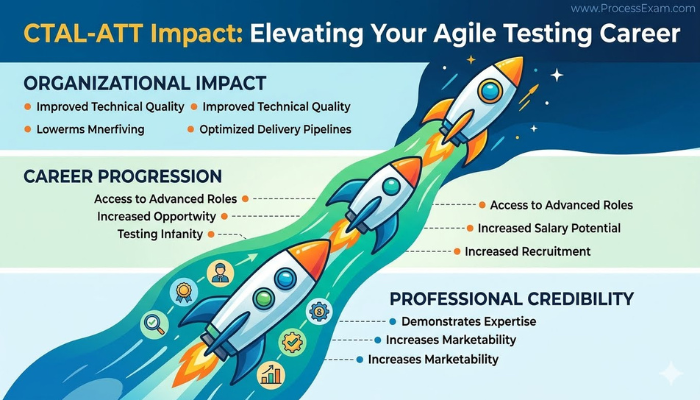
Obtaining the ISTQB Advanced Level Agile Technical Tester certification is more than just passing an exam; it's a strategic career move that offers tangible benefits to individual professionals and the organizations they serve. This credential signals a specialized skill set highly valued in today's fast-paced software development landscape.
Elevating Professional Credibility
The CTAL-ATT certification enhances a tester's standing within the industry. It provides formal recognition of advanced technical competencies in agile environments, distinguishing certified professionals from their peers.
-
Demonstrates Expertise: It officially validates a deep understanding of complex technical testing practices in agile, proving readiness for challenging roles.
-
Increases Marketability: Employers actively seek individuals who can drive quality through technical leadership in agile teams, making certified professionals more attractive candidates.
-
Fosters Trust: Holding an ISTQB Advanced Level certification builds confidence among team members, stakeholders, and clients in a tester's ability to deliver robust and reliable software.
This elevated credibility can open doors to more senior roles and greater influence in project decision-making.
Driving Career Progression and Compensation
For many, certification is a direct pathway to career advancement and improved earning potential. The specialized nature of the CTAL-ATT makes it particularly impactful in this regard.
Professionals with this certification often experience:
-
Access to Advanced Roles: Opportunities as Technical Test Leads, Automation Architects, DevOps Testers, or Quality Engineers in highly technical agile settings.
-
Increased Salary Potential: The demand for skilled agile technical testers translates into competitive salaries, reflecting the value these professionals bring to an organization.
-
Enhanced Leadership Opportunities: The certification prepares individuals to mentor junior testers, lead test automation initiatives, and contribute significantly to overall agile quality strategy.
Investing in the CTAL-ATT is an investment in long-term career growth and financial reward, as indicated by typical ISTQB Agile Technical Tester salary trends.
Strengthening Organizational Agile Maturity
Certified CTAL-ATT professionals contribute directly to their organization's ability to deliver high-quality software efficiently in an agile context. Their expertise helps bridge gaps between development, testing, and operations.
-
Improved Technical Quality: Certified testers can implement advanced static and dynamic analysis, ensuring higher code quality and fewer defects in production.
-
Optimized Delivery Pipelines: They are instrumental in integrating testing seamlessly into CI/CD pipelines, accelerating delivery cycles without compromising quality.
-
Enhanced Collaboration: With a solid technical foundation, these testers can better collaborate with developers and operations teams, fostering a culture of shared quality responsibility.
By having CTAL-ATT certified individuals, organizations can accelerate their agile transformation and achieve higher levels of operational excellence. This certification ensures teams have the necessary expertise for robust, reliable deployments.
Achieving Readiness for the CTAL-ATT Exam
True readiness for the ISTQB CTAL-ATT exam extends beyond simply covering the syllabus. It encompasses a holistic state of preparedness, combining in-depth technical knowledge, strategic exam-taking skills, and a confident mindset. Many candidates fail to connect these elements, leaving gaps in their final readiness.
Mastering Exam Format and Question Types
Familiarity with the exam format and the nuances of question types is as critical as content knowledge. The CTAL-ATT exam typically features scenario-based questions that require critical thinking and application of principles, not just recall.
-
Understand the Cognitive Levels: ISTQB exams test different cognitive levels, from K1 (remembering) to K3 (applying) and K4 (analyzing). The CTAL-ATT focuses heavily on K3 and K4 questions, requiring candidates to apply concepts to given situations or analyze problems.
-
Practice Scenario Analysis: Work through practice questions that present real-world agile scenarios and ask for the best technical testing approach, tool selection, or problem resolution.
-
Refine Time Management: With 40 questions in 90 minutes, pacing is crucial. Practice completing sections within allocated timeframes to avoid rushing through complex questions.
This strategic understanding of the exam's mechanics allows candidates to approach each question with a clear tactical advantage.
Building a Robust Review Strategy
Effective review is not just rereading notes; it involves actively recalling information, identifying weak areas, and reinforcing understanding through different methods. A structured review process is vital in the final weeks leading up to the exam.
-
Regular Self-Assessment: Continuously use practice tests and self-quizzes to gauge progress and pinpoint specific topics requiring more attention. Track your performance by syllabus area.
-
Targeted Study Sessions: Instead of broad reviews, dedicate sessions to challenging concepts or areas where practice tests reveal consistent errors. Use flashcards for key definitions and principles.
-
Collaborative Learning: Discuss complex topics with study partners or peers. Explaining concepts to others often solidifies your own understanding and exposes new perspectives.
A well-executed review strategy ensures that knowledge is not just acquired but is also readily accessible and applicable under exam conditions.
Adopting an Agile Mindset for Preparation
Ironically, applying agile principles to your exam preparation can significantly boost your chances of success. This involves iterative learning, continuous feedback, and adaptability.
Consider these agile preparation tactics:
-
Iterative Learning Sprints: Break down the syllabus into smaller, manageable "sprints" (e.g., one syllabus section per week). Review progress at the end of each sprint.
-
Frequent Feedback Loops: Regularly take mini-quizzes or section tests to get immediate feedback on your understanding, allowing for quick adjustments to your study plan.
-
Adaptive Planning: Be flexible. If a particular topic proves more challenging than anticipated, re-allocate time or seek additional resources rather than rigidly sticking to an initial plan.
By embracing these principles, candidates can make their ISTQB CTAL-ATT preparation more efficient, less stressful, and ultimately more effective, reflecting the very values the certification aims to validate.
The ISTQB Advanced Level Agile Technical Tester certification is a rigorous yet highly rewarding credential. While many candidates may initially struggle due to common preparation pitfalls, a strategic, hands-on, and ethical approach can transform these challenges into stepping stones for success. By meticulously understanding the exam's technical depth, engaging with practical application, and leveraging high-quality, up-to-date resources, aspiring CTAL-ATT professionals can confidently navigate their study journey. The certification not only validates essential skills for the modern agile landscape but also significantly propels career growth and contributes to stronger, more efficient development teams.
To ensure you are fully prepared and to avoid the common errors that deter many, commit to a diligent study regimen. Utilize comprehensive practice exams and study materials that mirror the real test environment, such as those available on trusted preparation partner ProcessExam. Your dedication to a thorough and ethical preparation process will undoubtedly be the key to unlocking your success as an ISTQB Advanced Level Agile Technical Tester.
FAQs
1. What skills does the ISTQB CTAL-ATT certification validate?
The ISTQB CTAL-ATT certification validates advanced technical testing skills within an agile context, including test automation, static and dynamic analysis, and the application of testing across continuous integration, deployment, and delivery pipelines.
2. Is prior agile experience required for the CTAL-ATT exam?
While not an explicit prerequisite, significant practical experience in agile software development, particularly in technical testing roles, is highly recommended. The exam tests application and analysis rather than just theoretical knowledge.
3. How long does it typically take to prepare for the ISTQB CTAL-ATT exam?
Preparation time varies greatly depending on existing knowledge and experience. However, most candidates dedicate several weeks to a few months of focused study, often combining self-study with accredited training courses and extensive practice.
4. Are there any prerequisites for taking the ISTQB CTAL-ATT exam?
Candidates are typically expected to hold the ISTQB Foundation Level certification and the ISTQB Agile Tester Foundation extension. It's also advisable to have prior experience in agile environments and technical testing roles.
5. What kind of career opportunities open up after achieving the CTAL-ATT certification?
Achieving the CTAL-ATT certification can open doors to roles such as Technical Test Lead, Agile Test Automation Engineer, DevOps Tester, or Senior Quality Assurance Engineer. It enhances marketability for positions requiring deep technical expertise in agile contexts.
- ISTQB Agile Technical Tester Test Questions |
- ISTQB Agile Technical Tester Book |
- ISTQB Agile Technical Tester Sample Questions |
- Specialist |
- CTAL-ATT Question Bank |
- CTAL-Agile Technical Tester Simulator |
- CTAL-Agile Technical Tester Mock Exam |
- ISTQB CTAL-Agile Technical Tester Questions |
- Agile Technical Tester Certification Cost |
- Agile Technical Tester Certification Requirements |
- CTAL-ATT Exam Questions Download |
- CTAL-ATT Test Questions |
- Agile Technical Tester PDF


