
Expert Roadmap: Navigating Your ASCM CPIM Future

The ASCM CPIM (Certified in Planning and Inventory Management) credential stands as a globally recognized benchmark for professionals seeking to demonstrate mastery of essential terminology, concepts, and strategies related to demand management, procurement, supplier planning, materials requirements planning, capacity planning, sales and operations planning (S&OP), master scheduling, performance measurement, supplier relationships, quality control, and continuous improvement. This article serves as a comprehensive roadmap, guiding aspiring candidates through the nuances of the certification, outlining its structure, dissecting key knowledge domains, and detailing a strategic preparation pathway. It is designed for supply chain professionals, operations managers, and anyone involved in the planning and inventory functions looking to elevate their expertise and career trajectory in an increasingly complex global marketplace.
Understanding the ASCM CPIM Credential
The ASCM CPIM certification validates an individual's deep understanding of the end-to-end supply chain, focusing specifically on the critical areas of planning and inventory management. This credential signifies a professional's ability to effectively manage manufacturing and supply chain operations, ensuring efficiency, cost reduction, and improved customer satisfaction. Achieving the CPIM designation demonstrates a commitment to excellence and a comprehensive skill set that is highly valued across various industries.
Exploring the CPIM Exam Logistics
The journey to becoming an ASCM CPIM certified professional culminates in successfully passing a rigorous exam. Understanding its structure and administrative details is the first crucial step in planning your study approach. The exam evaluates a candidate's grasp of a broad spectrum of supply chain principles and their application in real-world scenarios.
-
Exam Name: ASCM APICS Planning and Inventory Management
-
Exam Code: CPIM
-
Exam Price: USD $1,265
-
Duration: 210 Minutes
-
Number of Questions: 150 Passing Score 300 / 350
Core Competencies Validated by CPIM
The ASCM CPIM certification extends beyond theoretical knowledge, emphasizing practical application of supply chain planning and inventory control techniques. It confirms a candidate’s proficiency in orchestrating intricate processes that are vital for organizational success. Professionals holding this credential are equipped to tackle complex operational challenges and drive strategic initiatives, positioning them as invaluable assets within their organizations. For a deeper understanding of the certification's scope, candidates should explore the official resources available on the ASCM Official Page.
Exploring Key Content Domains
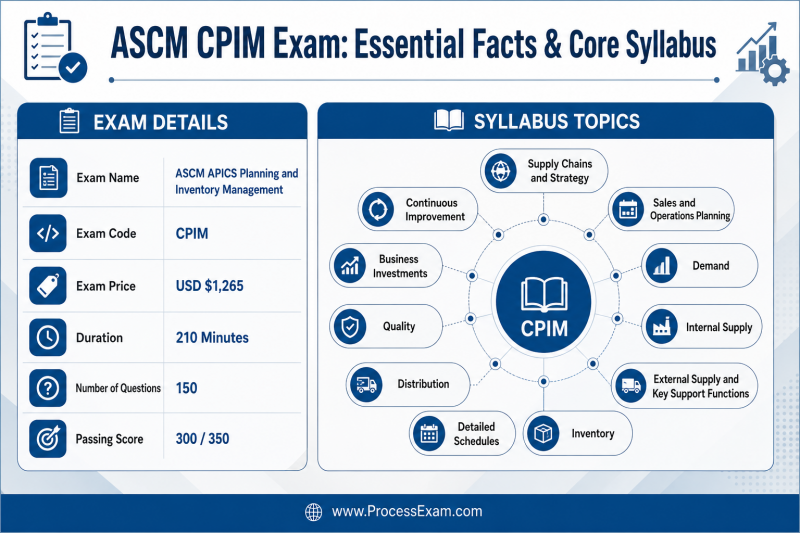
The ASCM CPIM curriculum is meticulously designed to cover a wide array of topics crucial for effective planning and inventory management. Each domain addresses specific facets of the supply chain, ensuring a holistic understanding for certified professionals. Mastering these areas is fundamental for candidates aiming to excel in the certification exam and apply their knowledge practically.
Detailed Syllabus Overview
The CPIM syllabus is structured to build a comprehensive foundation in supply chain operations, progressing from strategic considerations to detailed execution. Candidates are expected to develop an in-depth understanding of how these elements intertwine to create efficient and responsive supply chains.
-
Supply Chains and Strategy: Understanding the fundamental concepts of supply chain management, competitive strategies, and how supply chain designs support business objectives. This includes globalization, sustainability, and ethical considerations.
-
Sales and Operations Planning: Focuses on the process of aligning sales forecasts with production capabilities, inventory levels, and financial goals. Emphasizes collaboration across functions to balance demand and supply.
-
Demand: Covers various demand forecasting techniques, understanding customer behavior, and managing independent and dependent demand patterns within the supply chain.
-
Internal Supply: Deals with the planning and control of internal manufacturing processes, including master scheduling, material requirements planning (MRP), and capacity requirements planning (CRP).
-
External Supply and Key Support Functions: Explores the intricacies of procurement, supplier relationship management, logistics, and distribution, alongside critical supporting functions like quality management and continuous improvement.
-
Inventory: A core area focusing on the purpose of inventory, inventory costs, control methods, and the impact of inventory decisions on financial performance and customer service.
-
Detailed Schedules: Delves into production activity control, detailed scheduling techniques, and sequencing to optimize resource utilization and meet customer delivery promises.
-
Distribution: Encompasses network design, transportation planning, warehousing, and inventory positioning strategies within the distribution channels to ensure efficient product delivery.
-
Quality, Business Investments, and Continuous Improvement: Highlights the importance of quality management systems, performance measurement, capital budgeting, and continuous improvement methodologies like Lean and Six Sigma in enhancing supply chain efficiency.
These domains are interconnected, and a robust understanding of their relationships is key to success. For a comprehensive breakdown of the module content, refer to the official content outline.
Strategic Preparation for ASCM CPIM Success
Achieving the ASCM CPIM certification requires a disciplined and well-structured preparation strategy. It's not merely about memorization but about internalizing concepts and understanding their practical implications. A systematic approach ensures that you cover all syllabus areas comprehensively and build confidence for the exam.
Crafting Your Effective Study Plan
Developing a personalized study plan is paramount. Begin by assessing your current knowledge against the syllabus topics to identify areas requiring more attention. Allocate dedicated study time, integrating official ASCM learning systems, textbooks, and online resources. Consistency is key, so breaking down the material into manageable chunks and setting realistic milestones will help maintain momentum. Remember to incorporate regular review sessions to reinforce learning and revisit complex topics.
Leveraging Preparation Resources
The market offers a range of study aids, but prioritizing official and reputable resources is critical. ASCM provides official learning systems that align directly with the exam content, including study guides, practice questions, and online tools. Supplementing these with peer study groups or professional training courses can provide alternative perspectives and clarify difficult concepts. Additionally, utilizing practice exams is an indispensable component of your preparation strategy, helping you to gauge your readiness and identify areas for improvement. Access to high-quality practice questions and detailed explanations can significantly enhance your understanding and retention. You can find comprehensive practice materials to support your learning journey at CPIM practice exams.
Overcoming Preparation Challenges
The journey to CPIM certification can present challenges, from time constraints to complex subject matter. Proactive strategies include scheduling study sessions during peak alertness, creating a distraction-free study environment, and taking regular short breaks to prevent burnout. If a topic proves particularly difficult, seek clarification from instructors, mentors, or online forums. Practicing with a variety of question types also helps in developing critical thinking and problem-solving skills necessary for the exam. It's crucial to avoid shortcuts like exam dumps, which undermine genuine learning and ethical professional conduct. Focus on understanding the material deeply for long-term success.
Real-World Impact and Professional Growth
The ASCM CPIM credential is more than just a certificate; it's a testament to a professional's capabilities in the dynamic field of supply chain management. Earning this certification opens doors to advanced roles, enhances decision-making abilities, and contributes directly to an organization's bottom line by optimizing operational efficiency.
Advancing Your Career Trajectory
Holders of the ASCM CPIM certification often find themselves in a stronger position for career advancement. The credential signifies expertise that is directly applicable to roles such as production planner, inventory manager, supply chain analyst, operations consultant, and materials manager. It demonstrates a commitment to professional development, making candidates more attractive to employers seeking highly skilled individuals capable of driving strategic supply chain improvements and managing complex inventory systems.
Driving Operational Excellence
CPIM-certified professionals are instrumental in improving an organization’s operational performance. Their deep understanding of planning and inventory management principles allows them to identify inefficiencies, implement best practices, and optimize processes. This translates into reduced inventory costs, improved order fulfillment rates, enhanced forecasting accuracy, and ultimately, a more agile and responsive supply chain. By applying the knowledge gained, they can contribute significantly to achieving lean operations and sustainable growth.
Enhancing Decision-Making Capabilities
The comprehensive nature of the CPIM syllabus equips professionals with a robust framework for informed decision-making. Whether it's optimizing inventory levels, developing sales and operations plans, or managing supplier relationships, CPIM-certified individuals can analyze complex data, anticipate challenges, and formulate effective strategies. This capability is invaluable in navigating the uncertainties of global supply chains, enabling organizations to respond swiftly to market changes and maintain a competitive edge.
Sustaining Expertise and Continuous Improvement
Achieving the ASCM CPIM certification marks a significant milestone, but true mastery in supply chain management involves ongoing learning and adaptation. The field is constantly evolving, driven by technological advancements, global economic shifts, and changing consumer demands. Maintaining your credential and actively pursuing continuous improvement are essential for long-term professional relevance and impact.
Maintaining Your CPIM Credential
ASCM certifications, including CPIM, typically require continuing education to ensure certified professionals remain current with industry best practices and emerging trends. This commitment to ongoing learning reinforces the value of the credential and keeps your skills sharp. It often involves participating in professional development activities, attending industry conferences, or taking additional courses. By adhering to the maintenance requirements, you not only preserve your certification status but also continuously expand your knowledge base.
Embracing Evolving Supply Chain Dynamics
The landscape of supply chain management is dynamic, with new technologies like AI, blockchain, and automation constantly reshaping processes. CPIM professionals are encouraged to stay abreast of these developments, exploring how they can be integrated into existing planning and inventory strategies. Engaging with industry publications, attending webinars, and participating in professional associations are excellent ways to remain informed and adapt your expertise to the future demands of the supply chain. This proactive approach ensures you remain a strategic asset in any organization.
The ASCM CPIM certification is more than an accomplishment; it's an investment in your professional future and a commitment to excellence in supply chain management. It equips you with the foundational knowledge and strategic perspective needed to navigate complex operational challenges and drive significant value within any organization. By following a structured roadmap and dedicating yourself to continuous learning, you can unlock new opportunities and cement your role as a leader in the global supply chain arena.
Ready to validate your expertise and accelerate your career in planning and inventory management? Take the next step towards achieving the ASCM CPIM certification. Begin your preparation today by exploring comprehensive study resources and practice tests designed to equip you for success. Visit ProcessExam.com for resources that can guide your journey to certification.
Frequently Asked Questions
1. What kind of roles benefit most from ASCM CPIM certification?
The ASCM CPIM certification is highly beneficial for professionals in roles such as production planners, inventory managers, supply chain analysts, operations managers, and consultants. It also supports careers in master scheduling, procurement, and materials management, where deep knowledge of planning and inventory control is critical.
2. How long does it typically take to prepare for the ASCM CPIM exam?
The preparation time for the ASCM CPIM exam can vary significantly based on an individual's prior experience, study habits, and allocated time. Typically, candidates spend anywhere from 3 to 6 months of dedicated study, with some taking longer for a more in-depth approach. Consistent study and practice are key.
3. What are the prerequisites for taking the ASCM CPIM exam?
While there are no formal educational prerequisites to take the CPIM exam, ASCM recommends candidates have a strong understanding of supply chain fundamentals or relevant work experience. A college degree or equivalent experience in supply chain, operations, or related fields can be advantageous.
4. How does the CPIM certification enhance career opportunities?
The CPIM certification enhances career opportunities by validating a professional's expertise in critical planning and inventory management functions. This leads to increased recognition, better job prospects, higher earning potential, and eligibility for more strategic and leadership roles within organizations that value optimized supply chains.
5. Is the ASCM CPIM certification globally recognized?
Yes, the ASCM CPIM certification is globally recognized and respected across various industries. It is highly valued by multinational corporations and organizations worldwide, signifying a universal standard of excellence in planning and inventory management practices, making it a valuable credential for international careers.
- Supply Chain Management |
- ASCM APICS Certified Planning and Inventory Management Test Questions |
- CPIM Question Bank |
- CPIM Body of Knowledge (BOK) |
- APICS CPIM Simulator |
- APICS CPIM Mock Exam |
- ASCM APICS Certified Planning and Inventory Management Book |
- ASCM CPIM BOK PDF |
- APICS Certified Planning and Inventory Management Certification Cost |
- APICS Certified Planning and Inventory Management Certification Requirements |
- ASCM APICS CPIM Question Bank |
- ASCM APICS CPIM Book |
- ASCM APICS CPIM Study Guide |
- APICS CPIM Certification |
- APICS CPIM Certification Cost |
- APICS CPIM Certification Requirements |
- ASCM APICS Certified Planning and Inventory Management Sample Questions |
- CPIM Exam Questions Download |
- CPIM Test Questions |
- APICS Certified Planning and Inventory Management PDF |
- ASCM APICS CPIM Exam Questions |
- ASCM APICS CPIM Sample Questions |
- APICS CPIM |
- APICS CPIM PDF


