
Decoding APMP Graphics Micro-Certification: Expert Insights
The APMP Graphics Micro-Certification (GR-M APMP) stands as a testament to a proposal professional's proficiency in visual communication. This specialized credential validates a candidate's ability to create compelling, compliant, and effective graphics for proposals, enhancing clarity and persuasive power. Designed for individuals keen on differentiating their expertise in proposal development, this article delves deep into the certification's core, offering expert insights into its structure, benefits, and strategic preparation pathways. Professionals aiming to elevate their visual storytelling and impact in competitive bidding environments will find this guide invaluable.
Certifying Visual Communication Expertise
The modern proposal landscape increasingly emphasizes visual appeal and clarity. The APMP Graphics Micro-Certification directly addresses this need by validating a specific skillset crucial for engaging evaluators and conveying complex information succinctly. This certification affirms a professional’s understanding of fundamental graphic principles, adherence to best practices, and the strategic application of visuals within bids and proposals. It signals to employers and clients a commitment to excellence in every facet of proposal creation.
Achieving this micro-credential demonstrates a specialized proficiency in several key areas:
-
Understanding visual hierarchy: Directing the reader's eye effectively.
-
Selecting appropriate graphic types: Matching visuals to data and message.
-
Ensuring compliance and clarity: Meeting requirements while remaining easy to understand.
-
Enhancing readability and engagement: Making proposals more appealing and digestible.
This focus on practical application ensures that certified professionals can immediately contribute to higher quality, more impactful proposals.
Understanding the APMP Graphics Micro-Certification Structure
The GR-M APMP examination provides a focused assessment of a candidate’s graphic development capabilities. Understanding its structure is the first step toward effective preparation, ensuring candidates are fully aware of what to expect on exam day. This micro-certification is designed to be a concise yet comprehensive evaluation of core competencies.
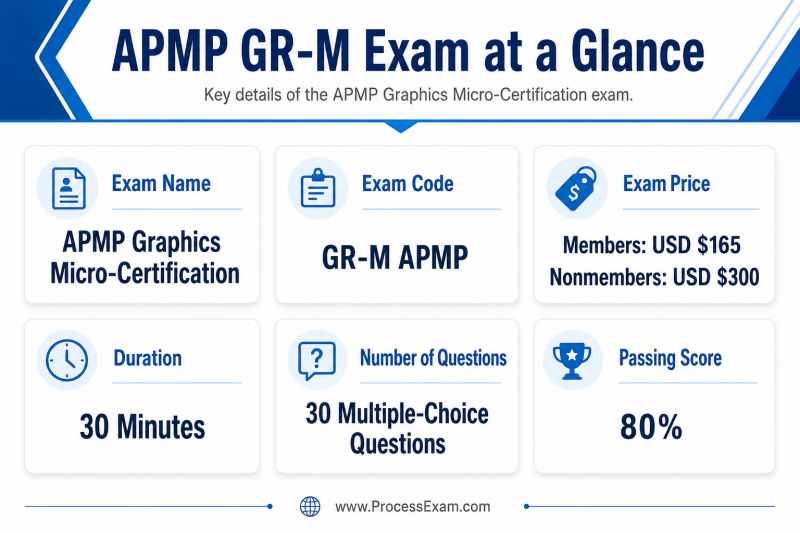
The specifics of the APMP Graphics Micro-Certification exam are as follows:
- Exam Name: APMP Graphics Micro-Certification
- Exam Code: GR-M APMP
- Exam Price: APMP Members: USD $165, Nonmembers: USD $300
- Duration: 30 Minutes
- Number of Questions: 30
- Passing Score: 67%
Candidates should familiarize themselves with these details before beginning their study journey. For comprehensive study resources and to explore essential APMP exam details, candidates can visit ProcessExam’s dedicated page.
Advantages of Pursuing this Micro-Credential
Earning the APMP Graphics Micro-Certification offers distinct advantages in a competitive professional environment. Beyond validating specific skills, it elevates a professional’s standing and contributes significantly to their career trajectory within proposal management. This credential acts as a badge of expertise, signaling a higher level of commitment and specialized knowledge.
Enhanced Credibility and Marketability
Holding the GR-M APMP certification sets professionals apart, demonstrating a validated skill set in a critical area. This enhanced credibility can lead to greater opportunities, both within existing roles and when seeking new positions. It confirms an individual's ability to produce high-quality, impactful visuals. Organizations increasingly seek candidates who can directly contribute to improving proposal win rates. For further information and official APMP guidelines, consider visiting the APMP official page.
Driving Proposal Success Rates
Effective graphics are paramount to a proposal's success. Studies consistently show that well-designed visuals significantly improve comprehension and retention, making proposals more persuasive. Certified professionals are equipped to apply these principles, translating complex data into easily digestible formats, thereby improving the overall impact and winnability of bids. Their expertise directly contributes to converting prospects into clients.
Implementing Proposal Graphics Best Practices
The APMP Graphics Micro-Certification emphasizes the practical application of industry best practices for visual communication in proposals. This involves understanding not just how to create a graphic, but how to ensure it serves its strategic purpose within the broader proposal document. Adhering to these principles ensures consistency, clarity, and compliance.
Strategic Visual Planning
Before any graphic is created, a certified professional considers its strategic intent. This includes identifying the key message, understanding the target audience, and aligning the visual with the overall proposal strategy. Visual planning also involves selecting the most effective type of graphic—whether it's an infographic, flowchart, diagram, or data visualization—to convey information efficiently and persuasively. This proactive approach prevents the creation of irrelevant or confusing visuals.
Ensuring Consistency and Compliance
Consistency in branding, style, and terminology across all graphics is vital for a professional proposal. Certified individuals understand the importance of maintaining a unified visual language that reinforces the client's brand. Furthermore, they are adept at ensuring graphics comply with all client requirements, including file formats, resolution, and content restrictions, thereby avoiding potential disqualification or negative scoring.
Cultivating Core Visual Storytelling Abilities
Effective proposal graphics go beyond mere decoration; they tell a story, simplify complex ideas, and evoke desired responses. The APMP Graphics Micro-Certification cultivates these core visual storytelling abilities, empowering professionals to transform raw information into compelling narratives. This skill is crucial for captivating evaluators and differentiating proposals.
Simplifying Complex Information
One of the most valuable aspects of strong visual communication is the ability to break down intricate processes, data sets, or concepts into understandable visual formats. Certified professionals learn techniques to deconstruct complexity, identifying the essential elements and presenting them in a way that minimizes cognitive load for the reader. This clarity is especially critical when dealing with highly technical or abstract topics.
Engaging the Reader Through Design
Visuals have the power to draw a reader in and maintain their attention, a crucial advantage in lengthy proposal documents. By understanding principles of layout, color theory, and typography, APMP Graphics Micro-Certification holders can design visuals that are not only informative but also aesthetically pleasing and engaging. This engagement keeps evaluators interested and helps them navigate the proposal with ease, increasing the likelihood of key messages being absorbed.
Key Learning Goals for GR-M APMP Candidates
The APMP Graphics Micro-Certification learning objectives are structured to equip candidates with a comprehensive skill set for designing and managing proposal graphics. These objectives cover both the theoretical underpinnings and practical applications necessary for excellence in visual communication within bids. Meeting these goals is essential for successful exam performance.
Candidates are expected to demonstrate proficiency in:
-
Identifying target audience needs: Tailoring graphics to specific evaluators.
-
Selecting appropriate graphic types: Choosing the right visual for the message.
-
Applying design principles: Utilizing layout, color, and typography effectively.
-
Ensuring graphic compliance: Adhering to client and organizational standards.
-
Integrating visuals with text: Creating a cohesive narrative flow.
-
Evaluating graphic effectiveness: Assessing impact and areas for improvement.
These objectives collectively ensure a well-rounded understanding of proposal graphics.
Developing a Robust Exam Preparation Strategy
Passing the GR-M APMP exam requires more than just casual study; it demands a structured and strategic approach. A robust preparation strategy ensures that all critical areas are covered, and knowledge is effectively consolidated for optimal performance on exam day. This advanced guide provides the frameworks for achieving exam success.
Crafting an Effective Study Plan
A well-structured study plan is the cornerstone of effective exam preparation. Candidates should allocate dedicated time blocks for reviewing core concepts, practicing design principles, and familiarizing themselves with common graphic types used in proposals. It’s beneficial to break down the study material into manageable chunks, focusing on one or two learning objectives at a time to ensure thorough comprehension. Regular short study sessions are often more effective than infrequent long ones.
Leveraging APMP Training Resources
The APMP organization provides various resources designed to support candidates in their certification journey. These might include official study guides, webinars, workshops, or recommended readings that align directly with the certification’s learning objectives. Utilizing these vendor-specific materials can significantly enhance understanding of the specific requirements and best practices emphasized by the APMP. Relying on authentic resources ensures accurate and relevant preparation.
Mastering Graphics for Proposal Development
True mastery of proposal graphics extends beyond technical execution; it involves an understanding of how visuals contribute to the overall strategy and persuasion of a bid. The APMP certification for proposal graphics focuses on integrating these elements seamlessly into the proposal development process, transforming them into powerful tools for conveying value. This holistic approach is critical for high-impact results.
Integrating Visuals with Narrative
Graphics should never stand in isolation; they must seamlessly integrate with the written narrative of the proposal. Certified professionals learn to ensure that visuals complement, rather than duplicate, text, creating a richer and more engaging reading experience. This includes using callouts, references, and consistent messaging between text and image to reinforce key points and maintain a logical flow throughout the document.
Developing Visual Impact and Persuasion
The ultimate goal of proposal graphics is to persuade. This involves designing visuals that not only convey information but also influence the evaluator’s perception and decision-making. Techniques such as highlighting benefits, showing value propositions visually, and creating compelling data visualizations are central to this. The certification helps candidates refine their ability to create graphics that resonate and leave a lasting positive impression.
Accessing Official APMP Training Materials
For aspiring candidates, identifying and utilizing official APMP graphics training resources is paramount to successful exam preparation. These materials are specifically designed to align with the certification's objectives, providing accurate and relevant content that reflects the expectations of the examination. Leveraging these resources ensures a targeted and efficient study process.
Key training materials often include:
-
Official Study Guides: Comprehensive documents outlining core concepts and best practices.
-
Webinars and Workshops: Instructor-led sessions offering deeper dives into specific topics.
-
Recommended Reading Lists: Curated external resources that complement the APMP curriculum.
-
Sample Graphics and Templates: Practical examples illustrating effective visual design.
These resources are invaluable for building a solid foundation and understanding the nuances of proposal graphics.
Navigating Common GR-M APMP Study Hurdles
While the APMP Graphics Micro-Certification is highly rewarding, candidates may encounter specific challenges during their preparation. Recognizing and addressing these common hurdles proactively is key to maintaining momentum and ensuring a smooth study journey. Effective strategies can transform potential roadblocks into learning opportunities.
Time Management for Busy Professionals
Many candidates for the GR-M APMP are working professionals with demanding schedules. Juggling work, personal commitments, and study can be a significant challenge. Developing a realistic study schedule, utilizing short, focused study blocks, and leveraging mobile learning tools can help maximize efficiency. Prioritizing study time and communicating commitments to family and colleagues can also create a more conducive learning environment.
Understanding Specific APMP Graphic Standards
The APMP framework has its own set of standards and expectations for proposal graphics, which may differ from general graphic design principles. Candidates must invest time in understanding these specific guidelines, including visual consistency, brand compliance within proposal contexts, and common pitfalls to avoid. Focusing on these distinctions during study will ensure alignment with the exam's specific requirements.
Gauging Readiness with Targeted Practice
Self-assessment is a critical component of any effective exam preparation strategy. For the APMP Graphics Micro-Certification, this involves regularly testing your knowledge and application skills through targeted practice questions and mock scenarios. This process helps identify areas of weakness and build confidence before the actual examination.
Utilizing Practice Questions Effectively
Engaging with APMP Graphics Micro-Certification practice questions is an excellent way to familiarize yourself with the exam format and the types of questions asked. It allows you to test your understanding of concepts, identify gaps in your knowledge, and refine your time management skills. After attempting questions, review both correct and incorrect answers to understand the underlying principles and reasoning. For additional preparation, you can find effective APMP practice questions to help assess your readiness.
Simulating Exam Conditions
Beyond just answering questions, simulating the actual exam environment can significantly reduce test-day anxiety. Practice taking full-length timed exams under conditions similar to the real test, minimizing distractions and adhering to the duration. This practice helps to build stamina, improve focus, and develop strategies for efficiently managing the exam's time constraints.
Fulfilling Micro-Certification Eligibility Criteria
Understanding the GR-M APMP certification requirements is crucial before embarking on the certification journey. While micro-certifications often have fewer prerequisites than full professional certifications, it's important to confirm any necessary experience or foundational knowledge the APMP might recommend for candidates. This ensures a solid starting point for preparation and avoids potential issues down the line.
Typically, micro-credentials like this are designed to be accessible to professionals who already possess a foundational understanding of proposal development. The focus is on a specialized skill enhancement rather than an introductory credential. Candidates should check the official APMP website for the most current and specific eligibility criteria, which may include recommendations for prior experience in proposal roles or existing APMP certifications at foundational levels.
Advancing Your Career Through Visual Acumen
The APMP Graphics Micro-Certification career impact extends far beyond merely adding a line to a resume. It positions professionals as leaders in visual communication within their organizations, opening doors to new responsibilities and opportunities. Investing in this micro-credential is an investment in long-term career growth and specialization.
Taking on Leadership Roles in Proposal Design
With a validated expertise in proposal graphics, certified individuals are often sought after to lead visual design efforts for critical bids. This can involve setting visual standards, mentoring junior team members, or serving as the primary liaison with graphic design teams. These leadership roles offer increased visibility and influence within the organization, leading to greater career satisfaction and advancement.
Enhancing Overall Professional Reputation
A professional with the GR-M APMP demonstrates a proactive approach to skill development and a commitment to excellence. This dedication enhances their overall professional reputation, making them a more valuable asset to any team. This reputation can translate into better project assignments, recognition for their contributions, and improved networking opportunities within the broader proposal management community.
Maintaining Graphics Excellence Beyond Certification
Achieving the APMP Graphics Micro-Certification is a significant milestone, but maintaining graphics proficiency is an ongoing process. The field of visual communication evolves constantly, with new tools, trends, and best practices emerging regularly. Continuous learning and application are essential to remain at the forefront of effective proposal graphics.
Embracing Continuous Learning and Development
To stay current, certified professionals should actively engage in continuous learning. This includes subscribing to industry publications, attending webinars on graphic design trends, and exploring new software tools. Participating in APMP community forums and sharing experiences with peers can also provide valuable insights and keep skills sharp. A commitment to lifelong learning ensures that one’s expertise remains relevant and impactful.
Applying Learned Skills in Diverse Contexts
Regularly applying the principles and techniques learned for the GR-M APMP in various proposal scenarios helps solidify knowledge and adapt skills to different requirements. Experimenting with new graphic approaches, seeking feedback on visual designs, and continuously refining one’s craft are crucial for evolving from a certified professional to a recognized expert in proposal graphics.
Strategic Edge in Proposal Competitions
In today's highly competitive procurement landscape, every advantage counts. The APMP micro-credential for graphics provides a distinct strategic edge, enabling organizations to submit proposals that not only meet technical requirements but also stand out visually and communicate more effectively. This differentiation can be the decisive factor in securing contracts.
Standing Out in Crowded Markets
Many proposals feature similar technical solutions and pricing structures. What often differentiates winners from runners-up is the quality of communication and presentation. Professionally designed graphics can make a proposal more memorable, easier to digest, and more persuasive than those from competitors who neglect visual elements. The GR-M APMP ensures that an organization’s proposals leverage this critical advantage.
Improving Evaluator Engagement and Comprehension
Evaluators are often inundated with lengthy, text-heavy documents. High-quality, strategic graphics break up monotony, highlight key differentiators, and simplify complex information, making the evaluator's job easier and more enjoyable. When evaluators can quickly grasp the essence of a proposal and perceive its value clearly, it significantly increases the likelihood of a positive assessment.
Evolution of Visual Communication in Proposals
The domain of proposal graphics is not static; it is continually evolving with technological advancements and changing communication preferences. Professionals holding the APMP Graphics Micro-Certification are better equipped to adapt to these shifts, ensuring their visuals remain cutting-edge and effective in an ever-changing environment. This forward-looking perspective is crucial for sustained success.
Impact of Digital Tools and Interactive Media
The increasing reliance on digital submission platforms allows for the incorporation of more dynamic and interactive graphic elements. Certified professionals must be aware of how to leverage these tools effectively, from embedding videos to creating interactive data visualizations that enhance the proposal's persuasiveness. Adapting to these digital innovations ensures proposals remain at the forefront of visual engagement.
Anticipating Future Trends in Proposal Design
Staying ahead of the curve means not just responding to current trends but anticipating future ones. This includes understanding the impact of AI in graphic generation, the rising importance of accessibility in visual design, and evolving standards for mobile-friendly content. The foundational knowledge gained through the GR-M APMP prepares professionals to critically evaluate and integrate these emerging trends into their proposal strategies.
Embarking on Your Graphics Certification Journey
The APMP Graphics Micro-Certification is a powerful credential for any proposal professional looking to specialize and excel in visual communication. It signifies a validated mastery of skills crucial for creating compelling and compliant proposal graphics, which in turn leads to enhanced career opportunities and improved proposal win rates. The focused nature of the GR-M APMP makes it an achievable yet impactful goal.
Whether you are looking to refine existing skills, secure a competitive advantage, or simply demonstrate a commitment to best practices in proposal development, this micro-credential provides a clear pathway. Begin your structured preparation, leverage official resources, and commit to mastering the essentials of APMP proposal graphics best practices. Your journey to becoming a certified expert in visual communication starts now. To boost your certification readiness and access comprehensive exam resources, visit ProcessExam today.
Frequently Asked Questions
1. What is the APMP Graphics Micro-Certification (GR-M APMP)?
The APMP Graphics Micro-Certification validates a professional's expertise in creating effective, compliant, and persuasive graphics for proposals and bids. It confirms understanding of visual communication best practices within the proposal management context.
2. Who should pursue the APMP Graphics Micro-Certification?
This micro-certification is ideal for proposal managers, writers, graphic designers, and any professionals involved in proposal development who wish to enhance and validate their skills in visual communication and proposal graphics.
3. How does the APMP Graphics Micro-Certification benefit my career?
Earning this micro-credential enhances your professional credibility, improves your marketability, and demonstrates specialized expertise in a critical area of proposal development. It can lead to increased responsibilities and career advancement opportunities.
4. Are there any prerequisites for the GR-M APMP exam?
While specific formal prerequisites may vary, candidates typically benefit from prior experience in proposal development or a foundational understanding of the APMP's core principles. It is always recommended to check the official APMP website for the most current eligibility criteria.
5. What kind of preparation is recommended for the GR-M APMP exam?
Recommended preparation includes developing a structured study plan, utilizing official APMP training resources, reviewing best practices in visual communication for proposals, and practicing with sample questions to assess readiness.
- APMP Graphics Exam Questions |
- APMP Graphics Question Bank |
- APMP Graphics Questions |
- GR-M APMP Question Bank |
- APMP GR-M APMP BOK PDF |
- GR-M APMP Exam Questions Download |
- GR-M APMP Test Questions |
- APMP Graphics Book |
- APMP Graphics Study Guide |
- APMP GR-M APMP Exam |
- APMP Exam |
- GR-M APMP |
- GR-M APMP Exam |
- GR-M APMP Certification |
- GR-M APMP Practice Test |
- GR-M APMP Study Guide PDF |
- GR-M APMP Study Guide Material |
- Graphics |
- Graphics Certification |
- Graphics Certification Cost |
- Graphics Certification Requirements |
- APMP Graphics Micro-Certification |
- APMP Graphics Sample Questions |
- APMP GR-M APMP Quiz |
- GR-M APMP Questions |
- GR-M APMP Sample Exam |
- Graphics PDF |
- APMP Graphics Test Questions |
- GR-M APMP Body of Knowledge (BOK) |
- Graphics Simulator |
- Graphics Mock Exam


