
ISTQB CT-AI: Master AI Testing for Certification & Career
The ISTQB Certified Tester AI Testing (CT-AI) certification empowers quality assurance professionals to validate artificial intelligence systems effectively. This certification, offered by ISTQB, establishes a crucial baseline for individuals looking to apply robust testing principles to AI and machine learning models. It’s designed for testers, test analysts, test engineers, test consultants, test managers, and software developers who need to demonstrate their competence in the unique challenges of AI testing. This comprehensive guide will walk you through the specifics of the CT-AI exam, its syllabus, preparation strategies, and the career advantages it offers.
Unveiling the ISTQB CT-AI Certification Journey
The ISTQB Certified Tester AI Testing (CT-AI) certification is a vital credential for anyone involved in the quality assurance of AI-powered products and solutions. It provides a structured understanding of how to approach the testing of AI components, addressing the complexities that traditional software testing methodologies may not fully cover. Earning this certification signifies your ability to contribute to the reliable and ethical deployment of AI. Professionals seeking to deepen their expertise in this critical domain will find the CT-AI particularly valuable, as it helps bridge the gap between conventional testing and the evolving landscape of AI. To learn more about the official objectives and context, visit the Official ISTQB CT-AI Certification Overview.
Decoding the ISTQB CT-AI Exam Structure
Understanding the format of the ISTQB CT-AI exam is a crucial first step in your preparation journey. This certification exam is designed to assess your practical knowledge and theoretical comprehension of AI testing principles. Familiarity with these details helps candidates manage their time and expectations during the actual test.
The ISTQB Certified Tester AI Testing exam (CT-AI) presents a clear framework for evaluation:
-
Exam Name: ISTQB Certified Tester AI Testing
-
Exam Code: CT-AI
-
Exam Price: USD $199
-
Duration: 60 Minutes
-
Number of Questions: 40 multiple-choice questions
-
Passing Score: You must achieve 31 out of 47 possible points to pass the exam, indicating a thorough understanding of the material.
This structure ensures a fair and consistent assessment of a candidate’s expertise across the core competencies outlined in the syllabus.
Grasping the Core Concepts: ISTQB CT-AI Syllabus Overview
The syllabus for the ISTQB CT-AI certification is meticulously designed to cover all essential aspects of testing artificial intelligence systems. It progresses from foundational AI knowledge to advanced testing techniques specifically tailored for machine learning models. Each section builds upon the previous, ensuring a holistic understanding.
Foundational Knowledge in AI and Quality
This initial segment introduces the fundamental concepts of AI and the specific quality characteristics pertinent to AI-based systems. It sets the stage for understanding why AI testing requires a distinct approach compared to traditional software testing.
-
Introduction to AI: Covers basic definitions, types of AI, and its application areas, providing a common ground for testers.
-
Quality Characteristics for AI-Based Systems: Explores unique quality attributes such as fairness, interpretability, robustness, and ethical considerations for AI, which are paramount in its validation.
Machine Learning Specifics for Testers
Delving deeper, this part of the syllabus focuses on the intricacies of machine learning, which forms the backbone of many AI systems. Testers need to understand ML's lifecycle, data dependency, and performance metrics to effectively identify and address potential issues.
-
Machine Learning (ML) - Overview: Introduces the core concepts of machine learning, different types of ML (supervised, unsupervised, reinforcement), and the general ML lifecycle.
-
ML - Data: Emphasizes the critical role of data in ML, including data types, collection, preprocessing, augmentation, and its impact on model performance and bias.
-
ML Functional Performance Metrics: Details the various metrics used to evaluate ML model performance, such as accuracy, precision, recall, F1-score, and their relevance in testing different ML tasks.
-
ML - Neural Networks and Testing: Explores the basics of neural networks and specific challenges and techniques for testing these complex structures, including deep learning.
Advanced Approaches to AI System Testing
The latter sections of the syllabus move into the practical application of testing strategies for complete AI-based systems. It addresses how to design tests, manage environments, and even how AI can be utilized to enhance testing processes.
-
Testing AI-Based Systems Overview: Provides a general framework for testing AI systems, integrating the concepts learned in earlier modules into a comprehensive testing strategy.
-
Testing AI-Specific Quality Characteristics: Focuses on practical methods to test for the unique quality characteristics introduced earlier, ensuring the AI system meets non-functional requirements.
-
Methods and Techniques for the Testing of AI-Based Systems: Explores various testing methods like white-box, black-box, and grey-box testing adapted for AI, along with specific techniques like adversarial testing, transferability testing, and model-based testing.
-
Test Environments for AI-Based Systems: Discusses the specific requirements and challenges of setting up and managing test environments for AI, including data management, computational resources, and version control.
-
Using AI for Testing: Investigates how AI and machine learning techniques can be applied to improve testing processes, such as intelligent test case generation, defect prediction, and test optimization.
This structured syllabus ensures that certified testers are well-equipped to face the multifaceted challenges of testing AI. You can access the detailed syllabus document from the official ISTQB website to guide your studies effectively: Download the ISTQB CT-AI Syllabus.
Realizing the Benefits of ISTQB CT-AI Certification
Attaining the ISTQB Certified Tester AI Testing certification offers a multitude of advantages for professionals in the ever-evolving tech landscape. It's more than just a piece of paper; it's a testament to your specialized skills and commitment to quality in a cutting-edge field. This certification positions you as an invaluable asset to organizations leveraging AI.
Elevating Your Professional Standing
The CT-AI certification significantly enhances your professional credibility, marking you as an expert capable of handling advanced testing challenges.
-
Demonstrated Expertise: It provides a globally recognized validation of your skills in testing AI systems, distinguishing you from peers.
-
Industry Recognition: As ISTQB is a leading international standard for software testing certifications, the CT-AI ensures your qualifications are respected worldwide.
-
Enhanced Confidence: A deeper understanding of AI testing methodologies instills greater confidence in your ability to contribute effectively to AI projects.
Broadening Your Career Prospects
With the rapid adoption of AI, demand for skilled AI testers is soaring. The CT-AI certification opens doors to new and exciting career opportunities.
-
Access to Niche Roles: Qualifies you for specialized positions such as AI Test Engineer, ML Quality Assurance Specialist, or AI Validation Analyst.
-
Increased Earning Potential: Specialized skills often command higher salaries and better compensation packages in the competitive tech market.
-
Future-Proofing Your Career: Equips you with essential skills for a future where AI integration is becoming ubiquitous across industries.
Mastering AI Testing Methodologies for CT-AI Success
To excel in the ISTQB CT-AI exam and, more importantly, in real-world AI testing scenarios, a solid grasp of specific methodologies is indispensable. Testing AI is not merely about finding bugs in code; it involves scrutinizing data, model behavior, ethical implications, and performance metrics that are unique to intelligent systems. This requires a shift in mindset and a tailored toolkit of techniques.
Core Principles of Quality for AI-Based Systems
Traditional quality characteristics, while still relevant, gain new dimensions when applied to AI. The CT-AI syllabus emphasizes understanding these unique aspects.
-
Fairness and Bias Detection: AI models can inadvertently learn and perpetuate biases present in their training data. Testers must employ techniques to detect and mitigate these biases, ensuring equitable outcomes.
-
Explainability and Interpretability: Unlike traditional software, AI models, particularly deep learning networks, can be black boxes. Testing involves ensuring models can provide understandable explanations for their decisions, crucial for trust and compliance.
-
Robustness and Resilience: AI systems must perform reliably even when faced with noisy, adversarial, or out-of-distribution data. Testers evaluate their stability and ability to withstand unexpected inputs.
-
Privacy and Security: AI models often handle sensitive data. Testing must verify compliance with data protection regulations and assess vulnerability to attacks that could compromise data or model integrity.
-
Performance and Efficiency: Beyond traditional speed and resource usage, AI performance is evaluated on metrics like accuracy, precision, recall, and latency, which directly impact user experience and business value.
Strategic Approaches to Machine Learning Testing
The lifecycle of an ML model introduces distinct testing phases, from data preparation to deployment and continuous monitoring. Effective strategies integrate testing at every stage.
-
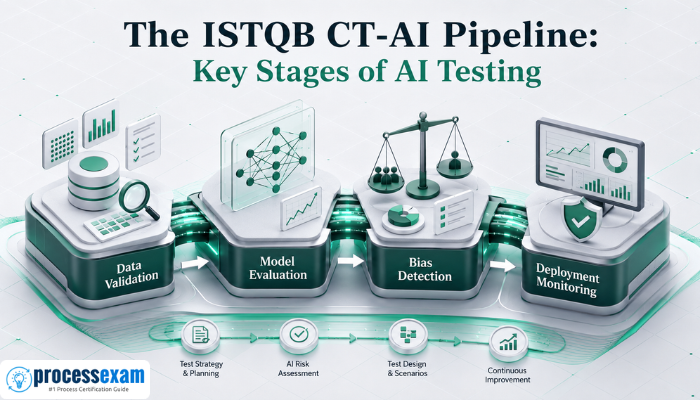
Data Testing: This crucial phase involves validating the quality, consistency, and representativeness of training and testing datasets. It includes checks for completeness, accuracy, format, and potential biases in the data itself.
-
Model Testing: Once a model is trained, it must be rigorously tested against diverse datasets, including edge cases and real-world scenarios. This involves evaluating its functional performance using metrics appropriate for the specific ML task (e.g., classification, regression, clustering).
-
System Integration Testing: AI components rarely operate in isolation. Testers ensure seamless integration with other software modules and external systems, verifying data flow and overall system behavior.
-
Adversarial Testing: This involves deliberately feeding misleading inputs to an AI model to gauge its vulnerability to adversarial attacks. It helps identify weaknesses that could be exploited in real-world applications.
-
Monitoring and Retesting: AI models can degrade over time due to concept drift or data changes. Continuous monitoring and periodic retesting in production are essential to maintain performance and identify decay.
By adopting these methodologies, ISTQB Certified Tester AI Testing professionals can thoroughly validate AI-based systems, ensuring their quality, reliability, and ethical operation.
Preparing for the ISTQB CT-AI Exam: Your Strategic Roadmap
Success in the ISTQB CT-AI exam requires a well-structured and diligent preparation approach. Given the specialized nature of AI testing, a targeted strategy is more effective than generic study methods. This section provides actionable tips to help you maximize your chances of passing.
Crafting Your Effective Study Plan
A personalized study plan is the cornerstone of effective exam preparation.
-
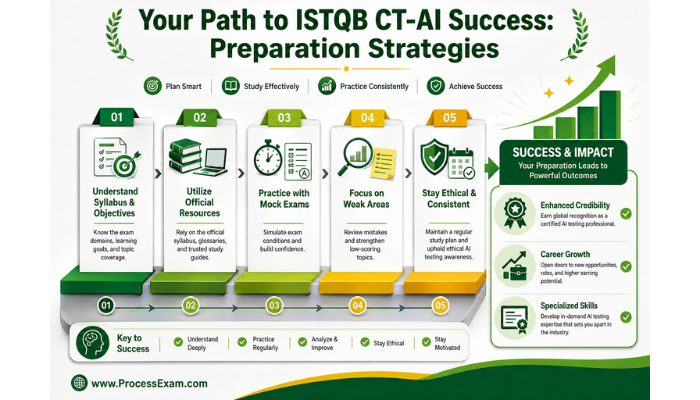
Understand the Syllabus Thoroughly: Begin by downloading and meticulously reviewing the official ISTQB Certified Tester AI Testing syllabus. Pay close attention to the learning objectives for each section, as these dictate what the exam questions will cover.
-
Allocate Study Time Wisely: Break down the syllabus into manageable chunks and allocate dedicated time slots for each topic. Prioritize areas where your knowledge is weaker.
-
Gather Quality Study Materials: Utilize the official syllabus as your primary guide. Consider reputable textbooks, online courses, and training providers specializing in ISTQB certifications.
-
Take Detailed Notes: Summarize key concepts in your own words. This active learning technique reinforces understanding and aids recall.
Leveraging Practice Exams Effectively
Practice is essential for familiarizing yourself with the exam format and identifying knowledge gaps.
-
Simulate Exam Conditions: When taking practice tests, try to mimic the actual exam environment—timed sessions, no distractions, and using only allowed resources.
-
Analyze Your Performance: Don't just look at the score. Review every question, especially those you answered incorrectly. Understand why the correct answer is correct and why your chosen answer was wrong.
-
Focus on Weak Areas: Use practice exam results to pinpoint specific syllabus topics that require more attention. Revisit those sections in your study materials.
-
Consider a Mock Exam Provider: Reputable platforms often offer realistic practice exams that reflect the difficulty and style of the actual certification test. A quality ISTQB CT-AI practice exam can significantly boost your readiness by providing detailed explanations for each answer.
Navigating Common Preparation Challenges
Many candidates face similar hurdles during their study. Being aware of them helps you overcome them.
-
Avoiding Information Overload: The field of AI is vast. Stick to the syllabus topics to avoid getting bogged down in extraneous details.
-
Maintaining Motivation: Break your study into smaller, achievable goals. Celebrate small victories to keep your motivation high.
-
Staying Ethical: Never resort to brain dumps or unofficial sources that promise "actual questions." This undermines the value of the certification and can lead to unpreparedness for real-world application. Focus on genuine learning and understanding.
Exploring Essential Resources for ISTQB CT-AI Exam Success
A well-rounded set of resources is fundamental to a successful ISTQB CT-AI exam preparation. Beyond the official syllabus, there are several avenues to deepen your understanding and refine your skills. Utilizing a combination of learning materials can cater to different learning styles and reinforce complex concepts.
The primary resource is always the official ISTQB Certified Tester AI Testing Syllabus. This document is your blueprint, detailing every topic and learning objective. It's crucial to read it thoroughly and use it as a checklist for your studies. Complementary to this, official ISTQB-accredited training courses can provide structured learning, often with experienced instructors who can clarify difficult concepts and offer practical insights.
Online learning platforms and specialized books on AI testing or machine learning quality assurance can further enrich your knowledge. Look for materials that align closely with the CT-AI syllabus domains. Engaging with a community of fellow learners, whether through forums or study groups, can also be beneficial for discussing challenges and sharing insights.
Assessing Your Investment: Understanding ISTQB CT-AI Certification Cost
The ISTQB Certified Tester AI Testing (CT-AI) certification represents a valuable investment in your professional development. Understanding the associated costs is an important part of planning your journey. The exam price for the CT-AI certification is USD $199. This fee covers your attempt at the official exam.
Beyond the direct exam fee, candidates should also factor in potential costs for study materials and training. While the official syllabus is freely available, many professionals opt for accredited training courses, which vary in price depending on the provider and format (e.g., online, in-person, self-paced). Investing in high-quality study guides or practice exams can also be a wise decision to ensure thorough preparation. Despite these potential additional expenses, the return on investment often outweighs the costs. The specialized skills gained and the enhanced career opportunities can quickly recoup the initial outlay, making the ISTQB CT-AI certification cost a worthwhile expenditure for career advancement in AI quality assurance.
Conclusion: Advancing Your Career in AI Testing
The ISTQB Certified Tester AI Testing (CT-AI) certification is more than just another credential; it's a strategic move for any testing professional aiming to thrive in the era of artificial intelligence. It equips you with the specialized knowledge and skills to confidently approach the unique challenges of validating AI systems, ensuring their reliability, ethical performance, and overall quality. By understanding the exam structure, mastering the comprehensive syllabus, and committing to a diligent preparation strategy, you are well on your way to earning this highly valuable certification.
Ready to take the next step in becoming an expert in AI testing? Begin your preparation today by thoroughly reviewing the official ISTQB CT-AI syllabus and exploring reputable study resources. Sharpen your skills and validate your expertise in this critical domain. For more certification guides and to support your journey, Explore More Certification Guides.
Frequently Asked Questions
1. What is the ISTQB Certified Tester AI Testing (CT-AI) certification?
The ISTQB Certified Tester AI Testing (CT-AI) certification is a globally recognized credential that validates a professional's expertise in applying testing principles and methodologies to artificial intelligence and machine learning systems. It covers unique quality characteristics and testing techniques specific to AI.
2. Who should consider taking the ISTQB CT-AI exam?
The CT-AI exam is ideal for testers, test analysts, test engineers, test consultants, test managers, and software developers who are involved in or aspire to be involved in the quality assurance of AI-based systems. It's also suitable for anyone looking to gain foundational knowledge in AI testing.
3. What are the main benefits of holding the ISTQB CT-AI certification?
Holding the ISTQB CT-AI certification demonstrates specialized knowledge in a high-demand field, enhances professional credibility, and opens doors to new career opportunities in AI quality assurance. It validates your ability to ensure the quality and ethical operation of AI solutions.
4. How much does the ISTQB CT-AI certification exam cost?
The exam price for the ISTQB CT-AI certification is typically USD $199. This fee covers the cost of taking the exam itself, though additional expenses for training materials or courses may apply depending on your chosen preparation method.
5. What kind of preparation is recommended for the ISTQB CT-AI exam?
Effective preparation includes thoroughly studying the official ISTQB CT-AI syllabus, utilizing official training materials or accredited courses, and practicing with mock exams under timed conditions. Focusing on understanding the core concepts of AI and ML testing, rather than memorization, is key.
- ISTQB AI Testing Exam Questions |
- ISTQB AI Testing Question Bank |
- ISTQB AI Testing Questions |
- ISTQB AI Testing Test Questions |
- ISTQB AI Testing Study Guide |
- ISTQB Artificial Intelligence Tester Questions |
- ISTQB AI Testing Book |
- ISTQB Artificial Intelligence Tester Question Bank |
- ISTQB Artificial Intelligence Tester Book |
- ISTQB AI Testing Sample Questions |
- ISTQB Artificial Intelligence Tester Exam Questions |
- ISTQB Artificial Intelligence Tester Sample Questions |
- Specialist |
- ISTQB CT-AI Quiz |
- ISTQB CT-AI Exam |
- CT-AI |
- CT-AI Question Bank |
- CT-AI Certification |
- CT-AI Questions |
- CT-AI Practice Test |
- CT-AI Study Guide Material |
- CT-AI Sample Exam |
- AI Testing |
- AI Testing Certification |
- Artificial Intelligence Tester Simulator |
- Artificial Intelligence Tester Mock Exam |
- CT-AI Exam |
- CT-AI Study Guide PDF |
- CT-AI Exam Questions Download |
- CT-AI Test Questions |
- AI Testing PDF |
- Artificial Intelligence Tester |
- Artificial Intelligence Tester PDF |
- ISTQB Certified Tester AI Testing


