
Accelerate Your CPOA Career: The Strategic Learning Map

The IIBA Certificate in Product Ownership Analysis (IIBA CPOA) is a globally recognized professional certification designed to validate the essential skills of product owners and business analysts working in agile environments. This credential confirms an individual's proficiency in applying Product Ownership Analysis practices to optimize value delivery and foster effective product development. This article serves as a strategic learning map, guiding aspiring candidates through the CPOA certification journey, from understanding its core requirements and syllabus to crafting an effective preparation strategy that positions them for success and career advancement. It explores the exam's purpose, what it validates, and how it empowers professionals to excel in the dynamic landscape of product ownership.
Understanding the IIBA CPOA Credential's Scope
The IIBA Certificate in Product Ownership Analysis (IIBA CPOA) is a crucial validation for professionals aiming to solidify their expertise in navigating the complexities of product ownership. This certification signifies an individual's capacity to effectively understand customer needs, collaborate with development teams, and drive the delivery of valuable products. It is particularly relevant for product owners, business analysts, product managers, and agile team members who are responsible for defining product vision, managing backlogs, and ensuring alignment between business goals and technical execution within an agile framework. The CPOA credential underscores a commitment to best practices in agile product ownership, enhancing credibility and opening doors to advanced career opportunities in this field.
Why Pursue IIBA CPOA Certification?
Earning the IIBA CPOA certification offers distinct advantages in a competitive market, signaling to employers a verified proficiency in critical Product Ownership Analysis domains. It validates a professional's ability to translate strategic objectives into tangible product outcomes, ensuring that development efforts are consistently aligned with market demands and customer satisfaction. The certification focuses on practical application, equipping practitioners with the tools and techniques needed to excel in their roles, fostering innovation, and driving continuous improvement in product development lifecycles.
Decoding the CPOA Exam Structure
The IIBA CPOA examination assesses a candidate's practical understanding and application of Product Ownership Analysis principles across various scenarios. Successfully navigating this assessment is key to earning the coveted certification. The exam is structured to evaluate competencies in key areas, ensuring that certified professionals possess a comprehensive skill set for effective product ownership. For detailed information and updates regarding the exam, candidates should always consult the official IIBA CPOA page.
The IIBA Certificate in Product Ownership Analysis exam details are as follows:
-
Exam Name: IIBA Certificate in Product Ownership Analysis
-
Exam Code: CPOA
-
Exam Price: Member - $250, Non-Member - $405
-
Duration: 90 Minutes
-
Number of Questions: 60
-
Passing Score: Pass or Fail
This format emphasizes both theoretical knowledge and the ability to apply concepts, requiring candidates to demonstrate competence across multiple facets of product ownership. The pass/fail scoring ensures that individuals meet a predefined standard of excellence rather than a relative ranking.
Navigating the IIBA CPOA Syllabus
A thorough understanding of the IIBA Certificate in Product Ownership Analysis syllabus is foundational to successful exam preparation. The syllabus outlines the specific knowledge areas and their respective weightings, providing a clear roadmap for study. Each domain contributes to a holistic understanding of Product Ownership Analysis, preparing candidates for real-world challenges.
The syllabus topics and their distribution are as follows:
|
Apply Foundational Concepts |
10% |
|
Cultivate Customer Intimacy |
15% |
|
Engage the Whole Team |
15% |
|
Make an Impact |
15% |
|
Deliver Often |
15% |
|
Learn Fast |
15% |
|
Obsess About Value |
15% |
These percentages indicate the relative importance of each domain on the exam, guiding candidates to allocate their study time effectively. Mastering these areas ensures a comprehensive grasp of the principles and practices validated by the CPOA certification.
Crafting a Strategic CPOA Preparation Plan
Effective preparation for the IIBA CPOA exam extends beyond mere memorization; it requires a structured approach that integrates theoretical knowledge with practical application. Candidates should develop a study plan that systematically addresses each syllabus domain, leveraging a variety of resources to deepen their understanding. A well-designed plan not only builds confidence but also enhances retention and the ability to apply concepts during the exam.
Developing a Comprehensive Study Schedule
Begin by reviewing the CPOA exam blueprint and syllabus in detail, identifying areas where your current knowledge is strong and where further study is needed. Create a realistic schedule that allocates dedicated time for each topic, paying particular attention to areas with higher weightings or those you find more challenging. Break down complex topics into smaller, manageable chunks to facilitate easier learning and comprehension. Consistency is key, so aim for regular study sessions rather than cramming.
Leveraging Quality Study Resources
Successful candidates often utilize a blend of official IIBA materials, reputable training courses, and practice questions. Consider enrolling in a Product Ownership Analysis certification training course to gain structured learning and expert guidance. Supplement this with the IIBA's recommended reading list and study guides. Practicing with sample CPOA questions is invaluable for familiarizing yourself with the exam format and question types, helping to refine your test-taking strategies. For comprehensive CPOA exam preparation materials and detailed insights, explore comprehensive CPOA exam preparation resources. Always prioritize resources that promote ethical preparation and avoid those offering "exam dumps," which undermine the integrity of the certification.
Simulating Exam Conditions
Regularly engaging with practice tests under timed conditions can significantly improve your performance. This practice helps to build stamina, manage time effectively, and reduce anxiety on exam day. Analyze your results to pinpoint weak areas and adjust your study plan accordingly. Focusing on understanding the rationale behind correct and incorrect answers is more beneficial than simply memorizing solutions. This iterative process of study, practice, and review is crucial for solidifying your knowledge and readiness. You can find effective study resources and practice materials to aid in this process.
Validating Essential Product Ownership Analysis Skills
The IIBA CPOA certification serves as a robust validation of an individual's capacity to perform critical Product Ownership Analysis tasks effectively. It assures employers that a candidate possesses the necessary skills to contribute significantly to agile product development, bridging the gap between business objectives and technical implementation. This credential confirms a deep understanding of how to drive value, foster collaboration, and adapt to evolving product requirements.
Defining Product Vision and Strategy
A core skill validated by the CPOA is the ability to articulate a clear product vision that aligns with organizational goals and market opportunities. This involves conducting thorough market research, analyzing stakeholder needs, and collaborating with cross-functional teams to define a compelling product strategy. The certification ensures practitioners can translate abstract ideas into actionable plans, providing direction for the entire product development lifecycle.
Mastering Backlog Management
Effective backlog management is central to product ownership, and the CPOA credential confirms proficiency in this area. This includes techniques for prioritizing features, managing requirements, and continuously refining the product backlog based on feedback and changing priorities. Certified professionals are adept at ensuring the backlog is well-organized, transparent, and reflects the highest value items for development. They understand how to balance competing demands and communicate trade-offs clearly to stakeholders.
Facilitating Stakeholder Collaboration
Product ownership is inherently collaborative, requiring strong communication and negotiation skills. The IIBA CPOA validates an individual’s ability to engage with a diverse set of stakeholders, including customers, development teams, and leadership. This involves facilitating workshops, managing expectations, and building consensus to ensure that the product meets the needs of all parties involved. The certification emphasizes the importance of fostering a collaborative environment to achieve shared product goals.
Realizing the Career Value of CPOA Certification
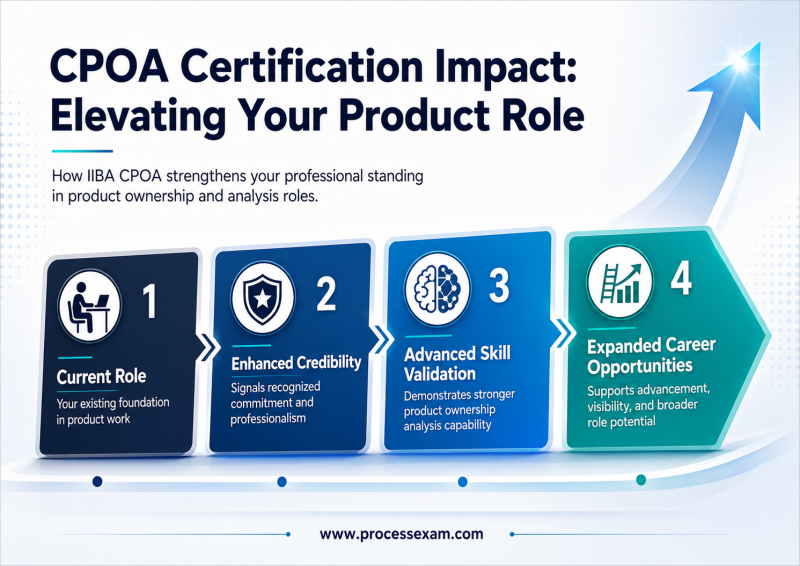
Investing in the IIBA CPOA certification can yield significant returns, propelling professionals into more influential roles and enhancing their earning potential. The credential is a clear indicator of a specialized skill set in Product Ownership Analysis, a domain increasingly critical in today's agile business landscape. It positions individuals as knowledgeable experts capable of driving product success and fostering innovation within organizations.
Elevating Professional Credibility
Holding an IIBA CPOA certification immediately distinguishes you in the job market. It signals to prospective employers and peers that you possess a verified and comprehensive understanding of Product Ownership Analysis principles and practices. This enhanced credibility can lead to increased opportunities for leadership roles, project assignments, and strategic contributions within product-focused teams. The certification acts as a trust signal, assuring stakeholders of your capability and expertise.
Accelerating Career Progression
The CPOA credential often serves as a catalyst for career advancement, opening pathways to senior product owner, lead business analyst, or product management positions. Employers actively seek individuals who can demonstrate a structured approach to product development, from ideation to delivery, and the CPOA validates just that. This professional certification provides a competitive edge, enabling you to take on greater responsibilities and influence product strategy at a higher level within an organization. It demonstrates a commitment to continuous learning and professional development in a rapidly evolving field.
Implementing Core Product Ownership Analysis Domains
The IIBA CPOA syllabus is meticulously designed to cover the breadth of Product Ownership Analysis, with each domain focusing on a critical aspect of delivering successful products. Understanding how to effectively implement the principles within each domain is fundamental to passing the exam and excelling in a product ownership role. This section delves into the practical application of these core areas.
Applying Foundational Concepts
This domain emphasizes understanding the core principles that underpin effective product ownership. It requires candidates to grasp the fundamental mindset of agile product development, including iterative delivery, continuous feedback, and value-driven prioritization. Professionals must be able to articulate the role of the product owner within various agile frameworks and understand how to establish a strong product vision and roadmap. This foundational knowledge ensures all subsequent product activities are built upon sound agile principles and a clear understanding of the product's purpose.
Cultivating Customer Intimacy
Achieving product success hinges on a deep understanding of the customer. This CPOA domain focuses on techniques for truly knowing your users, their needs, pains, and aspirations. It covers methods for eliciting and analyzing customer feedback, conducting user research, and creating empathy maps and personas to represent target users effectively. Professionals must demonstrate the ability to act as the voice of the customer within the development team, ensuring that product decisions are always customer-centric and informed by real-world usage patterns. This intimacy drives the creation of products that genuinely solve user problems.
Engaging the Whole Team
Product ownership is a collaborative endeavor, requiring the ability to rally and align diverse teams towards a common product goal. This domain explores strategies for fostering strong collaboration with development teams, stakeholders, and other business units. It includes techniques for effective communication, conflict resolution, and shared understanding of the product backlog. CPOA certified individuals are adept at facilitating discussions, building consensus, and empowering the team to deliver high-quality increments efficiently. Their ability to engage everyone ensures that the entire organization is pulling in the same direction.
Making an Impact
The 'Make an Impact' domain emphasizes the product owner's responsibility to deliver measurable value and drive positive outcomes for both customers and the business. This involves defining clear success metrics, tracking product performance, and iteratively adjusting the product strategy based on results. Candidates must demonstrate proficiency in understanding business objectives, identifying opportunities for innovation, and communicating the value proposition of product features effectively. The focus is on ensuring that every product increment contributes meaningfully to strategic goals and generates tangible benefits.
Delivering Often
Agile methodologies champion frequent delivery as a means to gain early feedback and adapt quickly. This CPOA domain focuses on the practices and mindset required to deliver valuable product increments regularly. It covers principles like minimum viable product (MVP), release planning, and managing continuous integration and deployment. Professionals must understand how to break down complex features into smaller, shippable components and manage the flow of work through the development pipeline. This iterative approach minimizes risk, accelerates learning, and ensures that the product constantly evolves in response to market demands.
Learning Fast
In a rapidly changing market, the ability to learn and adapt quickly is paramount for product success. This domain addresses strategies for continuous learning through experimentation, feedback loops, and data analysis. It covers techniques such as A/B testing, user acceptance testing, and retrospective analysis to glean insights from product usage and market reactions. CPOA certified individuals are skilled at formulating hypotheses, designing experiments, and using data to make informed decisions that guide product evolution. This rapid learning cycle is crucial for sustained innovation and market relevance.
Obsessing About Value
At the heart of Product Ownership Analysis is an unwavering focus on value. This domain delves into methods for defining, measuring, and maximizing the value delivered by the product. It includes techniques for value stream mapping, economic prioritization, and understanding the total cost of ownership versus value generated. Candidates must demonstrate the ability to continuously evaluate the business case for features, make difficult trade-off decisions, and advocate for initiatives that yield the highest return on investment. This value obsession ensures that resources are always directed towards the most impactful product initiatives.
Streamlining Your IIBA CPOA Registration
Once your preparation is complete, the final step is to navigate the IIBA CPOA registration process smoothly. This involves understanding the application requirements, paying the exam fee, and scheduling your exam at an authorized testing center. Being aware of the procedural steps in advance can help avoid last-minute hurdles and ensure a stress-free experience. The IIBA website provides detailed instructions and access to the registration portal, which should be your primary reference.
Understanding Eligibility and Application
Before registering, ensure you meet any prerequisite experience or knowledge requirements stipulated by IIBA, although the CPOA is generally accessible to those with relevant agile experience. The application typically involves creating an IIBA account and filling out an online form. Take care to provide accurate information to avoid any delays in processing your application. Familiarize yourself with the IIBA’s Code of Ethical Conduct, as adherence is expected from all certification candidates.
Scheduling Your CPOA Exam
After your application is approved and the exam fee is paid, you will receive instructions on how to schedule your exam through the designated testing provider. It is advisable to schedule your exam well in advance to secure your preferred date and time. Review the testing center policies and procedures beforehand, including identification requirements and rules regarding personal items. Arrive early on exam day to allow for check-in procedures and to mentally prepare yourself.
The IIBA CPOA certification is more than just a credential; it's a strategic investment in your professional future as a Product Owner Analyst. By following a structured learning path, understanding the exam's nuances, and embracing the core principles of Product Ownership Analysis, you can confidently accelerate your career. The journey demands dedication and strategic preparation, but the rewards of enhanced credibility, advanced skill validation, and expanded career opportunities make it a worthwhile endeavor. Embrace this learning map to solidify your expertise and drive impactful product outcomes. Take the next step in advancing your career by exploring further resources and guidance to advance your certification journey.
Frequently Asked Questions
1. What does the IIBA CPOA certification validate?
The IIBA CPOA certification validates an individual's proficiency in applying Product Ownership Analysis practices within agile environments to maximize value delivery and foster effective product development. It confirms skills in areas such as customer intimacy, team engagement, and value obsession.
2. Who is the ideal candidate for the IIBA CPOA exam?
The IIBA CPOA exam is ideal for product owners, business analysts, product managers, and agile team members who are involved in defining product vision, managing backlogs, and ensuring alignment between business goals and technical execution in agile settings.
3. How long is the IIBA CPOA exam, and how many questions does it have?
The IIBA CPOA exam has a duration of 90 minutes and consists of 60 multiple-choice questions. It is graded on a pass or fail basis.
4. Are there any prerequisites for taking the IIBA CPOA exam?
While the IIBA CPOA certification generally does not have strict experience prerequisites like some other IIBA certifications, candidates are typically expected to have practical experience working in an agile environment or in a product ownership-related role to successfully apply the concepts tested.
5. What kind of preparation is recommended for the IIBA CPOA exam?
Recommended preparation includes studying the official IIBA CPOA syllabus, attending Product Ownership Analysis training courses, utilizing study guides, and practicing with sample questions. A structured study plan that covers all syllabus domains is highly beneficial.
- IIBA Product Ownership Analysis Exam Questions |
- IIBA Product Ownership Analysis Question Bank |
- IIBA Product Ownership Analysis Questions |
- IIBA Product Ownership Analysis Study Guide |
- IIBA CPOA Quiz |
- CPOA Question Bank |
- Product Ownership Analysis Certification |
- IIBA Certificate in Product Ownership Analysis |
- IIBA Product Ownership Analysis Book |
- Product Ownership Analysis Certification Cost |
- Product Ownership Analysis Certification Requirements |
- IIBA Product Ownership Analysis Sample Questions |
- CPOA Exam Questions Download |
- CPOA Test Questions |
- Product Ownership Analysis PDF |
- ServiceNow CPOA Quiz |
- ServiceNow CPOA Exam


