Blogs

CPRSA Study Guide: Pega Robotics System Architect Exam

Updated on 23 September 2026. What’s new: the robotics exam is now PEGACPRSAV25 for Pega Robotic Automation R25, with 60 questions in 90 minutes and a 65% pass mark.

Pega rebuilt Robot Studio for its R25 release, and the Certified Pega Robotics System Architect exam moved with it. The current exam is PEGACPRSAV25, written against Pega Robotic Automation R25: 60 questions, 90 minutes, a 65% pass mark and a USD $190 fee per attempt. If you last looked at this credential when Pega wrote it PCRSA and Robot Studio ran inside Microsoft Visual Studio, the study path has changed underneath you.

Pega Robotics System Architect certification cover with a robot and the words A Sneak Peek

This guide covers the exam as Pega runs it today, checked in September 2026. It sets out the nine topic areas and how they are weighted, the logistics you need before you book a seat, a four-week plan that fits around a working week, and the errors that quietly cost marks on the day.

What changed for CPRSA candidates when Pega Robotics moved to R25?

Pega Academy still carries two robotics exam pages, and the gap between them explains most of the confusion candidates meet. The older page describes exam code PEGAPCRSA80V1_2019, the Version 8 exam that people sat when Robot Studio was a plug-in hosted inside Microsoft Visual Studio. The page reached from the certifications list describes PEGACPRSAV25, and that one applies to Pega Robotic Automation R25. Notice which acronym each code carries: the retired code spells PCRSA, the current one spells CPRSA. Job adverts, forum threads and older blogs still use the earlier spelling, so both names point at the same career path.

Pega Decisioning Consultant (CPDC) Certification Exam Preparation Tips to Ease Your Worries

Pega Certified Decisioning Consultant (CPDC) Certification

Pega CPDC Certification Exam Preparation Study Tips banner showing a student holding books and folders, representing focused

Achieving a Pega CPDC Professional Certification proves your skills and knowledge for architecting and executing Pega projects. Gaining one or multiple Professional certifications from Pega Academy demonstrates your commitment to excellence and to being a leader in the industry.

The Certified Pega Decisioning Consultant (CPDC) career path is for professionals engaging in the study and development of a Pega Decision Management or a Customer Decision Hub solution. This certification assures you have the skills to apply treatment principles of Decision Strategies, Next-Best-Action, as well as Predictive Analytics.

The IT industry is being revolutionized on a day-to-day basis, which is the reason for Professionals to stay up-to-date and have on validating credentials. The Pega Certified Decisioning Consultant exam is considered as necessary to step in the confines of success. It does not just ease candidates to upturn their ranks, but it also encourages them to have a secure grip on the technology.

But, meantime, it is impossible to pass the Certified Pega Decisioning Consultant Certification exam without any absolute exam preparation material. As the Pega Certified Decisioning Consultant does not just require you to have hands-on practice, but it also needs them to go through the complete exam material. Pega has designed to give a brief general overview of how to be proficient in that particular substance.

Is SHRM Certification Worth It? What It Does for an HR Career

Updated on 22 September 2026. What’s new: eligibility corrected (SHRM-CP needs no degree or HR experience) and the syllabus updated to the 2026 SHRM BASK with its eight behavioral competencies.

Is SHRM certification worth it? For most people who work in HR, yes, though rarely for the reason it is usually sold on. The letters do not lift a salary on their own. What they do is show an employer, through an exam built on SHRM's own competency model, that you can apply HR knowledge with sound judgment, and then keep showing it every three years. SHRM-CP and SHRM-SCP each cost $399 for SHRM members and $499 for non-members at the standard rate.

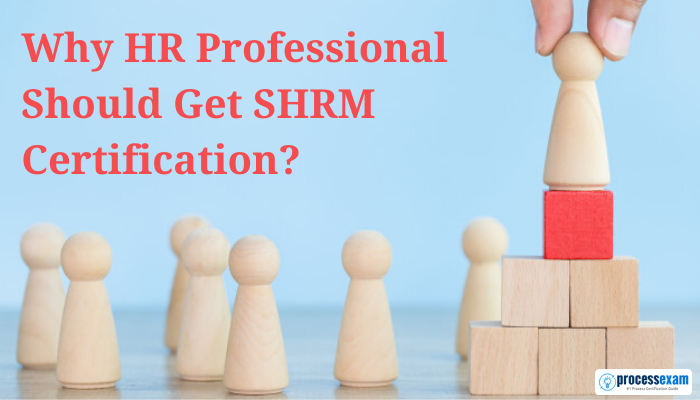
Wooden figure lifted onto the top block of a stack, representing an HR professional advancing with SHRM certification

Older articles on this question leaned on survey percentages and loose promises of credibility. This one takes a more practical line. It explains what the SHRM competency model is and why it was built, what a hiring manager can and cannot read from the credential on a CV, how to decide between the two exams, how to register for the testing window that runs from 1 December 2026 to 15 February 2027, and what holding the credential costs after the exam is behind you.

Is SHRM certification worth the money and the three-year commitment?

Worth is a comparison, so it helps to put both sides on one page. On one side sit an exam fee, several weeks of study and a renewal obligation that lasts as long as you want to keep the letters. On the other side sit an examined, renewable signal of competence that employers already recognise, a framework for your own development, and a credential that does not depend on a degree.

How the ITIL 4 Foundation Exam Works: 40 Questions, 26 to Pass

Question 17 of 40 describes a service provider whose request workflows only half work and asks which guiding principle it should apply first. Two of the four options look right, and telling them apart is what the ITIL 4 Foundation exam really measures. The paper itself is simple: 40 one-mark multiple-choice questions in 60 minutes, closed book, with 26 correct answers (65%) needed to pass and no deduction for a wrong answer.

ITIL 4 Foundation exam guide cover showing a professional keeping service gears running smoothly

Here is that question in full, written in the style of the real paper:

Question 17. A service provider wants to improve the way it fulfils service requests. Some of its current request workflows are quick and well liked by users; others regularly miss their targets. Which guiding principle should it apply FIRST?

A. Optimize and automate
B. Start where you are
C. Progress iteratively with feedback
D. Keep it simple and practical

Most candidates narrow this to B and C within seconds, and then hesitate. Improvement in ITIL 4 is iterative, so C feels safe. But the stem hands you two clues. It says some workflows already work well, and it asks what to do FIRST. Assessing what exists, keeping what works and measuring it directly before designing anything new is the whole of start where you are, so B is the answer. C is a true statement about ITIL that answers a different question: how to run the improvement once it has started. A is a trap of its own, because ITIL 4 automates only after something has been simplified and optimised, and D is sound advice that the stem never asks for.

How to Get PHR Certification: Eligibility, Cost and Exam Format

Updated on 21 September 2026. What’s new: updated for HRCI's 2024 PHR content outline, with the current 115-question, 120-minute exam format.

You are two years into an HR coordinator job, the PHR keeps turning up on adverts for the role above yours, and you are wondering whether it is too soon. For many coordinators it is not. With a bachelor's degree and two years of professional-level HR work, HRCI's Professional in Human Resources is open to you today. The real question is whether your two years count as professional-level, and that is where this guide starts.

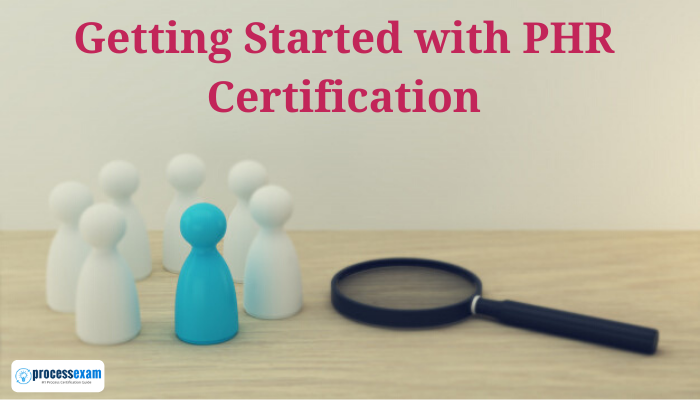
Getting started with PHR certification, one blue figure standing out from a group beside a magnifying glass

The PHR is HRCI's credential for people who run HR programmes and keep day-to-day operations working, grounded in United States employment law. It is not a qualification for people who have never done HR work, and it is not a leadership credential either. It sits exactly where a coordinator who has started making decisions of their own is heading. Below you will find the degree-and-experience routes, what the whole process costs, what the exam looks like, how HRCI scores it, and a way to prepare that fits someone still early in the profession.

Is two years in HR enough to sit the PHR?

It can be. HRCI sets three routes to eligibility on its PHR certification page, and you only need to meet one of them. Each route trades formal education against time spent in a professional-level HR role:

LSSYB Certification: LSSA Yellow Belt Exam Cost, Pass Mark and Study Plan

Updated on 16 October 2026. What’s new: exam fee corrected to €260, the price in LSSA's own web shop for the Lean Six Sigma Yellow Belt exam

LSSYB is the everyday shorthand for the Lean Six Sigma Academy Yellow Belt, the entry-level credential from LSSA, a certification body that has run Lean Six Sigma belts since 2009. The exam is 50 multiple-choice questions in 60 minutes, open book, with a passing score of 32 / 50. This guide covers what the paper asks, what LSSA's own sample reveals, the cost, a ten-day plan and what a Yellow Belt does afterwards.
LSSA Lean Six Sigma Yellow Belt career pathway cover with a belted figure and a sigma symbol

People reach this topic by typing many spellings: LSSYB, LSS YB, LSS-YB, LSSA-YB or the longer Lean Six Sigma Yellow Belt. They all point to the same LSSA exam, with exam code LSSA-YB. One warning for anyone who typed "CLSSYB": that is usually a slip for ASQ's CSSYB, a different Yellow Belt from a different body with a different exam. If your employer asked for the LSSA version, you are in the right place.

The belt is aimed at people who do the work rather than people who lead the improvement. LSSA's own page describes a Yellow Belt as someone with day-to-day experience of processes, which makes them a natural team member on Kaizen, Green Belt and Black Belt projects, and as someone responsible for improving operational performance in a department or on a production line.

PeopleCert ITIL Foundation Certification Preparation Is Not Tough Anymore!

PeopleCert ITIL, PeopleCert Online Exam, PeopleCert Exams, PeopleCert ITIL Foundation Exam, ITIL PeopleCert, PeopleCert ITIL

PeopleCert ITIL Foundation Certification is significant to start your career in IT Governance and Service Management Information Technology (IT) or take a promotion. PeopleCert products always favored in every sector, and ITIL certified are hot cakes in the corporate world because of their ability and knowledge in the workplace. PeopleCert ITIL Foundation practice questions provide a chance to belt ITIL Foundation certification in the first attempt.

How to Get Into PeopleCert IT Governance and Service Management?

It is time to get the PeopleCert ITIL Foundation certification! Are you having trouble focusing on getting ITIL Foundation certification? If you are looking for ITIL Foundation Questions that assure you pass your PeopleCert ITIL Foundation exam in the first attempt, then ProcessExam is a perfect match. Their PeopleCert ITIL Foundation Practice Test affirms your victory in PeopleCert ITIL Foundation Actual Exam because of its similarity with Real PeopleCert Exam Simulator. PeopleCert ITIL certification can be difficult, and we are here to help you become PeopleCert ITIL Foundation certified and attain IT Governance and Service Management.

What Is an ASQ Certified Reliability Engineer? Should You Become One?

An ASQ Certified Reliability Engineer is the person who makes sure a product keeps working after it ships: predicting how it will fail, designing the failure out, and proving the result with data. Become one if you already carry that responsibility at work and can show the eight years of experience ASQ asks for.

Be an ASQ Reliability Engineer - steps to take the CRE certification exam

That short answer hides a longer decision. The CRE is one of ASQ's harder credentials, it costs real money, and the application is judged before you are allowed anywhere near the exam. This guide sets out what the job involves, who the certification genuinely suits, what ASQ requires, what the current Body of Knowledge contains, and how to prepare for a 258-minute open-book exam without wasting a testing window.

What is a reliability engineer responsible for, and where do they work?

Quality engineering asks whether a unit conforms today. Reliability engineering asks how long it will keep conforming, under what conditions, and what happens when it stops. That single shift, from conformance to time, is what separates the two disciplines and it explains almost everything about the CRE exam.

Pega Marketing Consultant Certification Quick Start Guide: All of the Upfront Information

Pega Certification, Pega Marketing Consultant, Pega Marketing Consultant Exam Questions, Pega Marketing Consultant Question Bank, Pega Marketing Consultant Questions, Pega Marketing Consultant Test Questions, Pega Marketing Consultant Study Guide, Pega PCMC Quiz, Pega PCMC Exam, PCMC, PCMC Question Bank, PCMC Certification, PCMC Questions, PCMC Practice Test, PCMC Study Guide Material, PCMC Sample Exam, Marketing Consultant, Marketing Consultant Certification, Pega Certified Marketing Consultant

About Pega Certification

Pega is a set of tools for business process management. It is developed in Java and operates OOPS models. The significant advantage of Pega is that there is no requirement not to build the system from the scrape like any other standard programming.

It is turning out to be very well-known because of this, although a good number of ordinary programmers would not agree. Its reputation is also because of its speed and extensibility. Having well-built methodical skills, understanding of major object-orientation approaches is a need for utilizing this tool. Moreover, too, there are many frameworks built on the Pega Process Commander to maintain several various phases of business necessities.

How to Become a Quality Technician: Skills and Certification

A quality technician checks that what leaves a factory matches its drawing and specification, and you can start in the job with a high school education and a sharp eye. Employers hire on care, measuring skill and honest record keeping. The ASQ Certified Quality Technician credential then proves that skill on paper. Read on for the daily work, the skills, the exam and the next steps. Our CQT practice exam is there once you decide to sit it.

Woman holding a laptop beside a brick wall with the title How to Become Certified Quality Technician

What does a quality technician actually do all day?

Picture a machined bracket coming off a line at seven in the morning. Someone has to pull it, read the drawing, choose a gauge, measure four features, record the numbers and decide whether the lot moves on. That person is the quality technician. Some companies say quality inspector, quality control technician, tester or sampler; the core task is the same: compare the product with what the customer and the drawing asked for, and leave a record that anyone can follow later.

The work splits into a few repeating jobs.

Inspect and measure

Incoming material, work in progress and finished goods are all checked. In one plant that means hand tools and gauges; in another it means a coordinate measuring machine, an optical comparator or a torque tester. Some technicians look at every item, others pull a sample using a sampling plan and decide on the lot from it.

Syndicate content